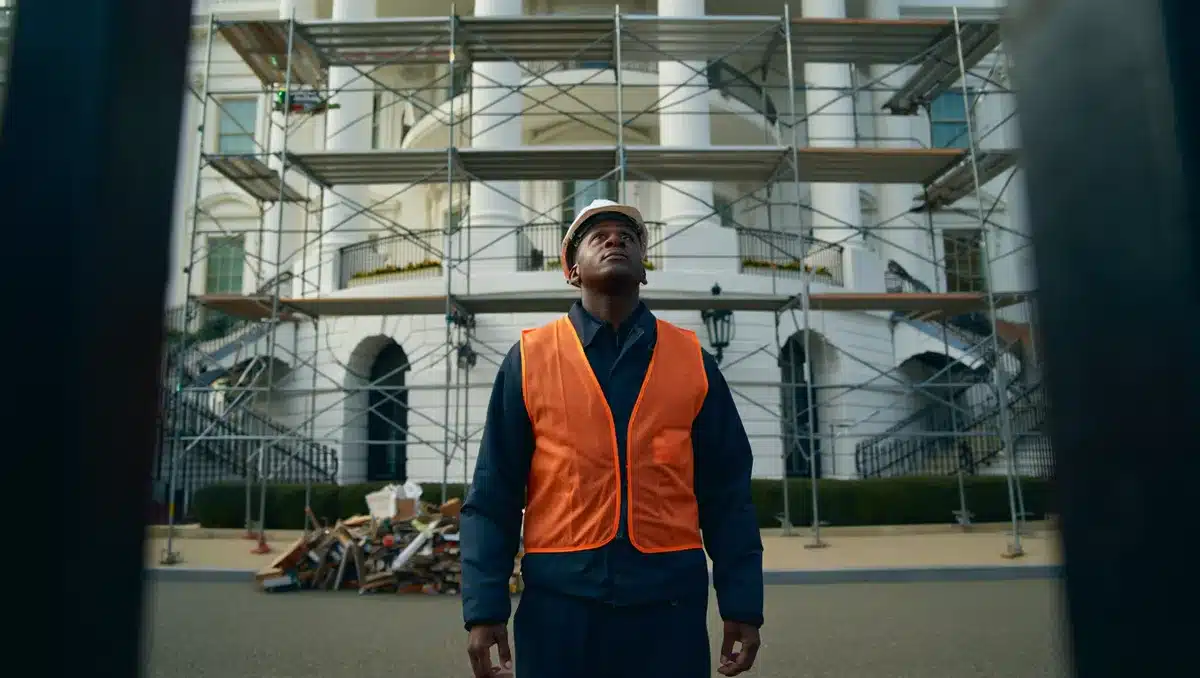
The Trump administration plans to spend at least $900 million for construction projects on the White House grounds, a significantly larger price tag than previously reported, with most of the cost to be covered by taxpayers, according to confidential contracts and planning documents reviewed by The Washington Post.
Instead of seeking money directly from Congress, the administration has pieced together funding from the U.S. Secret Service, the White House Military Office, and private donors, directing it to a little-known account that typically holds only a few million dollars for routine maintenance. The administration has used that account to fund what it calls “White House modernization projects” — at the center of which is a gilded East Wing ballroom.

The contracts reveal how the Trump administration has sidestepped Congress in what would become the most expensive overhaul of the White House in more than 80 years. The administration has not disclosed the total cost of all planned construction or shared details about the sources or original intended purposes of most of the money it has assembled.
Since Trump took office, the administration has directed $875 million to the White House maintenance account, known as “White House Repair and Restoration,” according to public budget records. To assemble this funding, the White House budget office authorized transfers of $500 million from the Secret Service and White House Military Office, while an additional $305 million came from private donations. Documents reviewed by The Washington Post show another $70 million directed to that account but do not identify the source.
The Executive Residence, a White House office with fewer than 100 employees that maintains the president’s private home, is managing the contracts. This office is not subject to rules requiring most federal agencies to disclose government records, rendering the contracts confidential. In past administrations, major White House construction projects were submitted to Congress for appropriations and directed through agencies like the General Services Administration.
Cerin Lindgrensavage, counsel for Protect Democracy, an advocacy group suing the Trump administration for allegedly withholding public information about federal spending, called the funding approach “incredibly unusual.” The Constitution reserves for Congress the power to decide how tax dollars are spent, though the White House budget office is permitted to move funds between accounts for purposes consistent with their original appropriation.
Court Halts Ballroom Construction
A federal appeals court ordered the Trump administration on August 7 to halt construction on the East Wing ballroom, ruling that Congress must approve the project before work can continue. The three-judge panel issued a 2-1 decision, with judges appointed by Democratic presidents siding against the administration.
“Whether or not a massive ballroom should be constructed is for Congress to decide and is not a matter for Executive self-help,” the U.S. Court of Appeals for the D.C. Circuit wrote in a 136-page ruling. The court temporarily stayed its order for two weeks to allow the Trump administration to appeal to the Supreme Court, which Trump immediately vowed to do.
The ballroom alone was previously estimated to cost at least $600 million, with half coming from taxpayers, according to The Washington Post’s June reporting of contractors’ invoices. The administration originally estimated the ballroom at $200 million but has since increased projections. The National Trust for Historic Preservation, which sued to halt construction, celebrated the ruling as a victory for congressional oversight and historic preservation.
In scope, Trump’s White House renovation plans rival those of Franklin D. Roosevelt, who oversaw completion of the East Wing in 1942. By contrast, President Harry Truman’s reconstruction of the White House between 1948 and 1952 — the most extensive overhaul of the president’s private residence — cost $5.7 million (approximately $60 million in today’s dollars), according to historians. Congress approved Truman’s work and established a six-person commission to oversee it. The Obama administration’s 2009 electrical and structural upgrades to the East and West wings cost $376 million over multiple years, with Congress appropriating the funds and the General Services Administration managing the work.
The White House did not answer questions from The Washington Post about the source of all the funding or the total cost of the planned work but said the money is being spent in a “manner consistent with” Congress’s original intent. White House spokesman Davis Ingle stated in a statement that “President Trump continues to implement long-overdue and necessary renovations to beautify the People’s House as we celebrate our great Nation’s 250th anniversary of independence.”
Sources
- The Washington Post — detailed investigation of $900 million in White House construction funding, confidential contracts, and administration’s use of multiple funding sources to bypass Congress
- NPR — federal appeals court ruling halting ballroom construction, requiring congressional approval, and Trump’s vow to appeal to Supreme Court
- USA Facts — historical White House renovation costs and Truman reconstruction details