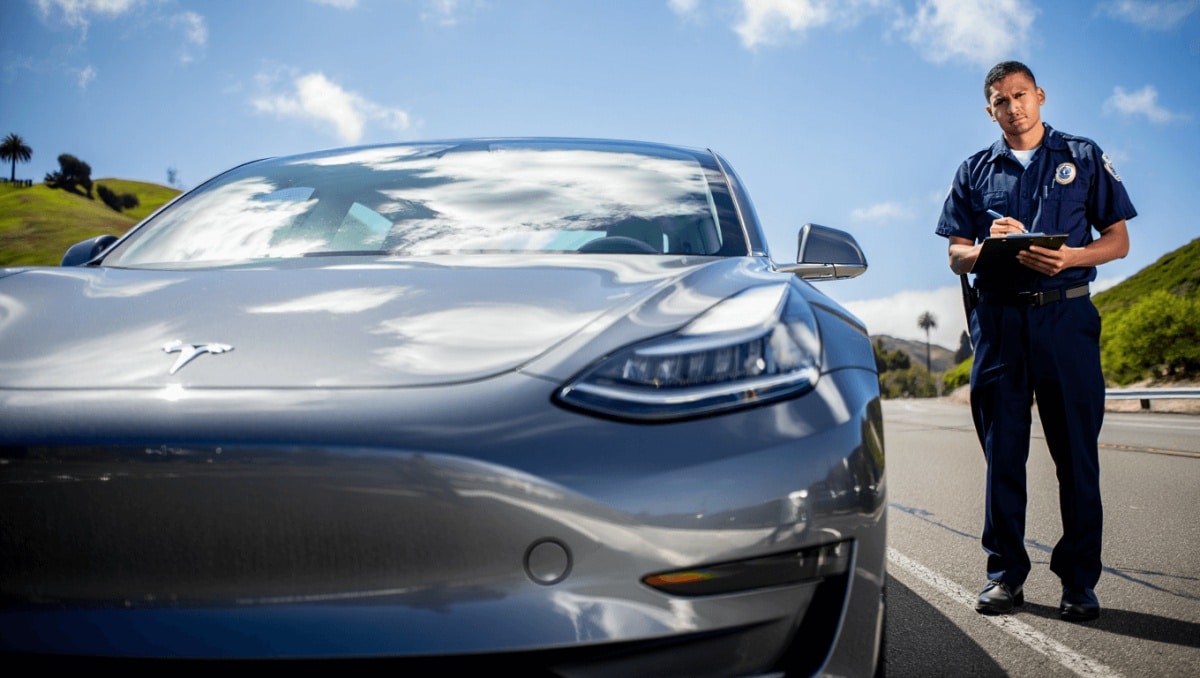
California regulators have decided not to enforce a 30-day stoppage of Tesla’s in-state sales and manufacturing after the company removed the label Autopilot from its vehicle marketing in the state. The ruling lets Tesla continue operating in California — its largest U.S. market — and closes a dispute that has stretched for nearly three years.
How the dispute unfolded
State officials accused Tesla late last year of presenting driver-assistance features in a way that overstated their capabilities, particularly through product names that could suggest autonomous driving. The Department of Motor Vehicles argued those labels risked misleading buyers about the level of human supervision required.
| Date | Action | Result |
|---|---|---|
| Nov 2023 | California DMV filed allegations of deceptive marketing over Tesla’s driver-assistance names | Regulatory action opened |
| Dec 2023 | Administrative law judge recommended a 30-day suspension of Tesla’s licenses | DMV endorsed the ruling but allowed time to comply |
| Jan 2024 | Tesla removed the Autopilot label from vehicles in the U.S. and Canada | Regulator accepted corrective measures; suspension averted |
| Feb 14, 2024 | Company shifted its paid offer to a subscription model | $99/month subscription replaced the $8,000 one‑time fee for Full Self-Driving (Supervised) |
Tesla had earlier adjusted the name Full Self-Driving to Full Self-Driving (Supervised) to emphasize that a human driver must remain engaged. That change, however, did not initially extend to the company’s longstanding Autopilot label, prompting the DMV to escalate the matter to an administrative hearing.
Why this matters now
At stake is more than one brand term: regulators are testing how naming and marketing shape consumer expectations about automated driving. The immediate consequence for Tesla is operational continuity in California, but the broader effect could influence how automakers present driver-assistance technology nationwide.
- For drivers: clearer labeling reduces the chance of users over-relying on assistance features and reinforces that active supervision remains necessary.
- For Tesla’s business: removing the free or standard-sounding Autopilot label and moving FSD to a subscription nudges owners toward paid upgrades and recurring revenue.
- For regulators: this sets a practical example that naming conventions can be deemed misleading and subject to enforcement.
- For safety oversight: expect closer scrutiny of marketing claims and potential follow-up actions by other states or federal agencies.
The subscription change—replacing an $8,000 one-time purchase with a $99 monthly plan—also alters the consumer calculus. Tesla’s CEO has signaled that the fee could rise as the system’s capabilities grow, suggesting a future where feature rollouts are tied to ongoing payments rather than single purchases.
While the DMV’s latest statement framed Tesla’s labeling fixes as sufficient to avoid the penalty, observers say the episode highlights how language and product packaging can become focal points in the wider debate over vehicle automation and accountability. The case may be closed for now, but it raises questions that regulators, automakers and drivers will continue to unpack as assisted-driving systems advance.