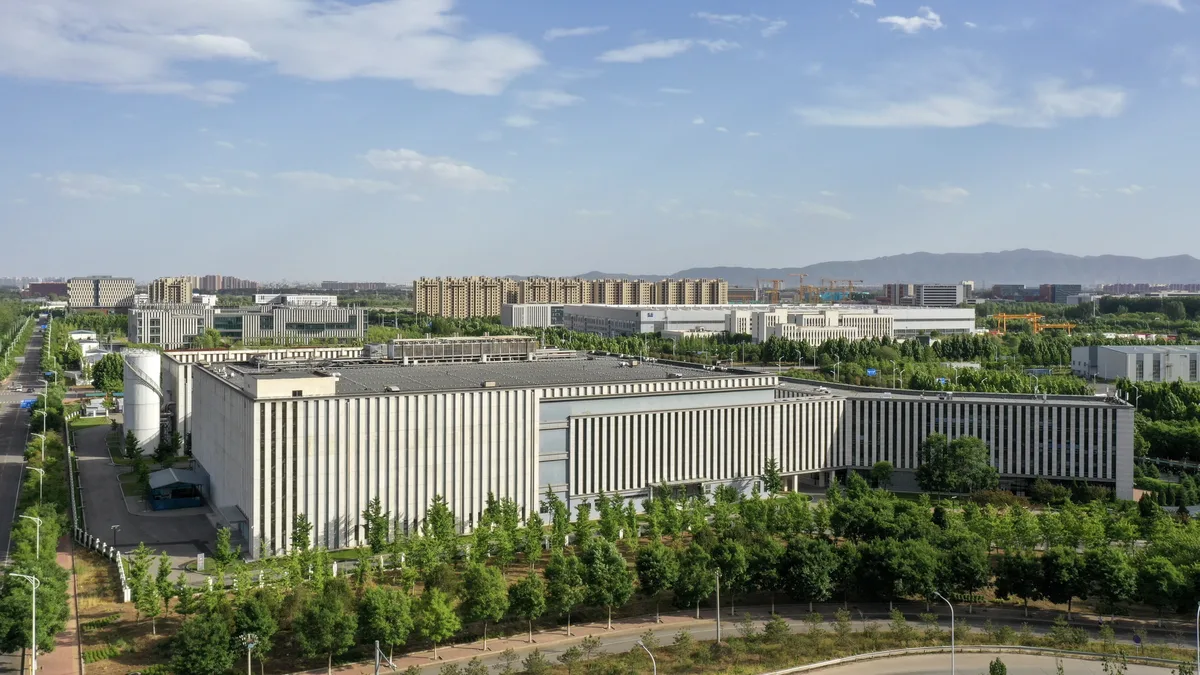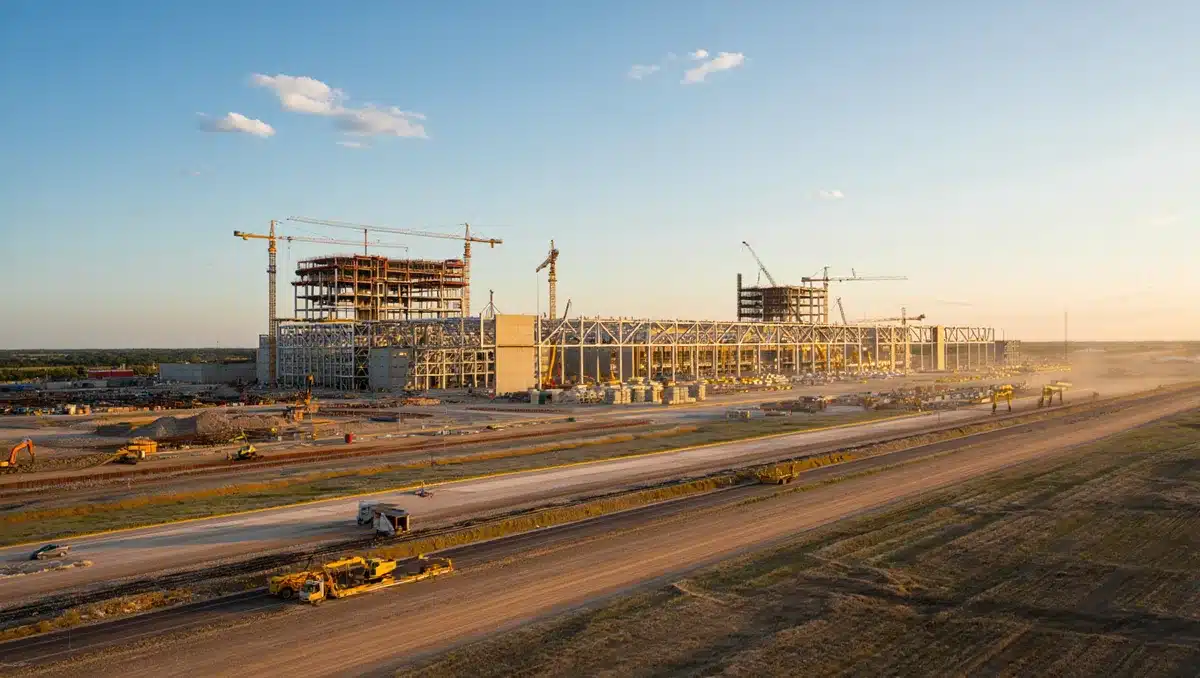
Elon Musk’s SpaceX and Tesla announced plans to build Terafab, a $16.8 billion semiconductor manufacturing facility in Grimes County, Texas, north of Houston, with the potential to eventually reach $119 billion in total investment across multiple phases. The complex will span 100 million square feet and create more than 3,000 jobs, according to announcements made August 6-7, 2026.
The facility represents a vertical integration play: SpaceX and Tesla will consolidate chip design, fabrication, packaging, and testing under one roof to supply their own internal demand for high-performance processors. Tesla plans to use the chips in its Optimus humanoid robots and autonomous vehicles, while SpaceX will deploy them in orbital systems and Starlink satellites.
The initial $16.8 billion phase is part of a broader reshaping of U.S. semiconductor manufacturing. Vertical integration—controlling the entire supply chain from design to production—has become a competitive advantage in the AI era, where companies like SpaceX and Tesla face chronic shortages of specialized chips tailored to their systems.
This model mirrors how other tech giants have moved toward internal chip production. The project also reflects growing momentum in domestic fab construction: TSMC and Sony are planning a $6.4 billion image sensor plant in Japan, while semiconductor industry investments across the U.S. have surpassed $920 billion in recent years, supported by the CHIPS Act’s $52 billion in federal incentives.
A comparable precedent came earlier this year when Micron Technology broke ground on a $100 billion megafab in Clay, New York, in January 2026. Micron’s project, planned over 20 years, aims to produce memory chips and is expected to create 9,000 jobs. The Terafab announcement underscores how AI demand is driving a race for domestic semiconductor capacity; industry analysts project typical fab construction timelines of 3 to 5 years from groundbreaking to first production, though some estimates suggest Terafab’s initial output could arrive by mid-2028 at the earliest.
The location in Texas reflects the state’s growing role as a semiconductor hub. Elon Musk plans the world’s largest building in Texas for the chip factory, according to his public statements, positioning the project as not only a manufacturing facility but a record-breaking industrial structure. Analysts note that the full $119 billion buildout, if realized, would rank among the largest private manufacturing investments in U.S. history.
SpaceX has signaled that the full multi-phase project could take 15 years or longer, given the complexity of scaling semiconductor production at this scale. The company filed regulatory documents in May 2026 outlining the $55 billion first phase and the eventual $119 billion total, indicating a long-term commitment to internal chip manufacturing independence. NVIDIA stock surged as SpaceX commits to an exclusive GPU partnership, reflecting market interest in the companies’ semiconductor strategy.
Sources
- Reuters — Confirmed SpaceX and Tesla’s $16.8 billion initial investment and $119 billion full project scope for Terafab
- Fox Business — Reported facility size (100 million square feet), job creation (3,000+), and location in Grimes County, Texas
- USA Today — Provided announcement details and context on project scope
- WSJ — Documented the project timeline and investment structure
- CNBC — Reported May 2026 filings showing $55 billion phase-one and $119 billion total cost projection
- Micron Technology / Syracuse.com — Precedent: Micron broke ground on $100 billion New York megafab in January 2026
- Industry sources (iRecruit, Supply Chain Insights) — Confirmed typical fab construction costs ($10–25 billion) and timelines (3–5 years)