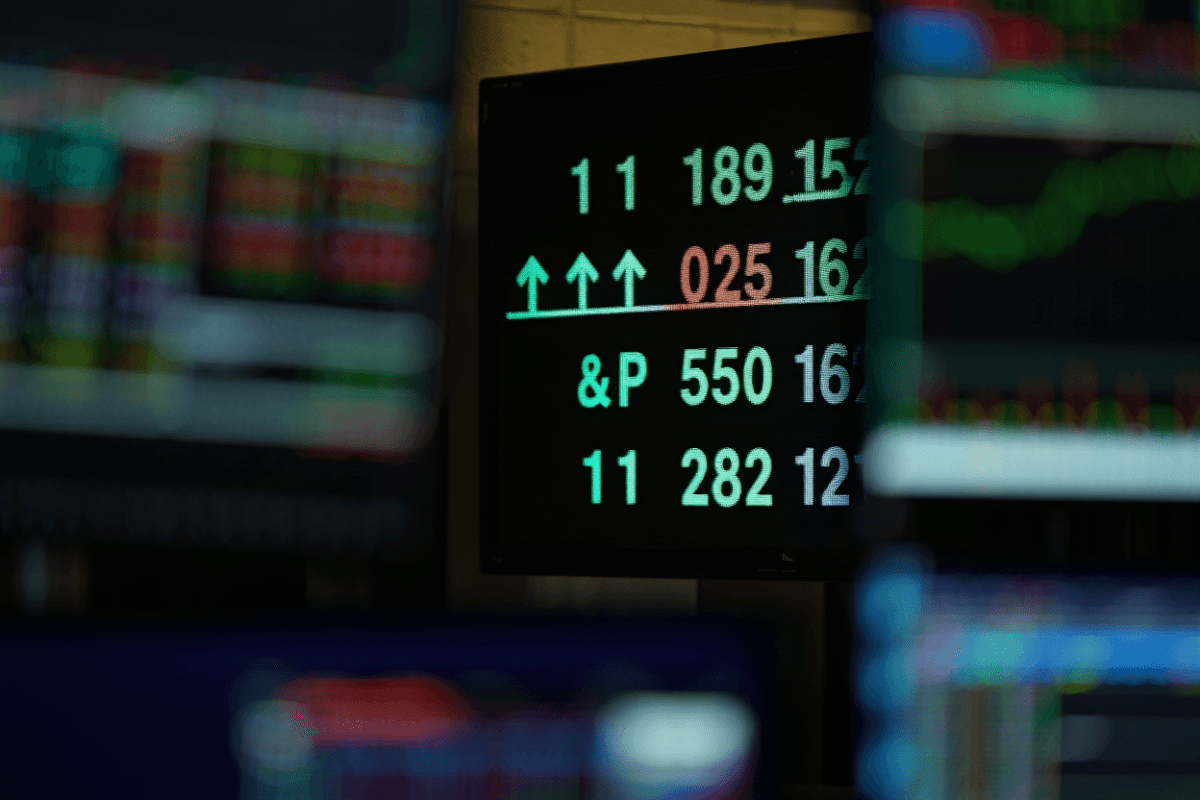
The stock market hit a record close last night as weak July jobs data eased concerns about aggressive Federal Reserve rate hikes, with the S&P 500 gaining 0.62% to finish at 7,757.64 and the Nasdaq climbing 1.30%.
The Labor Department reported that the U.S. economy lost 23,000 jobs in July, far below the 83,000-job gain economists had forecast, according to Reuters and Kiplinger. The unemployment rate ticked down to 4.1%, according to the Wall Street Journal and USA Today, signaling unexpected weakness in the labor market despite a lower jobless rate.
Markets rallied on the report because weaker employment data typically reduces the likelihood of near-term interest rate increases. According to Business Insider, “a weaker job market means the Fed might not have to rush to hike rates,” though the outlet also noted that poor employment figures paint a troubling picture of the broader economy. Traders had been bracing for a potential rate hike in September; the softer-than-expected jobs report shifted those expectations, lifting bond prices and stock valuations.
The Dow Jones Industrial Average rose 151.83 points, or 0.28%, to 54,036.93, according to U.S. News. The tech-heavy Nasdaq Composite gained 342.26 points, or 1.30%, according to Herald Economics. This marks the third record close for the S&P 500 in a single week, reflecting a broader rally that has accelerated since early August as stocks poised for new highs in August.
The July jobs miss represents a dramatic reversal from June, when employers added 57,000 jobs, according to the New York Times. The deterioration in hiring, combined with recent stock market futures edge higher as Wall Street awaits July jobs report, had left investors uncertain about the economic trajectory. The sharp swing in employment data underscores how sensitive markets have become to labor-market signals in determining monetary policy direction.
Federal Reserve officials have signaled they are data-dependent in setting policy. Weak employment figures typically reduce inflation pressures and ease the case for rate hikes, which had been a concern for equities earlier in the year. The combination of softer hiring and a lower unemployment rate suggests a labor market in transition—one that is cooling enough to give the Fed room to pause or cut, yet still resilient enough to avoid triggering recession alarms.
Sources
- Reuters — S&P 500 record close, July job loss of 23,000, economist forecast of 83,000 job gains
- U.S. News & Money — S&P 500 close at 7,757.64, Dow gain of 151.83 points to 54,036.93
- Wall Street Journal — unemployment rate fell to 4.1% in July
- Kiplinger — July jobs report details, 23,000 job loss, economist expectations
- Business Insider — explanation of why stocks rally on weak jobs data and Fed rate-hike implications
- Herald Economics — Nasdaq Composite gain of 342.26 points, 1.30% rise
- Yahoo Finance — July unemployment rate and jobs report details
- USA Today — July jobs loss and unemployment rate
- The New York Times — June jobs addition of 57,000