The Democratic Socialists of America reached 120,000 members on July 4, 2026, making it the largest socialist organization in United States history and surpassing the Socialist Party of America’s 1912 peak of 113,371 dues-paying members, according to the organization’s official announcement.
The milestone represents extraordinary growth for an organization that had roughly 50,000 members in October 2024, just after Donald Trump won a second term as president. According to the Washington Post, DSA membership has more than doubled since that election, driven by what the organization’s leaders describe as unprecedented enthusiasm for democratic socialist candidates and policies.
DSA’s expansion accelerated dramatically starting in late 2024, with membership growing 65.6% in 2025 alone, according to a February 2026 report from the organization’s internal publication Democratic Left. By February 2026, the organization had already crossed 100,000 members, with New York City’s chapter alone accounting for nearly 14,000 of them. The growth reflects a broader shift in American politics, with a CNN poll released in late July 2026 finding that one-third of Democrats and Democratic-leaning adults now identify as democratic socialists.
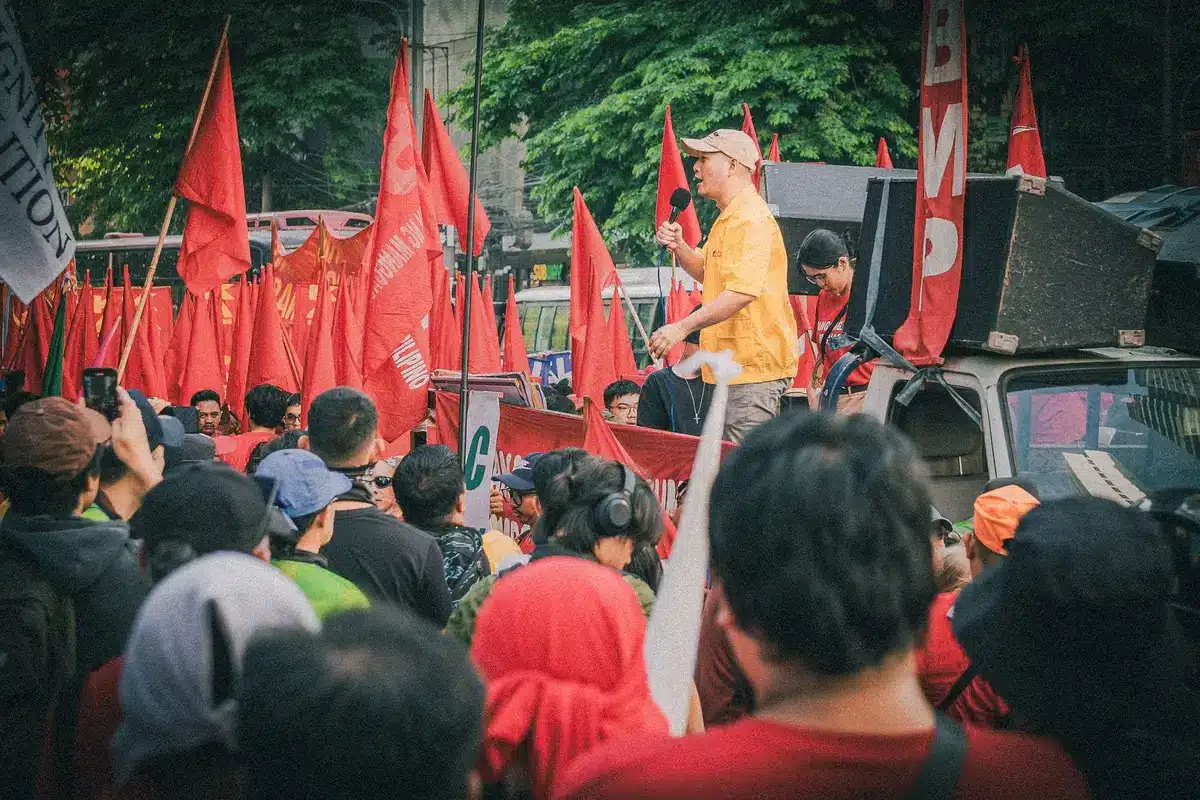
Much of the recent surge traces to the October 2024 launch of Zohran Mamdani’s campaign for New York mayor. Mamdani, a longtime DSA activist and state assemblymember, won the mayoral race and became the highest-profile democratic socialist elected official in the country. According to reporting on DSA’s growth, his campaign catalyzed a wave of new membership and energized the organization’s infrastructure for electoral work.
The organization’s growing political clout became evident in the 2026 primary season. DSA-endorsed candidates and candidates backed by local DSA chapters swept dozens of Democratic primaries across the country, from city council races to congressional contests, in some cases defeating veteran Democratic incumbents. According to the Washington Post, this electoral success has prompted serious strategic questions within DSA about whether to continue working within the Democratic Party or pursue what some members call a “dirty break” to form an independent political force.
The rapid growth reflects broader patterns identified by scholars studying what are called “movement parties”—organizations that serve as a nexus for activists from different social movements to shape electoral processes. According to an analysis in In These Times, DSA’s expansion is part of a global phenomenon of educated voters and activists who distrust traditional political establishments and have formed new political organizations to challenge them. The organization’s growth accelerated after the 2016 election of Bernie Sanders to the Senate and again after Trump’s 2016 victory, but the most recent surge began after late 2024.
DSA’s platform includes positions far outside mainstream Democratic politics, including abolishing the U.S. Senate, defunding the Pentagon, and opening borders. Yet the organization’s leaders argue these long-term goals should not prevent them from running candidates in competitive races outside deep-blue urban areas. A leading example is Francesca Hong, a DSA member who leads Wisconsin’s Democratic gubernatorial primary with 38% support, in a crucial swing state race ahead of the August 11 primary.

The organization’s political success has sparked alarm among Democratic Party establishment figures. According to the Washington Post, a Washington Post-Ipsos survey found that 75% of Democrats would support a democratic socialist for president, but fewer than half of all Americans felt the same way. This gap underscores the tension DSA faces: while the organization is reshaping Democratic primary politics, its platform and candidates remain controversial in general elections.
DSA leadership is now grappling with questions about its next phase. At a three-day summit in Chicago in early August 2026, attended by 600 members, DSA co-chair Ashik Siddique told the Washington Post: “I never thought this would be possible in my lifetime. It definitely has been a shock to some of us to see the gains we are making, but it doesn’t come from nowhere.” The organization is already preparing to make a 2028 presidential endorsement, with Rep. Alexandria Ocasio-Cortez mentioned as a potential frontrunner should she decide to run.
Sources
- Washington Post — DSA membership surge to 120,000, primary election wins, and internal strategy debates
- In These Times — DSA growth as part of global “movement party” phenomenon and analysis of member demographics
- Democratic Left — membership growth statistics and organizational developments
- University of Washington — historical data on Socialist Party of America 1912 membership peak
- Wikipedia / Britannica — confirmation of 1912 Socialist Party peak membership
- Daily Signal — DSA July 4, 2026 membership announcement
- CNN — poll on Democratic identification with democratic socialism