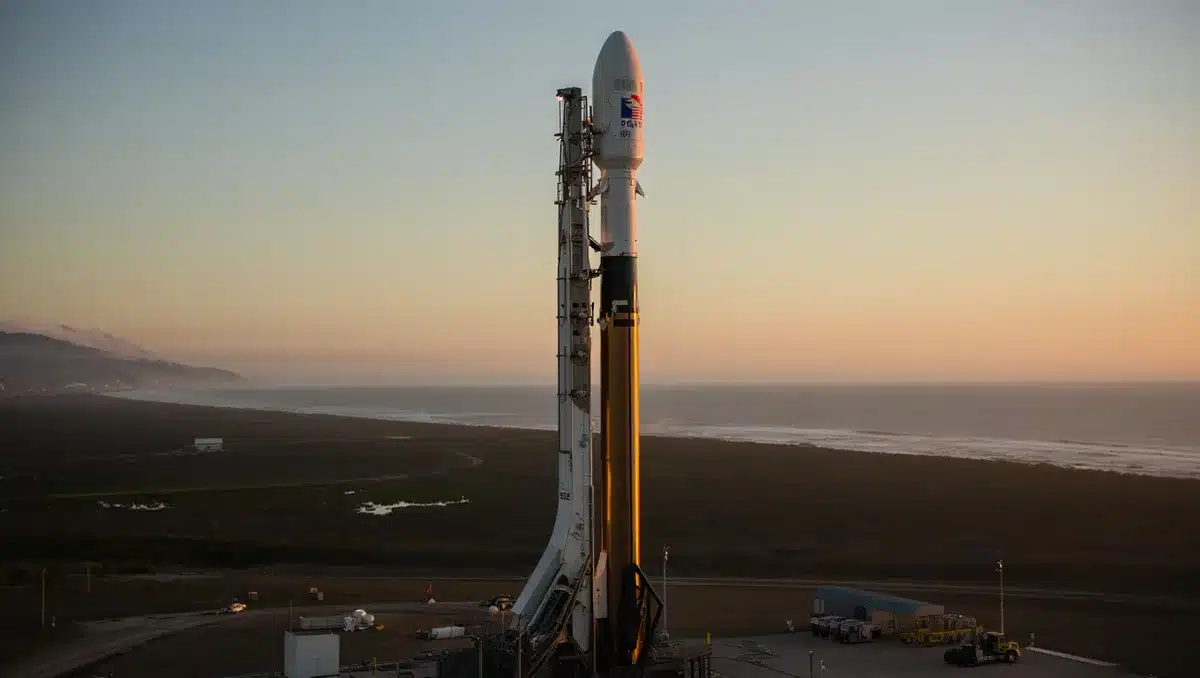
SpaceX has secured a $1.6 billion U.S. Space Force contract for 18 Falcon 9 launches through 2027, marking the largest publicly announced batch of missions under the National Security Space Launch Phase 3 Lane 1 program. The award covers launches from Vandenberg Space Force Base in California to deploy military satellites that detect, track, and communicate information about airborne threats in near real time.
The contract consists of two task orders supporting the Space Based Sensing and Targeting portfolio, a collection of satellite programs designed to improve how the military detects and tracks threats. The launches must be completed by the end of 2027, requiring an average of roughly one mission per month from Vandenberg depending on satellite delivery schedules.
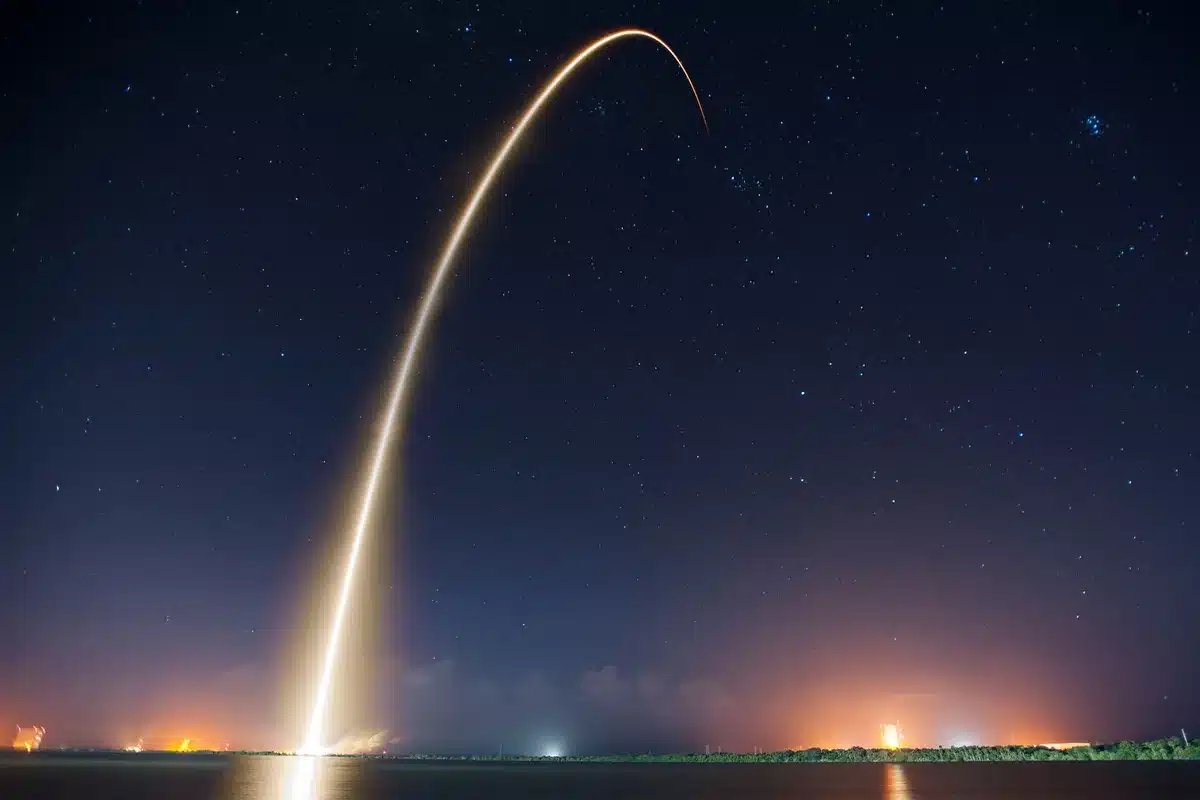
The Space Force achieved an unprecedented acquisition timeline for the award, completing the procurement in roughly two months from requirement identification to contract award, according to Col. Eric Zarybnisky, the Space Force’s acting portfolio acquisition executive for space access. This rapid pace reflects the military’s urgent demand for launch capacity to support next-generation satellite networks.
SpaceX’s dominance in military launch stems partly from its existing infrastructure and operational capability. The company currently holds the only combination of launch frequency, operational Falcon 9 rockets, and West Coast infrastructure needed to support a campaign of this scale, according to SpaceNews. Beyond providing launches, SpaceX is also building two of the portfolio’s largest satellite systems under separate multibillion-dollar contracts: a $2.29 billion Space Data Network Backbone for secure military communications and a $4.16 billion Airborne Moving Target Indicator system designed to track aircraft and other airborne targets from orbit.
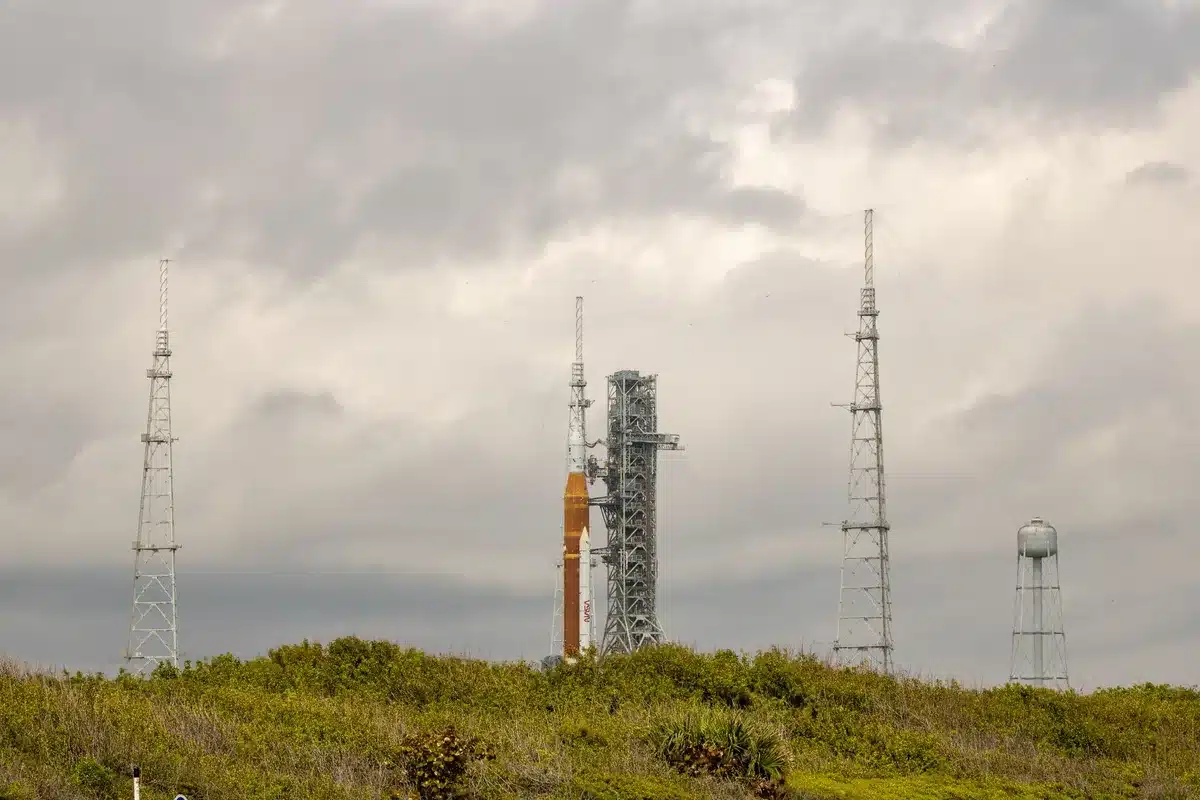
The award follows the Space Force’s decision earlier in July 2026 to raise the Phase 3 Lane 1 contract ceiling from $5.6 billion to $17 billion, reflecting expectations that military launch demand will grow substantially faster than originally anticipated. Seven companies currently hold positions on the Lane 1 contract vehicle, yet only SpaceX has demonstrated the operational capacity to execute large-scale national security launch campaigns at the required pace.
The Space Based Sensing and Targeting portfolio oversees multiple critical programs, including the Space Development Agency’s Tracking Layer—a constellation of infrared satellites designed to detect and track advanced missile threats—and the Space Data Network Backbone that moves large volumes of military data across the Joint Force using optical links between satellites. The portfolio represents a significant shift in how the U.S. military approaches space-based sensing and communications, moving toward resilient, distributed architectures rather than relying on a small number of large satellites.
Sources
- SpaceNews — contract award details, portfolio overview, SpaceX’s satellite system contracts, Lane 1 program context
- U.S. Space Force Space Systems Command — official task order announcement, acquisition timeline, mission schedule, Col. Zarybnisky statement
- Finance.yahoo.com — contract value and launch schedule confirmation
- Aviation Week — Space Based Sensing and Targeting portfolio details