SpaceX launched Starship Flight 13 on July 24, 2026, from its Starbase facility in Texas, marking the second test flight of the company’s third-generation rocket and the first time the vehicle deployed operational Starlink V3 satellites to orbit.
The 397-foot-tall two-stage rocket, powered by 33 Raptor engines generating 16 million pounds of thrust, lifted off at 5:51 p.m. EDT after a pair of earlier delays. The launch came two weeks after a July 16 abort when four engines failed to ignite properly, and a 24-hour delay on July 23 due to low clouds.
The booster ascended and separated cleanly from the Starship upper stage, then executed a boostback burn and descent toward the Gulf of Mexico. However, as it approached splashdown, only 10 of 13 engines restarted, and just five remained firing at impact, resulting in a “hard” splashdown at higher velocity than planned. The booster is designed to eventually be caught mid-air by mechanical arms at the launch pad, but SpaceX opted for Gulf splashdowns during early V3 flights as a safety precaution.
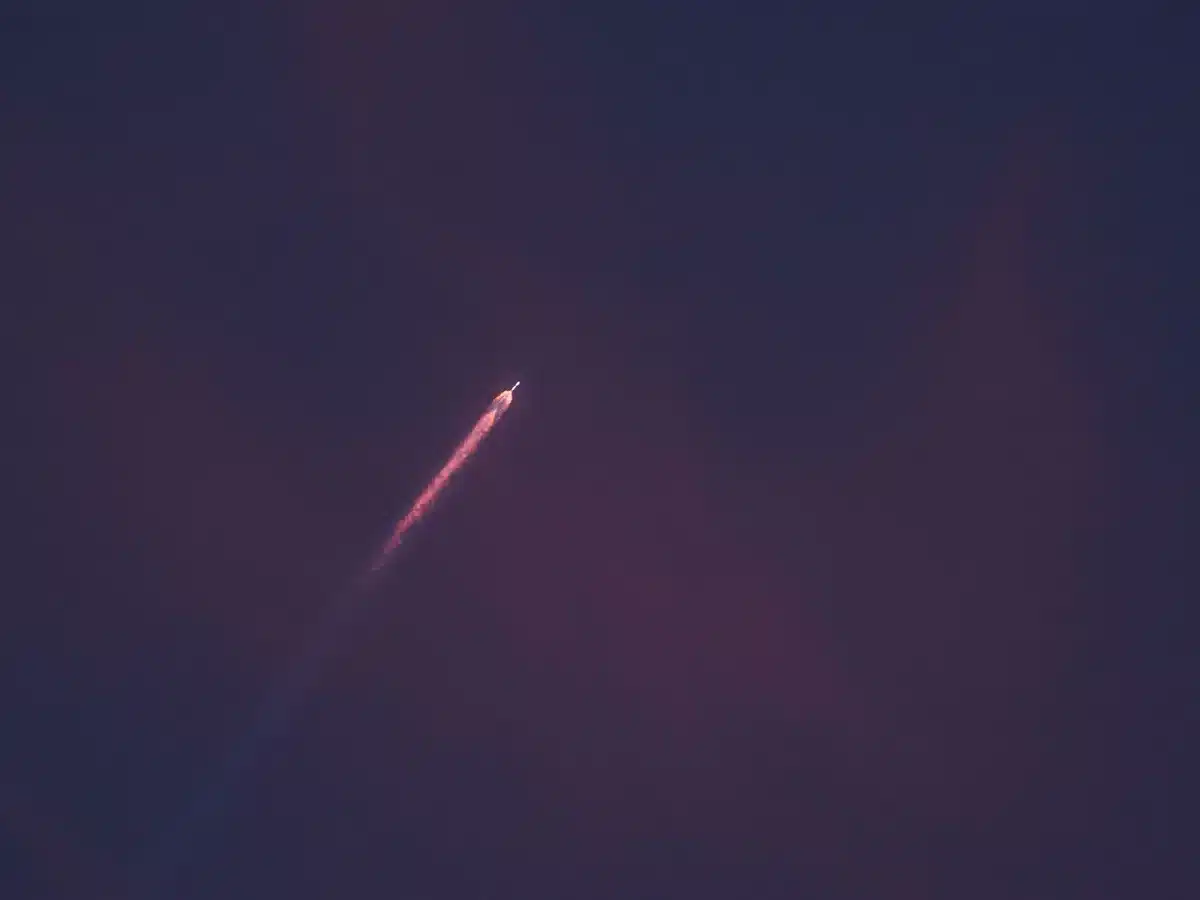
The Starship upper stage performed flawlessly. All six of its Raptor engines operated smoothly during ascent, and once coasting on a sub-orbital trajectory, the vehicle deployed 20 next-generation Starlink V3 satellites—the first operational deployment of this generation from Starship. Six of the satellites carried cameras to inspect the Starship’s heat shield tiles, helping engineers assess how useful onboard video will be for determining vehicle health before future re-entries.
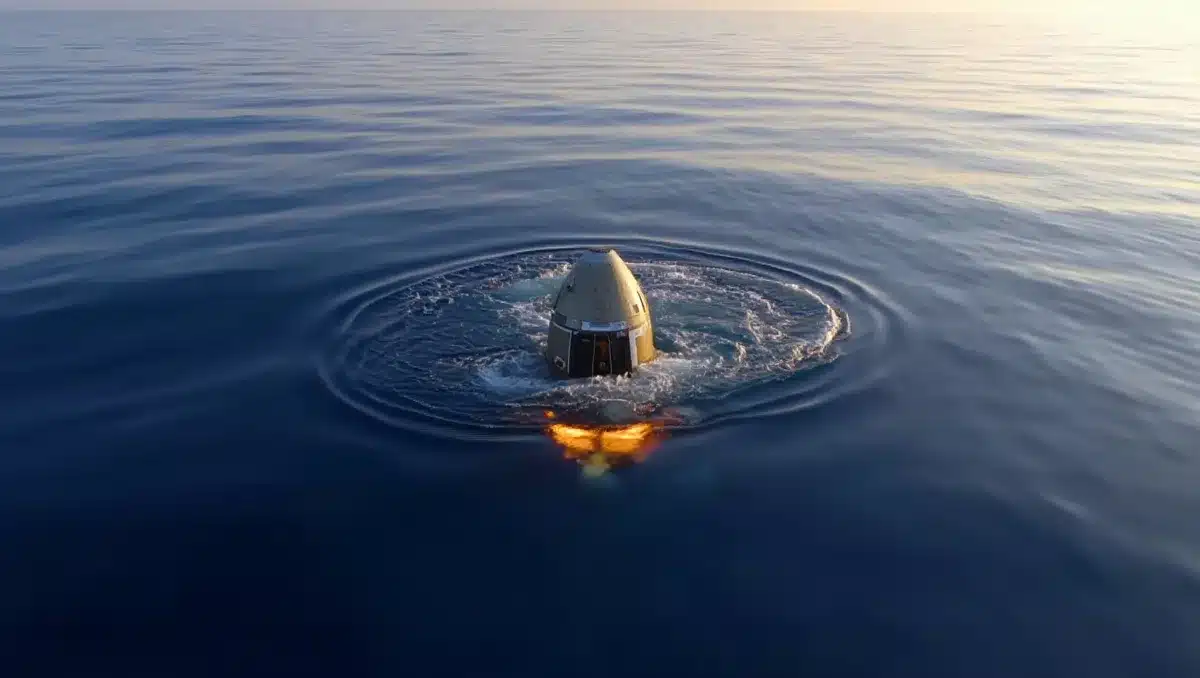
The upper stage then briefly re-ignited one Raptor engine in space, demonstrating the capability needed for future lunar missions. After a belly-first re-entry through blazing heat, the Starship flipped upright and executed a rocket-powered splashdown in the Indian Ocean one hour and five minutes after launch. For the first time, the Starship remained fully intact after splashdown, floating on the surface with many onboard cameras still operational—a significant milestone for the program.
This flight built on lessons from Starship Flight 12 in May, the first V3 test. During that mission, the booster experienced engine-out events and made a hard splashdown in the Gulf of Mexico, while the upper stage successfully deployed Starlink satellites and splashed down in the Indian Ocean. Flight 13 showed improved booster performance during ascent, though the landing burn engine issues persisted—a problem SpaceX engineers are actively working to resolve.
The successful upper-stage performance carries weight for NASA, which is counting on a modified Starship variant to serve as a lunar lander for the agency’s Artemis program. For moon missions, SpaceX will need to launch up to 15 Super Heavy-Starship tankers to refuel the lander before it can head to the lunar surface. NASA targets the first crewed lunar landing for 2028, a timeline that requires SpaceX to accelerate its test schedule and demonstrate the reliability needed to safely launch multiple tankers in quick succession.
However, the Government Accountability Office warned in a report released Thursday that SpaceX faces major hurdles. “SpaceX’s progress in developing its cryogenic fuel management technologies is a top risk for the program,” the GAO stated, citing concerns about on-orbit propellant transfer between multiple Starship vehicles—a critical capability for lunar missions. The agency also noted that SpaceX is more than a year behind schedule on key milestones, including the critical design review and long-duration propellant transfer demonstrations.

NASA is hedging its bets by also supporting Blue Origin’s lunar lander development, though that program has encountered setbacks. Blue Origin’s New Glenn rocket exploded during an engine test in early 2026, seriously damaging its launch pad. The company hopes to resume test flights by year’s end.
SpaceX continues to accelerate its test cadence. The company has already logged more than 70 launches in 2026 across its Falcon 9 and Starship programs, demonstrating the operational tempo required to support both commercial missions and the ambitious lunar timeline.
Sources
- Spaceflight Now — detailed account of Flight 13 launch, booster performance, upper-stage achievements, splashdown details, and GAO concerns about lunar lander readiness
- Space.com — Flight 13 test objectives, booster and upper-stage primary goals, higher dynamic pressure ascent testing
- SpaceX official launch page — mission timeline, launch window, vehicle configuration, and stage separation confirmation
- NBC News — confirmation of successful launch after delays
- SpaceX X post — splashdown confirmation