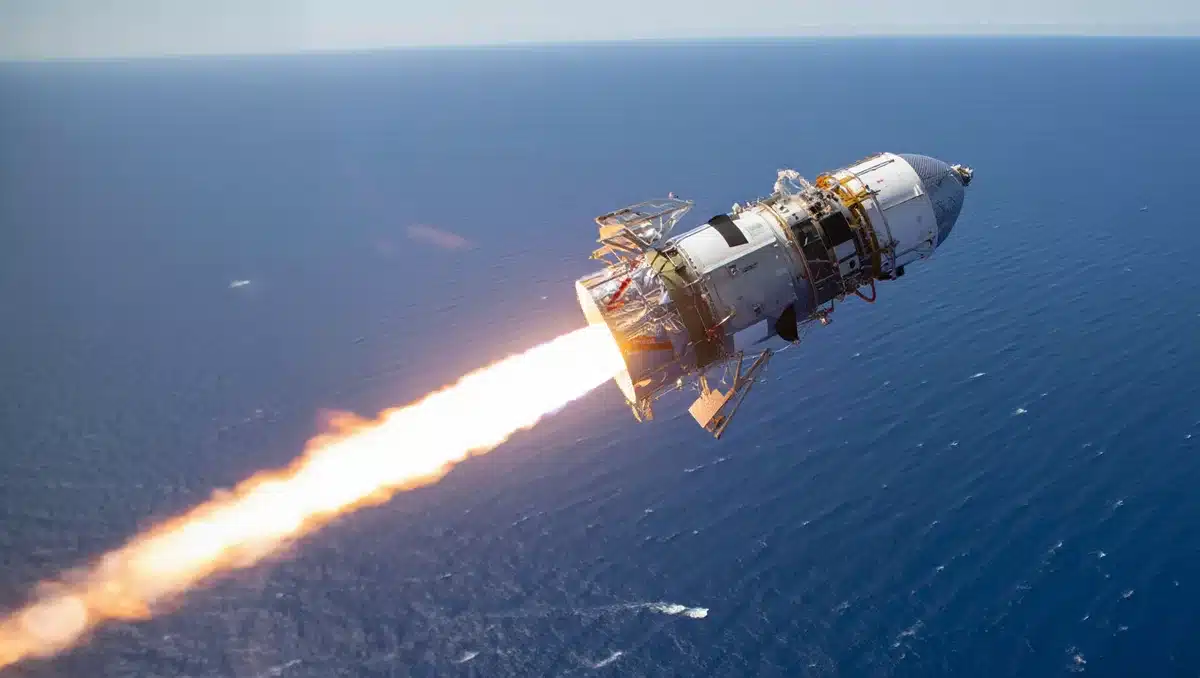
SpaceX’s Starship Flight 13 achieved the softest splashdown yet for the reusable rocket system on July 24, 2026, after successfully deploying 20 next-generation Starlink V3 satellites into orbit. The upper stage executed a controlled reentry and water landing in the Indian Ocean, with SpaceX mission control describing the impact as “the softest splashdown we have ever had with Starship.”
The flight marked a major milestone for SpaceX’s satellite constellation, as the 20 Starlink V3 satellites represented the first operational deployment of the company’s newest generation hardware. These satellites feature dramatically enhanced capabilities compared to earlier versions, with each unit delivering 1 terabit per second of downlink capacity and 160 gigabits per second of uplink capacity—roughly 10 times the throughput of the previous V2 generation.
The Super Heavy booster, the first stage of the Starship system, completed its own primary objectives by executing a successful launch, stage separation, boostback burn, and controlled landing six minutes after liftoff in an offshore location in the Gulf of Mexico. This marked another successful demonstration of the booster’s landing capabilities, a critical step toward SpaceX’s goal of achieving fully reusable launch operations.
Flight 13 came after an earlier launch attempt on July 16, 2026, which was aborted when some of the booster’s engines failed to ignite during the final countdown. SpaceX conducted post-abort engine work before rolling out the vehicle for a second attempt, which proved successful. The mission represents SpaceX’s continued progress in testing and refining the Starship system’s capabilities, including precision landing control and the ability to safely deploy large satellite payloads to orbit.

The Starlink V3 satellites deployed on this flight are designed to meaningfully increase the capacity and performance of SpaceX’s global internet constellation. The company plans to deploy additional V3 satellites on future Starship flights as it works toward expanding network coverage and connection speeds for users worldwide. Each V3 satellite weighs approximately 2,000 kilograms, significantly heavier than earlier generations, reflecting the additional hardware required to deliver the enhanced capabilities.
Sources
- Space.com — Reported the softest splashdown achievement and the successful deployment of 20 Starlink V3 satellites on Flight 13
- SpaceflightNow — Covered the mission objectives including booster boostback burn and satellite deployment details
- MyRGV — Documented the Super Heavy booster’s controlled offshore landing and Starship’s intact splashdown
- Teslarati — Provided details on Starlink V3 satellite specifications and the first deployment of functional prototypes
- TechTimes — Reported on V3 satellite capabilities and the mission’s significance for SpaceX’s constellation expansion