Governor Kathy Hochul and Mayor Zohran Mamdani unveiled a sweeping bus action plan on July 8 that targets 50 priority corridors across New York City’s five boroughs for speed improvements, promising to cut commute times by up to six minutes per trip. The plan, titled “Next Stop: Fast Buses, Better Service,” aims to increase bus speeds by 20% on these routes while transforming the city’s bus system through dedicated lanes, new vehicles, and operational changes.
New York’s buses currently average just 8 miles per hour, making the system the slowest of any major U.S. city despite carrying 2.75 million trips daily. The new plan represents the first major partnership between the New York City Department of Transportation and the MTA in years to directly address this persistent problem.
Five corridors have been selected for next-generation rapid bus service: Tremont/Cross Bronx in the Bronx, Northern Boulevard in Queens, Flatbush Avenue in Brooklyn, Utica Avenue in Brooklyn, and Kensington-JFK spanning Brooklyn and Queens. These routes will receive dedicated, protected bus lanes, frequent all-day service, upgraded stations with sheltered waiting areas, and public space improvements modeled after world-class rapid bus systems.
The plan includes roughly 2,500 new buses through the MTA’s $68 billion 2025-2029 capital program, replacing 40% of the aging fleet. All-door boarding will be phased in citywide by 2027, reducing time buses spend idling at stops. The city has committed $254 million in expense funding and $628 million in capital funding over five fiscal years to execute the plan.
Keeping bus lanes clear is critical to success. Automated Camera Enforcement has increased bus speeds by as much as 30% while reducing collisions by 20% on routes where it operates. The plan calls for expanding bus-mounted enforcement to 25 additional routes each year in 2026 and 2027, installing 200 stationary bus lane cameras by 2027, and expanding targeted NYPD enforcement from 14 to 20 corridors beginning this year.
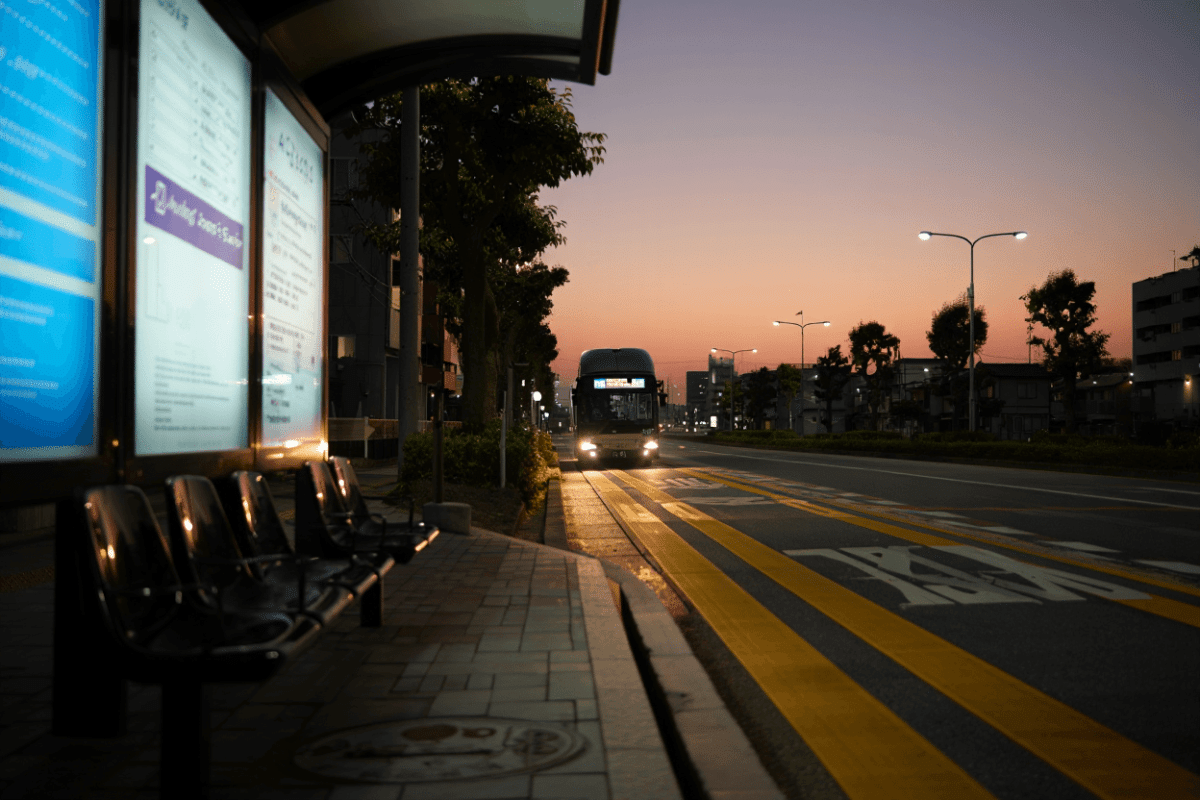
Rider experience improvements include installing 300 new bus shelters by 2028, adding seating at 875 bus stops annually to ensure every feasible stop has seating by 2035, planting 30 trees at bus stops in 2026, and installing 90 new real-time passenger information displays in 2026, expanding to 2,900 displays citywide by 2030.
MTA Chair and CEO Janno Lieber emphasized the political shift enabling the plan. “For years, we at MTA have wanted more bus lanes, more enforcement of cars and trucks blocking bus lanes. Faster buses,” he said. “But it’s no secret we didn’t have support at the local level. That is not the case anymore.”
Sources
- NYC.gov — Official announcement of the plan with details on 50 corridors, speed targets, five rapid bus routes, all-door boarding timeline, new buses, shelters, and seating commitments
- Governor Kathy Hochul official website — Joint announcement with identical plan details, quotes from Hochul, Mamdani, and MTA leadership, and bus lane enforcement statistics
- Spectrum News NY1 — Reporting on the 20% speed increase target, 50 priority corridors, all-door boarding by 2027, and bus shelter/seating plans
- CBS News New York — Coverage of the plan’s goal to reduce commutes by up to six minutes on 50 priority corridors
- NYC Comptroller — Data confirming NYC buses average 8.17 mph as of 2024, the slowest major U.S. city
- New York Daily News — Reporting on the 20% speed increase and six-minute time savings on priority corridors