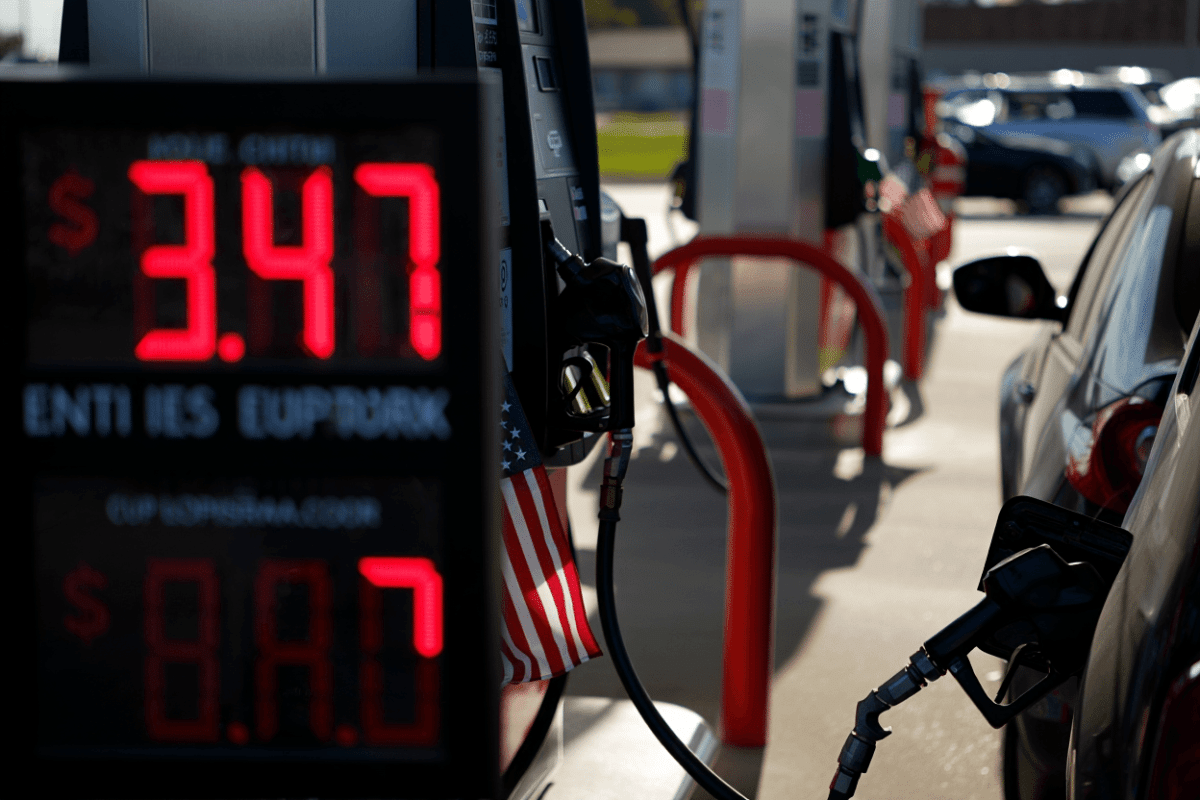
The White House announced 25 Freedom Fuel gas stations across the greater Philadelphia area on July 7, all selling regular fuel at $3.47 a gallon. The announcement came via video posted to social media, featuring customers praising the lower prices as an Independence Day gift from President Donald Trump.
The price undercuts the national average of $3.79 per gallon on the same day, according to AAA data cited by USA Today. At the Dresher, Pennsylvania location in Upper Dublin Township—a former Sunoco station—nearby competitors were charging significantly more: a Citgo station nearby offered regular at $3.79, while a Gulf station charged $3.85.
The White House confirmed the Freedom Fuel Network is a private company, not a government program. A White House spokesperson told the Inquirer that the administration has not provided funding and the company is not purchasing gasoline at a discount. The spokesperson did not elaborate on how the stations are able to offer such low prices.
Patrick De Haan, head of petroleum analysis at GasBuddy, questioned the model’s sustainability. “Stations selling at this price, it’s not sustainable,” De Haan said, according to the Inquirer. “Generally, when losses happen, somebody’s got to pay for it.” De Haan’s cost analysis suggested that anything under $3.67 per gallon is not sustainable for typical gas station operations with standard overhead costs.
De Haan pointed to a possible precedent: T-Mobile’s temporary takeover of Shell stations in Los Angeles, Houston, and Chicago in June 2026, where the company subsidized $1.99 gas as part of its T-Mobile Tuesdays promotion. “Someone is funding the difference, they’re offering a lower price that’s being subsidized by an unknown source,” De Haan told NJ.com. “It could be anyone funding this.”
The Freedom Fuel Network has minimal public information beyond a trademark application filed in Delaware on July 1 for Freedom Fuel Network, LLC. The network’s website lists 25 locations across Pennsylvania and New Jersey but provides no details on ownership, pricing structure, or how long the discounted prices will remain in effect. The company did not respond to requests for comment from the Inquirer.
Gas prices have been declining in recent weeks after a tentative ceasefire agreement between the United States and Iran in June reopened the Strait of Hormuz, a critical shipping lane that had been disrupted since May when the U.S. attacked Iran. That conflict had sent crude oil prices soaring, with Brent crude spiking more than 55% and peaking near $120 per barrel, according to USA Today. The Philadelphia area’s average gas price stood at $3.95 on July 7, up nearly 20% from a year earlier when it averaged $3.31, the Inquirer reported.