The U.S. Department of Agriculture’s Food Safety and Inspection Service (FSIS) issued a public health alert on June 25, 2026, for Kroger Private Selection Honey Dijon Boneless Skinless Chicken Breasts sold in nine states due to an undeclared egg allergen that could pose a serious risk to consumers with egg allergies.
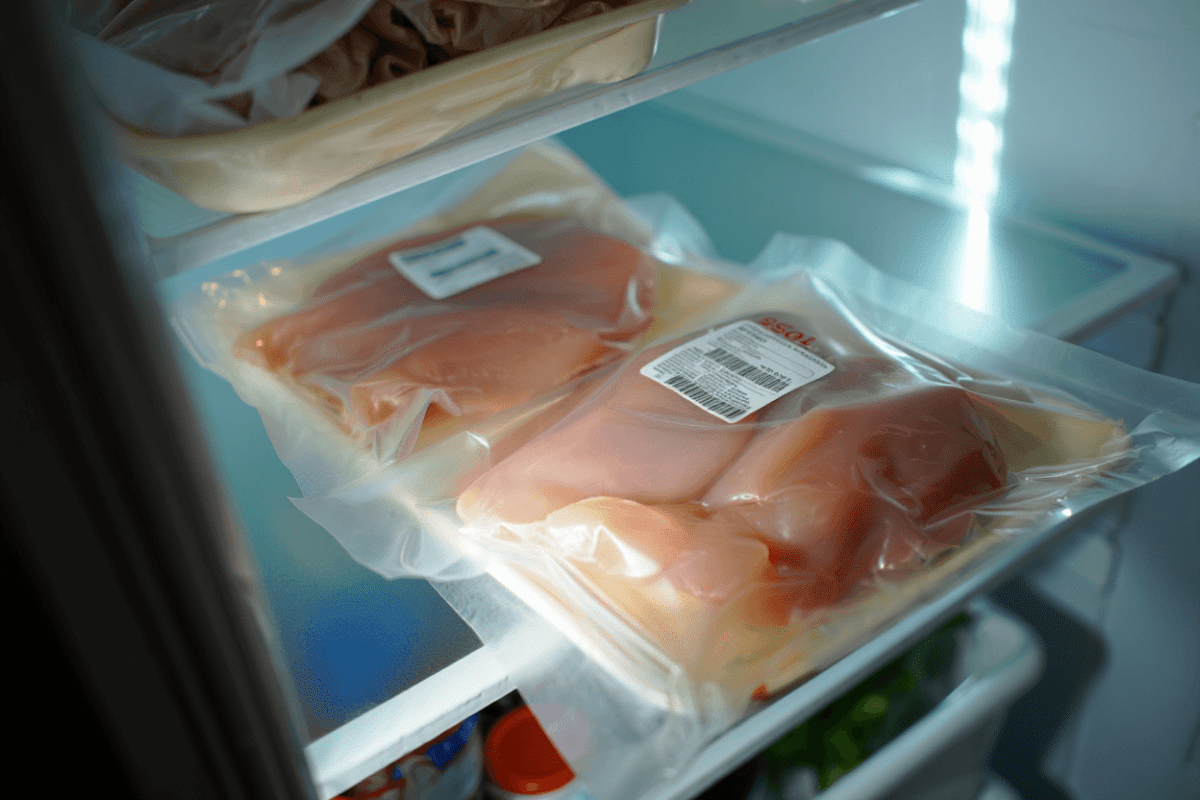
The affected products were produced on June 2, 2026, and include 21-ounce vacuum-packed packages bearing lot code 15326A, establishment number P-45288B, and a “best if used by” date of June 28, 2026. The chicken breasts were distributed to Kroger and Fred Meyer stores across Alabama, Alaska, Idaho, Illinois, Indiana, Kentucky, Tennessee, Oregon, and Washington.
A labeling error triggered the alert. According to the FSIS notice, a store employee discovered that the correct label was applied to the front of the product, but an incorrect label—missing the egg ingredient statement—was applied to the back where ingredient information is typically listed. The retailer notified the producing establishment, FW Farms of Fort Worth, Texas, which then notified FSIS.
Because the product is no longer available for purchase, the FSIS issued a public health alert rather than a formal recall. However, the agency expressed concern that some packages may remain in consumers’ refrigerators or freezers. Anyone who purchased the affected chicken should not consume it and should discard the product or return it to the store.
As of the alert date, no confirmed reports of adverse reactions have been reported. However, for people with egg allergies, consuming undeclared egg can trigger reactions ranging from mild symptoms like hives and itching to severe responses including anaphylaxis, a life-threatening condition characterized by difficulty breathing and a sharp drop in blood pressure, according to FDA guidance on food allergies.
Undeclared allergens have emerged as a leading driver of food recalls in recent years. According to a 2026 analysis by Esko, milk and dairy were the most frequently undeclared allergens in 2025, appearing in around 30% of allergen-related recalls, followed by tree nuts and wheat. A report from TraceGains found that 140 FDA food recalls occurred in the first quarter of 2026 alone, with undeclared allergens remaining a significant concern. Research has shown that most undeclared allergen recalls result from labeling-related errors, including wrong labels, wrong packaging, and ingredient statement mistakes—the exact type of error that triggered the Kroger chicken alert.
Sources
- Delish — Product details, affected states, labeling error explanation, and no adverse reactions reported
- The Indianapolis Star — Public health alert confirmation, product specifications, distribution states, and consumer guidance
- Esko — 2025 allergen recall statistics and most common undeclared allergens
- TraceGains — Q1 2026 FDA food recall data and undeclared allergen trends
- FDA — Food allergy reaction severity information