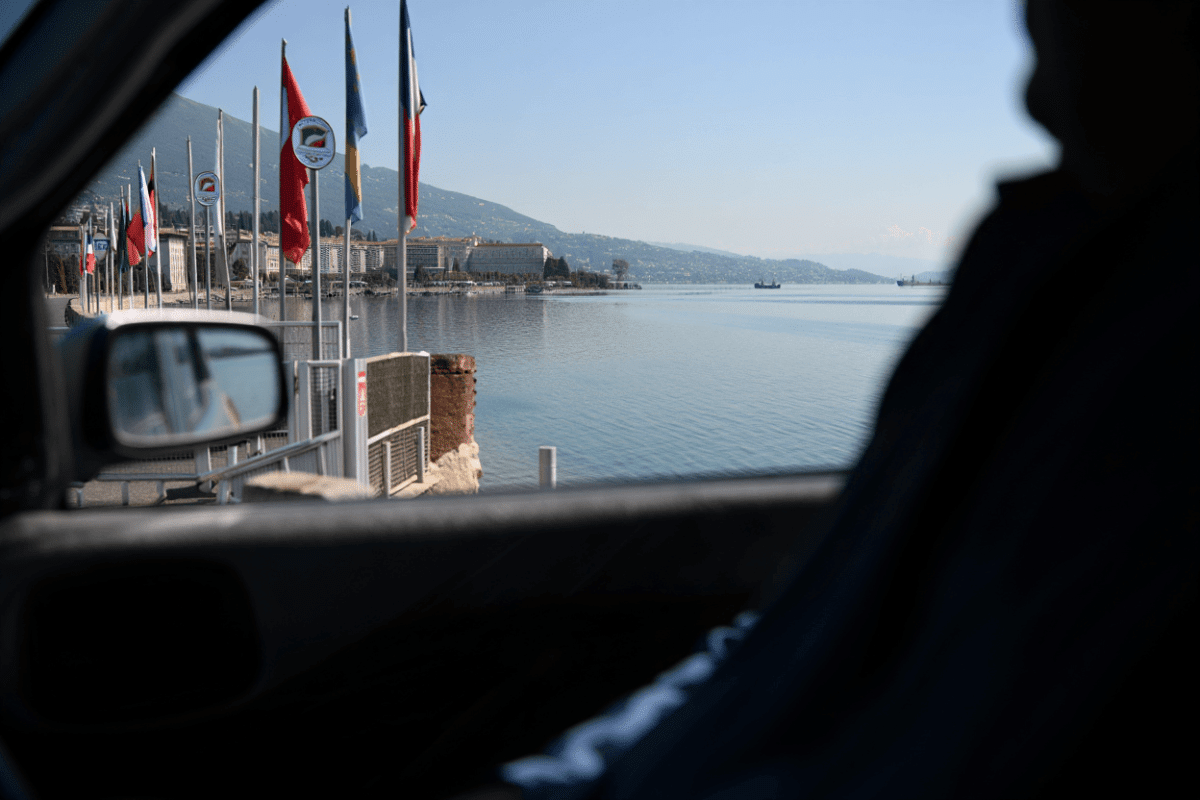
President Donald Trump arrived in Évian-les-Bains, France, on Monday to attend the 52nd G7 summit after announcing a landmark agreement with Iran to end their war and reopen the Strait of Hormuz, bringing a measure of diplomatic momentum to the world leaders’ gathering.
The US and Iran reached a framework deal that includes a 60-day ceasefire and a memorandum of understanding, according to multiple officials and media reports. Trump confirmed the agreement was electronically signed, stating the deal is “all signed” and that the Strait of Hormuz will be “completely open” by Friday. The deal aims to end hostilities that began when the United States and Israel launched coordinated military operations on February 28, 2026.
The ceasefire memorandum extends a previous two-week ceasefire that had been agreed in April 2026. During the 60-day period, both nations will hold negotiations on broader issues, including Iran’s nuclear program, sanctions relief, and frozen assets. The reopening of the Strait of Hormuz, a critical global shipping route through which roughly one-third of the world’s traded oil passes, was central to the agreement after Iran had blockaded the waterway since early March 2026.
G7 leaders expressed relief at the announcement. Canadian Prime Minister Mark Carney said on social media, “Canada welcomes the new agreement between the United States and Iran,” and extended gratitude to Pakistan for its role as mediator in the talks. A joint statement from G7 members emphasized that Iran must never acquire a nuclear weapon and signaled readiness to work with the US, Iran, and the International Atomic Energy Agency on verification.
The Trump administration set a 60-day deadline for Iran to reach an agreement in early 2026. After that deadline passed without a deal, Israel launched numerous strikes against Iran, escalating the conflict. The war disrupted global shipping and oil markets, with the Strait of Hormuz blockade sending energy prices surging. Trump’s willingness to pursue a negotiated settlement, rather than continue military pressure, marked a shift in his approach to the conflict.
While many G7 nations welcomed the ceasefire, Reuters reported that relief was tempered by unease over new Trump tariff threats and other policy concerns. The deal’s durability remains uncertain, with both sides issuing competing claims about its terms and timeline. The formal signing ceremony is scheduled for June 19, according to both US and Iranian officials, though some details of the agreement remain disputed between Washington and Tehran.
Sources
- The New York Times — Trump’s arrival in France and the Iran deal framework
- NPR — US and Iran announcement to end the war and reopen the Strait of Hormuz
- Reuters — G7 leaders meeting after US-Iran agreement; world leaders’ reaction
- AP News — Initial deal to end US-Iran war details and G7 summit coverage
- Britannica — 2026 Iran war start date (February 28, 2026)
- BNN Bloomberg — Canadian PM Mark Carney’s statement welcoming the Iran deal
- ABC News — Trump’s arrival at the G7 summit after Iran deal announcement
- Axios — Deal terms including 60-day ceasefire and Strait of Hormuz reopening
- Global News — G7 statement on Iran nuclear program and international cooperation