Major restaurant chains are accelerating closures across the United States in 2026 as they contend with mounting costs and shifting consumer behavior, yet many are simultaneously doubling down on value menu strategies to retain customers and stabilize their remaining locations.
The scale of the pullback is substantial. Wendy’s announced plans in February to close 298 to 358 US restaurants—roughly 5% to 6% of its footprint—in the first half of the year, citing sliding sales and profits. Pizza Hut intends to shutter 250 US locations by July 1, according to its parent company Yum! Brands, while Jack in the Box expects 50 to 100 closures by the end of June. Papa John’s plans to close approximately 200 stores in 2026 as part of a broader effort to shut down 300 underperforming North American locations by the end of 2027.
Restaurant operators face a perfect storm of pressures. Rising food and labor costs, higher insurance premiums, and increased rent have compressed margins across the industry. According to the National Restaurant Association, food and labor costs for the average restaurant have each increased 35% over the past five years. At the same time, consumers have grown resistant to further price hikes, forcing chains into a difficult bind.
The closures reflect broader market dynamics. Black Box Intelligence data shows 9% of full-service restaurants tracked lost 30% or more of their peak sales between 2019 and 2025. The softening economy that took hold in the second half of 2025 pushed many of those struggling units past the point of viability, according to Victor Fernandez, chief insights officer at Black Box Intelligence. “The restaurant space has been tough. There’s a lot of competition, so it’s a very saturated market to begin with,” he said.
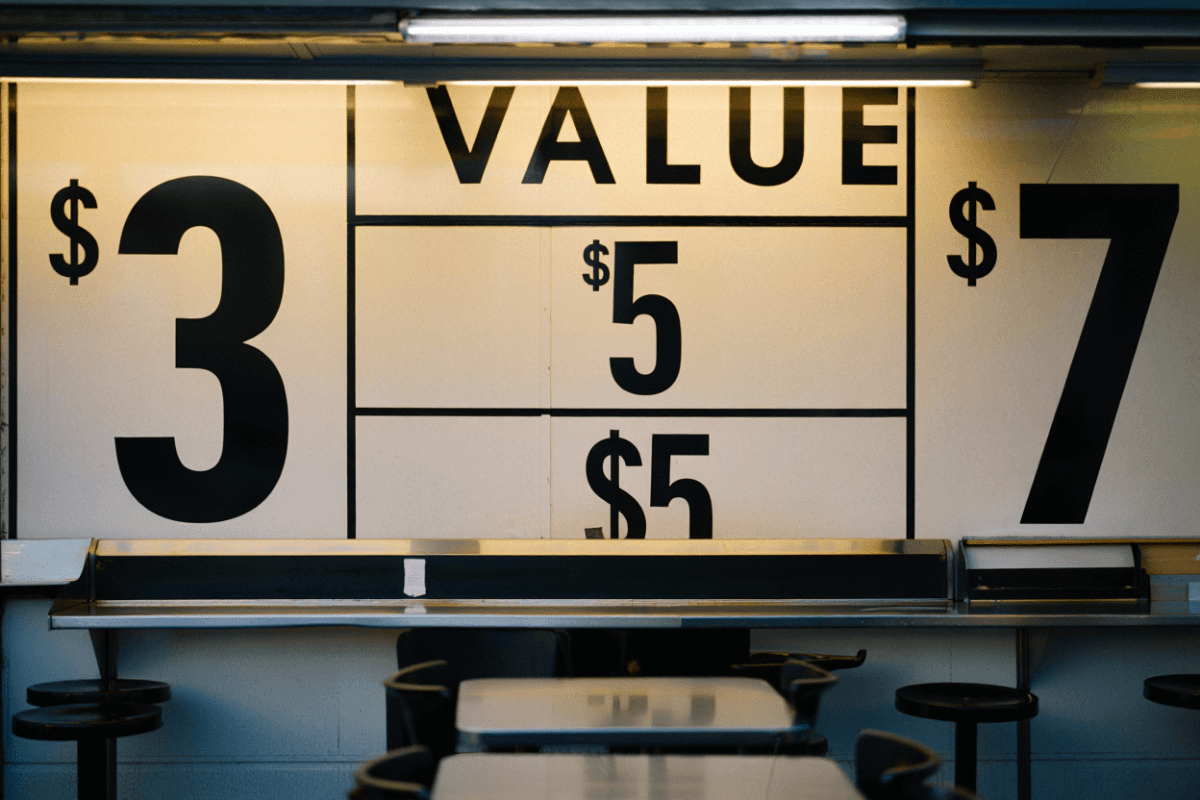
In response, restaurant chains have embraced value menus as a core strategy to compete for price-conscious diners. McDonald’s has seen measurable success with this approach: the chain’s U.S. same-store sales rose 3.9% in Q1 2026 due to its value-menu strategy, according to the Wall Street Journal. The company debuted an Under $3 Menu and a $4 Breakfast Meal Deal after two years of iterating on its value offerings. Red Robin has launched the Big YUMMM Deals starting at $9.99, while Taco Bell continues to lead with its Cravings Value Menu featuring bundled boxes priced between $5 and $7.
The value focus reflects a fundamental shift in consumer behavior. Eat-in occasions as a share of U.S. foodservice dollar sales fell from 56% in 2011 to just 35% in 2025, according to data cited by Morningstar analyst Ari Felhandler. This shift has pressured full-service restaurants with large, costly footprints while favoring limited-service operators who have invested in off-premise channels. Operators are streamlining their physical spaces, reducing table counts, and focusing on what guests actually want, rather than expanding footprints.
The widening gap between restaurant prices and grocery costs has also intensified competition. Grocers benefit from lower labor costs, making them increasingly attractive to budget-conscious consumers. Rising gas prices and declining consumer confidence could further accelerate closures, according to analysts, though the pullback is concentrated among weaker operators rather than signaling systemic industry collapse.
Stronger brands are using the moment strategically. Closures allow robust chains to sharpen their portfolios, secure better real estate, and reposition toward markets that have seen population growth since the COVID-19 pandemic. What will drive durable gains for survivors, according to Felhandler, is investment behind the brand and its value proposition through menu innovation, technology, and operations—not just aggressive discounting.
Sources
- Business Insider — Verified closure announcements for Wendy’s (298-358 locations), Pizza Hut (250 locations), Jack in the Box (50-100 locations), Papa John’s (200 stores), Red Robin, Denny’s, Noodles & Company, and Red Lobster, with CEO statements and earnings call details
- Restaurant Dive — Expert analysis from Victor Fernandez (Black Box Intelligence) on market saturation, Ari Felhandler (Morningstar) on cost pressures and consumer behavior, and data on full-service restaurant sales declines and market dynamics
- Wall Street Journal — McDonald’s Q1 2026 earnings report confirming 3.9% U.S. same-store sales increase driven by value-menu strategy
- National Restaurant Association — Data on food and labor cost increases (35% each over five years) and consumer spending pressures
- McKinsey & Company — Consumer Price Index data showing “food away from home” rose 6% from January 2024 to September 2025, driven by rising labor costs