
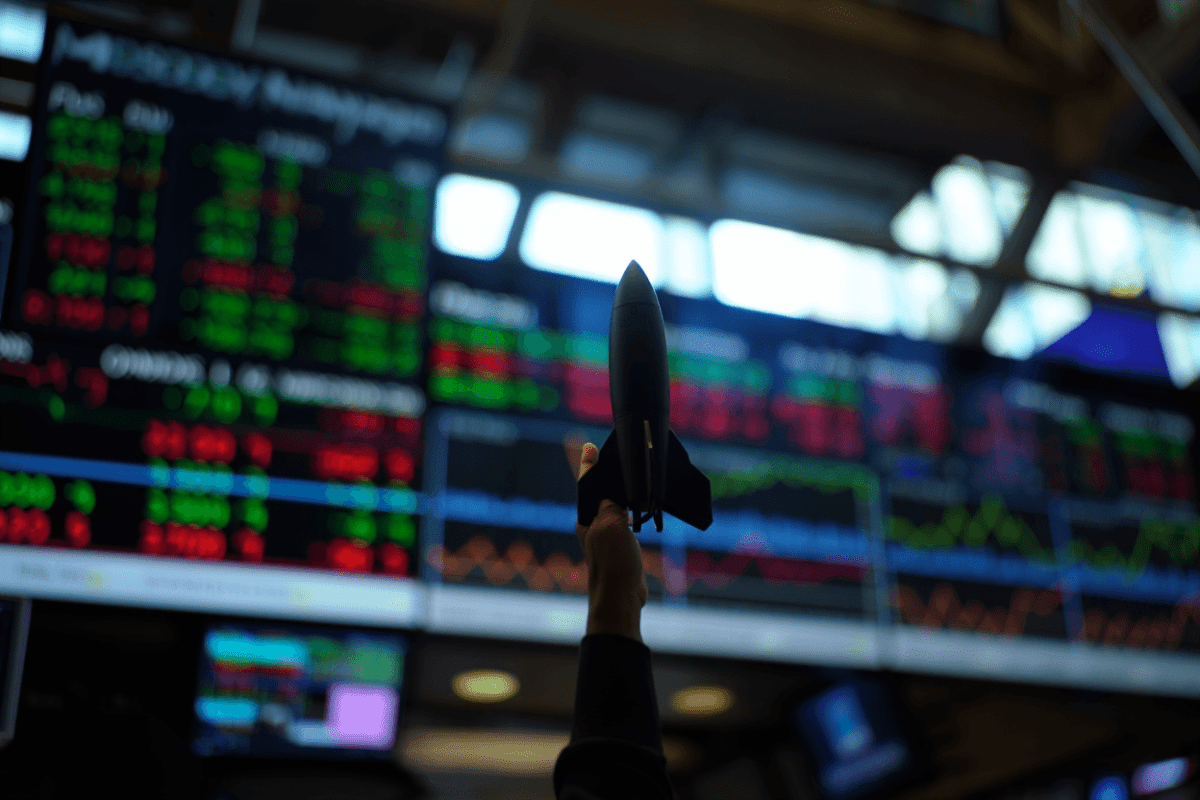
SpaceX’s record $75 billion initial public offering marks the largest IPO in history, with the rocket and satellite company raising capital by selling 555.6 million shares at $135 per share and beginning to trade on Nasdaq under the ticker SPCX on June 12, 2026. The IPO shatters the previous record held by Saudi Aramco, which raised $29.4 billion in 2019. An IPO—or initial public offering—is the process by which a private company first sells shares to the public, transforming into a publicly traded entity and gaining access to capital markets.
An IPO is fundamentally a capital-raising mechanism. When a private company goes public, it issues new shares that investors can buy on an exchange. The company receives the cash from those sales, which it can use for expansion, debt repayment, research and development, or acquisitions. For SpaceX, the $75 billion raised represents an unprecedented pool of capital to advance its space exploration, satellite internet (Starlink), and artificial intelligence ambitions.
How the IPO Process Works
The IPO process is complex and typically takes months. The company first hires investment banks—called underwriters—who conduct due diligence on the business, review its finances, and assess market conditions. Underwriters act as intermediaries between the company and investors, helping prepare and execute the share issuance. The company then files a registration statement (Form S-1) with the Securities and Exchange Commission, detailing its business model, risks, financial performance, and how it plans to use the capital raised.
After SEC review and approval, underwriters conduct roadshows where company executives pitch to institutional investors. Based on investor demand and market feedback, the underwriters set a final share price. On the night before trading begins, they announce the pricing—in SpaceX’s case, $135 per share. When trading opens the next day, the stock can trade at any price based on supply and demand. SpaceX shares opened at $150, up 11 percent from the IPO price, reflecting strong investor appetite.
The precedent set by Saudi Aramco in 2019 illustrates how record IPOs can reshape markets. Saudi Aramco’s $29.4 billion offering was hailed as historic at the time, valuing the oil giant at $1.7 trillion. SpaceX’s debut, at nearly three times that size, signals investor confidence in growth sectors like space technology and satellite communications, even as it underscores the enormous capital requirements of modern industrial ventures.
Beyond capital, going public brings other benefits. It creates liquidity for early investors and employees who hold shares. It increases a company’s visibility and credibility with customers and partners. Public companies can also use their stock as currency for acquisitions. However, going public comes with costs: regulatory compliance, disclosure requirements, quarterly earnings pressure, and loss of founder control as shareholders gain voting rights.
Sources
- Bloomberg — Confirmed SpaceX IPO raised $75 billion at $135 per share, pricing 555.6 million shares
- Reuters — Reported SpaceX priced the world’s biggest IPO at $135 per share on Thursday, raising record $75 billion
- NPR — Noted SpaceX’s IPO price of $135 and valuation of around $1.75 trillion, making it one of the 10 biggest listed companies
- Investopedia — Defined IPO as when a private company first sells shares of stock to the public on a stock exchange
- Fidelity — Explained that an IPO is when a private company first sells shares of stock to the public
- Wall Street Prep — Described the IPO process steps including underwriter selection, SEC filing, and share pricing
- SEC.gov — Stated that companies go public to raise capital and broaden opportunities for future access to capital
- White & Case — Noted Saudi Aramco’s 2019 IPO raised $29.4 billion, which was the largest-ever IPO at that time
- Weiss Ratings — Reported Saudi Aramco raised $25.6 billion in 2019 in the biggest IPO in history, now surpassed by SpaceX










