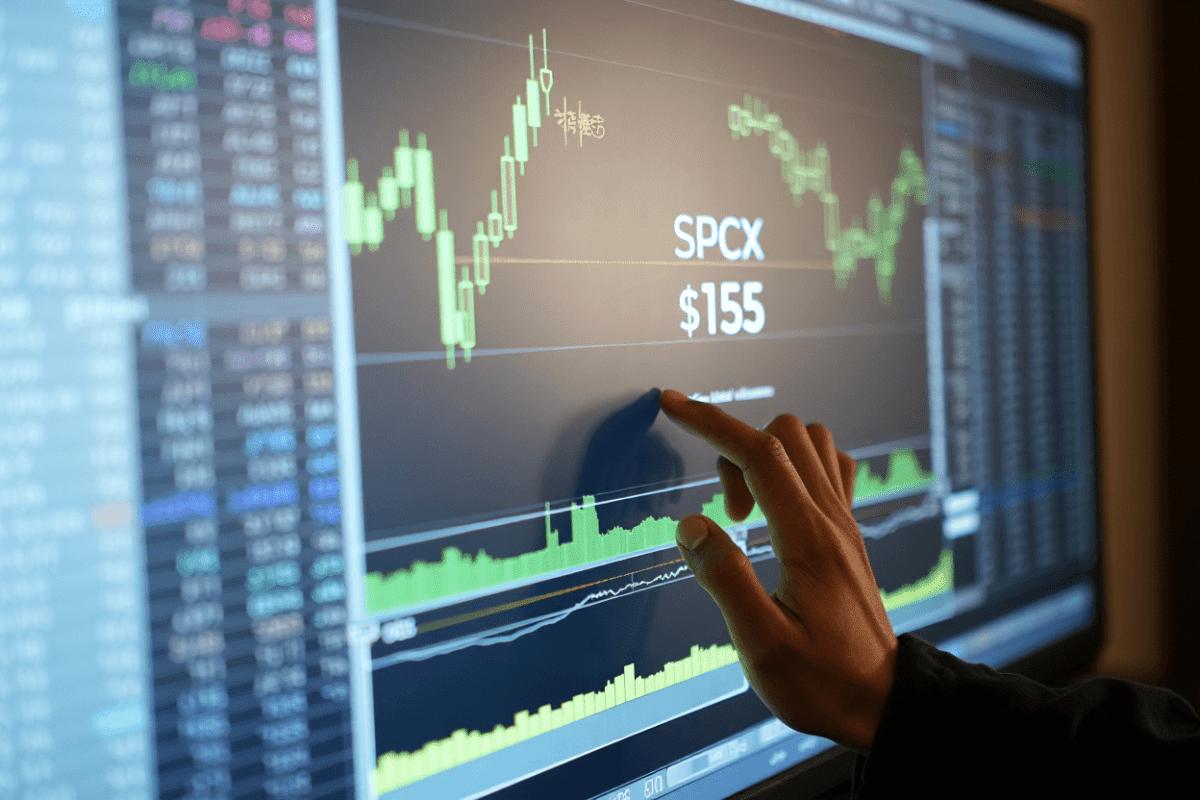
SpaceX opened around $155 per share on Nasdaq on June 12, 2026, marking a historic debut for what is now the largest initial public offering in market history. The company priced its IPO at $135 per share on June 11, raising $75 billion and achieving a $1.77 trillion valuation that instantly positioned it as one of the world’s most valuable companies.
The opening price represents a 15% jump from the IPO price, reflecting extraordinary demand from investors. Earlier in the day, pre-market indications had suggested the stock could open as high as $175 per share—a 30% premium—before settling at the $155 level as the market opened. Trading in the SPCX ticker did not commence immediately at the 9:30 a.m. market open, as is typical for mega-IPOs, while Nasdaq completed its price-discovery auction to match buy and sell orders.
The $75 billion raise shatters the previous IPO record set by Saudi Aramco in December 2019, when the Saudi oil giant raised $25.6 billion to $29.4 billion. SpaceX’s offering is nearly three times larger than Aramco’s, according to multiple financial sources including Reuters, Bloomberg, and the CME Group. At $1.77 trillion, SpaceX’s valuation would rank it among the top 15 companies in the world on day one, comparable to Saudi Aramco itself and dwarfing most major technology firms.
Retail investor demand for the IPO exceeded $100 billion, according to Reuters, as SpaceX allocated roughly 30% of the offering—approximately $22.5 billion in shares—directly to everyday investors through major brokerages including Robinhood, Fidelity, Charles Schwab, E*TRADE, and SoFi. This retail allocation is unusually generous for a blockbuster IPO and reflects the company’s strategy to democratize access to the listing. Total investor demand across all categories reached approximately $250 billion, underscoring the historic appetite for the offering.
The IPO prices SpaceX as a company worth more than Microsoft, Apple, or Saudi Aramco at the time of its listing. The company, which operates the Starlink satellite internet network, the Falcon 9 rocket, and the Starship vehicle under development, reported a net loss of nearly $4.3 billion in the first quarter of 2026 on revenue of $4.7 billion, according to its regulatory filings reviewed by NPR. Despite ongoing losses, investors have valued the company on the strength of Starlink’s profitability and the strategic importance of SpaceX’s rocket and space infrastructure business to national security and commercial space activity.
Morningstar analysts, however, cautioned that SpaceX is “significantly overvalued” at the IPO price. Morningstar’s discounted cash flow valuation of the company came to $780 billion, roughly 48% below its private market valuation at IPO pricing, according to CNBC reporting. Some analysts have suggested the valuation would have been substantially lower—between $1.2 trillion and $1.3 trillion—had SpaceX pursued a traditional IPO roadshow and price discovery process rather than fixing its price at $135 per share, a departure from Wall Street convention.
Market Impact and Precedent
SpaceX’s debut comes as the largest IPO in history by a wide margin. When Saudi Aramco went public in December 2019, the listing was hailed as a watershed moment for capital markets. Aramco’s $25.6 billion raise held the record for less than seven years. SpaceX’s $75 billion offering, combined with its $1.77 trillion valuation, signals a new scale for public market debuts and reflects both the scale of the space economy and investor appetite for exposure to companies operating in that sector.
The IPO also marks a significant moment for retail investor participation in mega-deals. By reserving 30% of shares for retail investors, SpaceX has departed sharply from typical IPO practice, which traditionally allocates the vast majority of shares to institutional investors and wealthy accredited investors. This move has drawn both enthusiasm from retail traders eager to own a piece of the company and skepticism from analysts who question whether everyday investors are being positioned as exit liquidity for early shareholders.
Sources
- CNBC — Live coverage of SpaceX IPO opening price indications and trading debut
- Reuters — IPO pricing details, retail demand figures, and investor allocation breakdown
- Bloomberg — Valuation, record IPO comparisons, and market capitalization context
- Yahoo Finance — Total investor demand ($250 billion) and retail order data
- NPR — Financial details from SpaceX’s IPO filing and quarterly loss figures
- CME Group — Analysis of SpaceX valuation and ranking among global companies
- CNBC / Morningstar — Analyst valuation assessment and discounted cash flow analysis
- Investing.com — Saudi Aramco IPO comparison and historical context