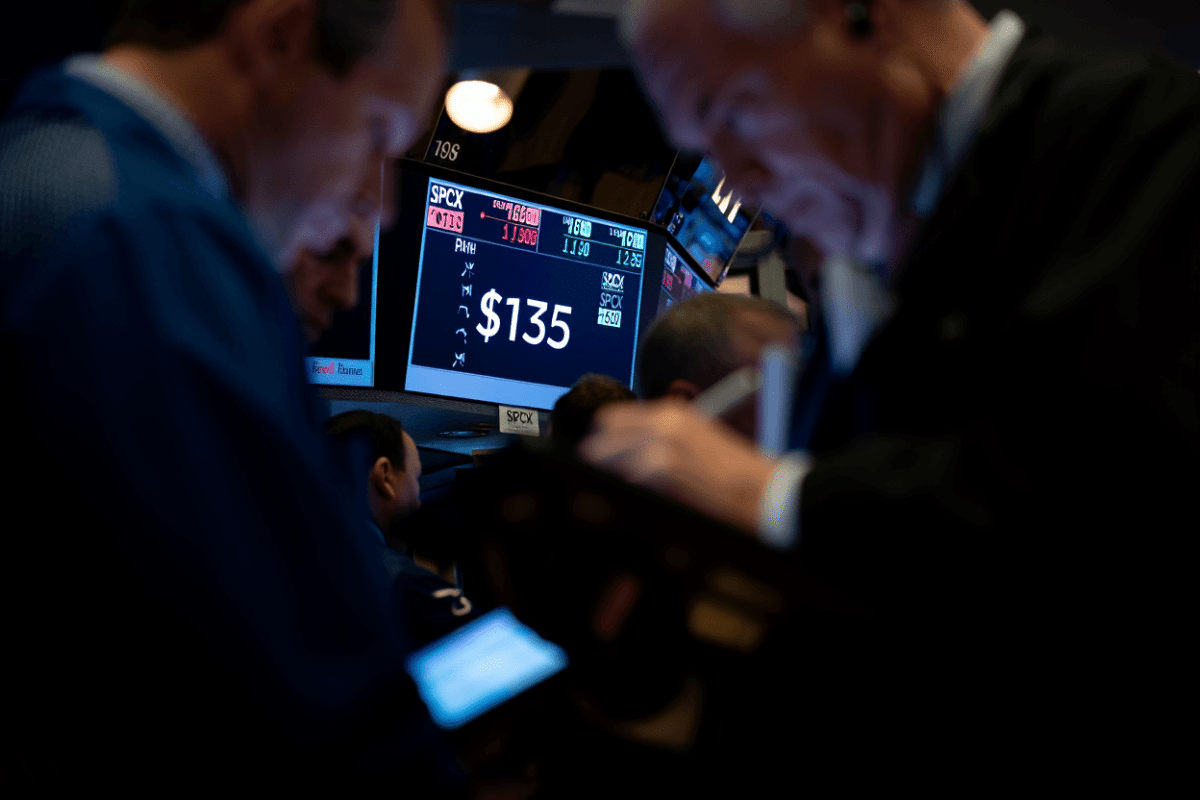
SpaceX began trading on Nasdaq earlier today at $135 per share, marking the debut of the world’s largest initial public offering in history. The rocket and spacecraft manufacturer is raising $75 billion in the offering, valuing the company at $1.77 trillion—nearly triple the previous record held by Saudi Aramco’s $29.4 billion IPO in December 2019.
The company is selling 555.6 million Class A shares under the ticker symbol SPCX. The offering represents only about 4% of SpaceX’s total outstanding shares, allowing founder Elon Musk to retain control of the company even after going public.
SpaceX broke with Wall Street convention by setting a fixed IPO price of $135 per share announced on June 3, rather than following the traditional practice of establishing a preliminary price range and letting market demand determine the final price. According to Reuters, this approach upended longstanding Wall Street norms, allowing SpaceX to lock in pricing a week earlier than typical IPO timelines.
The IPO demand was extraordinary. According to Seeking Alpha, the offering attracted over $250 billion in investor interest—nearly 4 times the $75 billion target—demonstrating strong appetite despite valuation concerns from analysts. Retail investors were allocated approximately 20% of the shares through brokerages including Robinhood, Fidelity, and Charles Schwab.
Morningstar analysts warned ahead of the debut that SpaceX is “significantly overvalued” at its IPO price. The company disclosed in its SEC filing that it “has a history of net losses and may not achieve profitability in the future,” raising questions about whether the $1.77 trillion valuation can be justified. Financial analysts have pointed to SpaceX’s ongoing losses and the speculative nature of its long-term revenue streams, including Starlink satellite internet and future Mars missions.
When Saudi Aramco listed in 2019, the state-owned oil giant raised $25.6 billion at a $1.7 trillion valuation, setting what was then an all-time record. That benchmark stood for nearly seven years. SpaceX’s $75 billion raise is nearly three times larger, reflecting both the scale of investor appetite for space-economy exposure and the company’s commanding position in commercial spaceflight and satellite broadband.
The IPO comes as SpaceX continues operating its Starship vehicle for test flights and expanding Starlink’s global satellite internet service. The company remains privately controlled by Musk, who holds roughly 50% of the shares and retains voting control through the IPO structure.
Sources
- Reuters — IPO pricing at $135 per share, $75 billion raise, Nasdaq debut June 12 under ticker SPCX, fixed-price offering structure
- CNBC — 555.6 million shares at $135 per share, $75 billion raise, Morningstar valuation concerns
- NBC News — IPO price $135, valuation $1.77 trillion, Nasdaq trading June 12
- The New York Times — IPO pricing at $135 per share, $1.77 trillion valuation
- Investing.com — SpaceX IPO raises $75 billion, valued at $1.77 trillion, largest in history; Saudi Aramco previous record of $25.6 billion in 2019
- Seeking Alpha — IPO demand exceeded $250 billion, retail allocation approximately 20%
- The Motley Fool — Saudi Aramco raised $25.6 billion in December 2019, largest IPO in history prior to SpaceX