
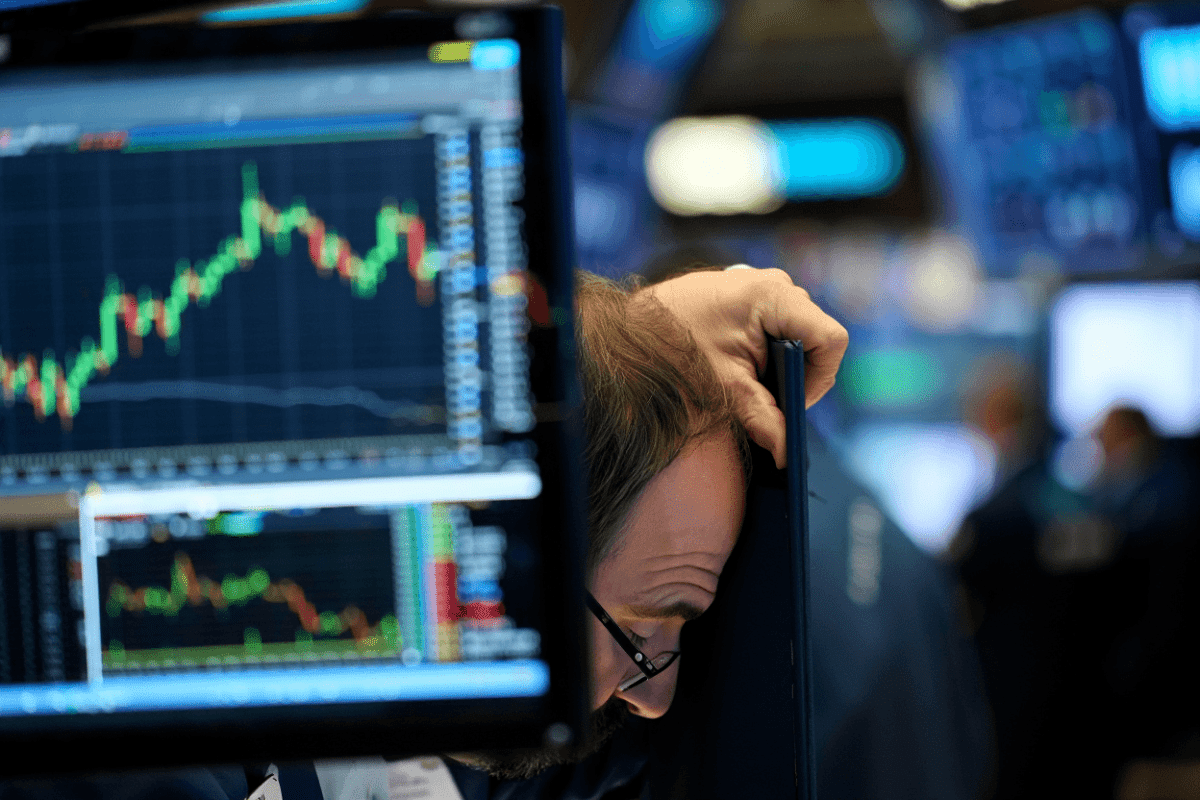
The S&P 500 jumped 1.8% on June 11, 2026, after President Donald Trump canceled planned military strikes against Iran and signaled that a peace deal could be finalized as soon as this weekend, easing months of geopolitical tension that had weighed on stock prices and energy markets.
Trump told reporters at the White House that the U.S. and Iran could sign a peace agreement that would reopen shipping traffic through the Strait of Hormuz, a critical waterway for global oil exports. The announcement sent stocks surging across all three major indexes, with the Dow Jones Industrial Average rising 930 points, or 1.9%, and the Nasdaq Composite climbing 2.5%, according to Reuters.
Semiconductor stocks led the rally, with the PHLX Semiconductor index jumping 7.9% in its biggest one-day percentage gain since April 2025, Reuters reported. The surge reflected investor relief that a resolution to the Middle East conflict could ease inflationary pressures tied to disrupted energy supplies. Chipmakers had been hit hard in recent weeks as the conflict stoked fears of higher oil prices and reduced global demand.
Oil prices plummeted on the news, with U.S. crude sliding to around $86 per barrel—the lowest level in months—easing concerns about energy-driven inflation that had been stoking economic worries across Wall Street. The decline in oil reflected expectations that reopening the Strait of Hormuz would restore normal crude flows to global markets.
The three major indexes registered their biggest daily percentage gains since April 8, 2026, when the U.S. and Iran had first agreed to a temporary ceasefire following months of escalating military strikes, according to Reuters. That earlier agreement had also triggered a rally, but subsequent tensions and the threat of renewed conflict had sent markets lower in recent days. The S&P 500 technology index had confirmed a correction on Wednesday before Thursday’s rebound.
Analysts attributed the sharp reversal to oversold technical conditions. “Our technical indicators are looking relatively oversold here,” said Robert Phipps, a director at Per Stirling Capital Management in Austin, Texas, quoted by Reuters. “Just as we had gone up too far, too fast, we came down too far, too fast.”
The rally also coincided with the record $75 billion initial public offering of SpaceX, which priced at $135 per share on June 11, making Elon Musk’s company one of the world’s most valuable at $1.77 trillion, according to Reuters. The IPO added to market momentum heading into Friday’s trading session.
However, Iran’s Foreign Ministry cautioned that Tehran had not yet reached a “final conclusion” on any agreement, tempering some of the optimism. Trump has repeatedly signaled progress on an Iran deal over recent weeks—he first claimed in May that a peace accord was imminent—but negotiations have remained fragile amid unresolved disputes over uranium enrichment and other terms.
The market’s sharp response underscores how deeply the Iran conflict has influenced investor sentiment and equity valuations since the war began earlier in 2026. Higher oil prices had threatened to fuel inflation and reduce consumer spending, two key drivers of corporate profits. A resolution would remove one of the major headwinds facing the economy and allow the market to refocus on other factors, particularly artificial intelligence and technology sector strength.
Sources
- Reuters — S&P 500 and Nasdaq closing levels, Dow Jones rise, semiconductor index surge of 7.9%, Trump’s Iran statements, comparison to April 8 rally, analyst commentary from Robert Phipps
- Bloomberg — Semiconductor index performance, biggest daily gain since April 2025
- Yahoo Finance — S&P 500 1.8% gain, Nasdaq and Dow closing figures
- The Washington Post — S&P 500 jump, Trump’s Iran deal signals
- The New York Times — Oil prices falling to around $86, stocks rallying on Iran deal hopes
- Barron’s — Chip stocks’ best day in more than a year, market closing data
- Axios — Trump’s claim that Iran approved a draft agreement
- WSJ — SpaceX IPO pricing at $135 per share, $75 billion raise, $1.77 trillion valuation










