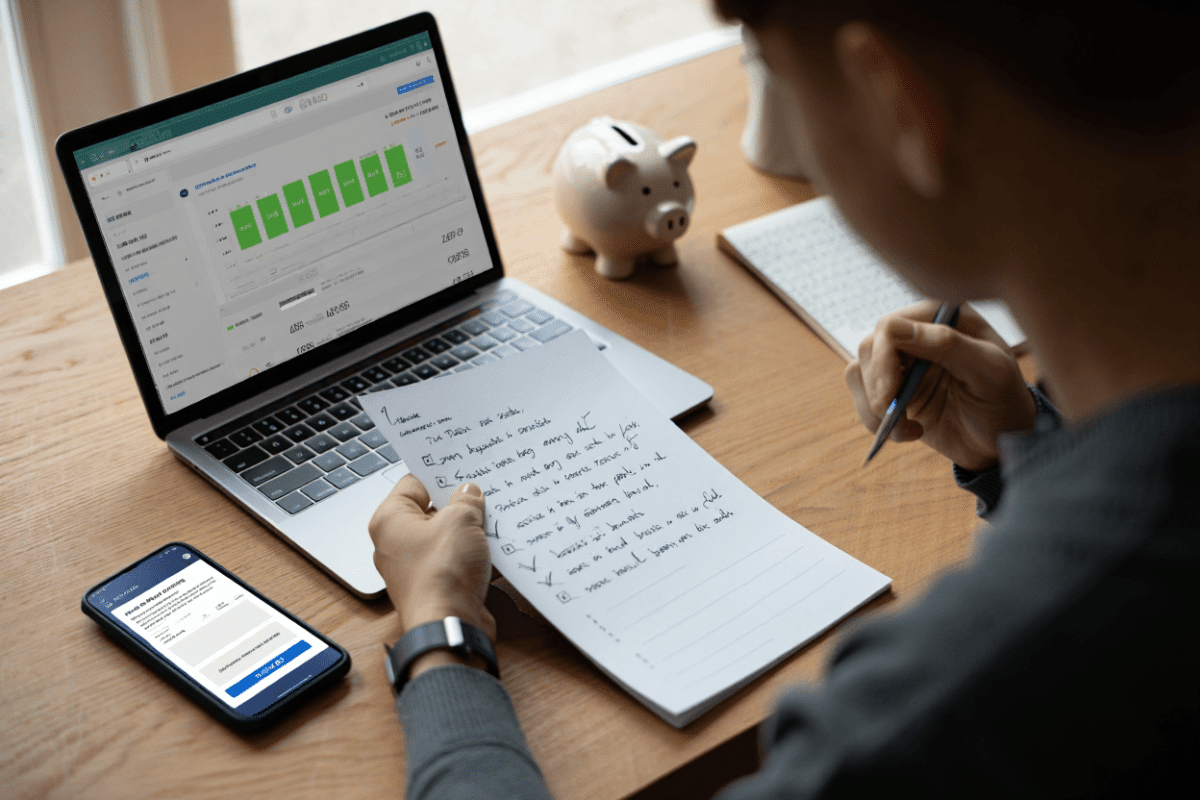
Saving money in 2026 requires a three-part strategy: setting up automated transfers, cutting unnecessary subscriptions, and building a robust emergency fund. With more than half of Americans planning to reduce spending this year and financial stress at historic levels, these practical tactics can help you take control of your finances.
Automating your savings is the most effective way to ensure money reaches your savings account before you have a chance to spend it. According to Fidelity Bank, automated transfers move money to savings automatically, reducing impulse purchases and the willpower required to save manually. Financial institutions like U.S. Bank recommend using model-driven tools that assess your spending patterns and identify pockets of money you can move to savings without disrupting your cash flow. By setting up recurring transfers on payday, you make saving a priority rather than an afterthought.
Cutting subscriptions represents one of the easiest wins for freeing up monthly cash. A NerdWallet survey found that more than half of Americans, 55%, plan to significantly cut back on subscriptions in 2026 to save money. Americans waste approximately $200 yearly on unused subscriptions, according to a separate survey, money that could be redirected toward savings or debt payoff. The strategy is straightforward: audit your current subscriptions, identify which ones you actually use, and cancel the rest. Many people discover they’re paying for services they’ve forgotten about or stopped using months ago.
Building an emergency fund is essential, yet many Americans fall short. According to a Bankrate survey from February 2026, just 47% of Americans say they have a sufficient emergency fund to cover a $1,000 emergency expense. Financial experts recommend saving between three and six months’ worth of living expenses, though starting with $1,000 is a realistic first goal. Chase and Fidelity both emphasize that an emergency fund should cover essential expenses—not your salary—during an unexpected financial crisis. A U.S. News survey found that the median amount Americans say they’d like to have saved for emergencies is $10,000.
The barriers to saving are real. Bankrate’s 2026 report found that 54% of Americans are saving less for emergency expenses due to inflation and rising prices. Despite these headwinds, 84% of Americans have a financial resolution for 2026, with building an emergency fund and using high-yield savings accounts being top priorities, according to a Vanguard survey. The combination of automated transfers, subscription cuts, and a focused emergency fund strategy gives you a foundation to build wealth even amid economic uncertainty.
Consider linking your emergency fund to a high-yield savings account to maximize returns on your stored cash. If you’ve already started automating contributions, you can also explore diversified index fund investments once your emergency fund is fully established. For those facing tax season, understanding new tax credits and deductions under recent legislation can also free up money to redirect toward savings.
Sources
- NerdWallet — subscription cutting survey data showing 55% of Americans plan to cut subscriptions in 2026
- Fidelity Bank — explanation of how automated transfers reduce impulse spending
- U.S. Bank — guidance on automated savings tools and cash flow management
- Bankrate — 2026 emergency savings report on emergency fund adequacy and inflation barriers
- Chase — emergency fund guidelines recommending 3-6 months of living expenses
- Fidelity — emergency fund starting goal of $1,000
- U.S. News & World Report — median emergency fund savings goal of $10,000
- Vanguard — survey showing 84% of Americans have 2026 financial resolutions
- AOL.com — data on Americans wasting $200 yearly on unused subscriptions