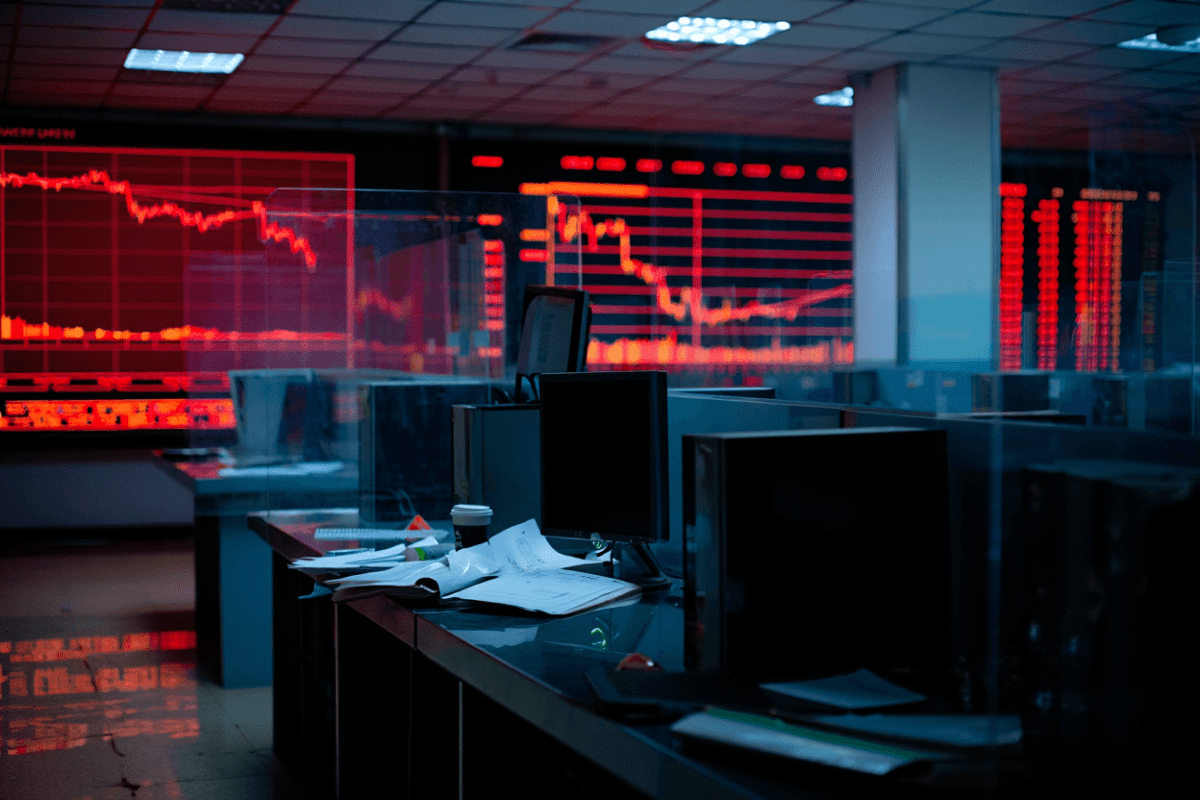
Stock market futures fell and tech stocks slid further as U.S.-Iran tensions escalated, with President Trump vowing to respond to Iran’s shooting down of a U.S. Apache helicopter patrolling the Strait of Hormuz overnight.
The S&P 500 fell 0.26% to 7,386.65 and the Nasdaq Composite dropped 0.97% to 25,678.82 on Tuesday, June 9, as a rebound in technology shares faded following Trump’s social media post about the helicopter incident. The Dow Jones Industrial Average rose 0.17% to 50,872.11, outperforming the broader market.
The Philadelphia SE Semiconductor Index dropped as much as 8.6% during the session before paring losses, ending down 1.9% on the day. Technology stocks resumed Friday’s selloff, with the S&P 500 tech index falling more than 4% before recovering somewhat. The Cboe Volatility Index hit its highest level since April 7 during the session.
The latest geopolitical flare-up came after Iran and Israel said Monday they would stop attacking each other, which had briefly boosted hopes that Middle East tensions were easing. However, Trump’s announcement about the helicopter incident added uncertainty to that narrative. “When the bounce ran its course this morning, the tape came for sale more broadly,” said Michael O’Rourke, chief market strategist at JonesTrading in Stamford, Connecticut, noting that Trump’s post “created another leg down” in markets.
The tech selloff extends a broader decline that began Friday when the Nasdaq plunged 4.2%, its worst day since October 2025. Broadcom’s disappointing guidance fueled concerns about high valuations in the semiconductor sector, which had rallied 78.7% year-to-date before the recent pullback. Shares of Broadcom fell 1.1% on Tuesday, while Nvidia was down just 0.2%.
Beyond semiconductor stocks, investors are also watching upcoming economic data and a highly anticipated SpaceX IPO later this week. The company is aiming to raise $75 billion and target a valuation of $1.75 trillion, the most ever for an IPO. Consumer price data for May is due Wednesday and could offer fresh clues on how rising energy prices from the Iran conflict are impacting inflation. A stronger-than-expected jobs report on Friday had increased bets that the Federal Reserve will hike interest rates this year, adding pressure on high-valuation growth stocks.
The market’s recent volatility reflects a broader debate about whether tech valuations have become stretched. Morgan Stanley strategists argued that Friday’s selloff was a necessary cooling of an overheated bull market, noting that the semiconductor index had risen 96% year-to-date and was 35% above its 50-day moving average—the widest gap in around 25 years. However, the combination of geopolitical risk, inflation concerns, and questions about whether AI spending will justify current valuations has kept investors on edge.
Sources
- Reuters — S&P 500 and Nasdaq closing prices, semiconductor index performance, and Trump’s statement on the helicopter incident on June 9
- The Guardian — Iran’s announcement of ending military operations on June 8 and market recovery details
- Trading Economics — S&P 500 level at 7,347 points on June 10, showing 0.54% decline from previous session