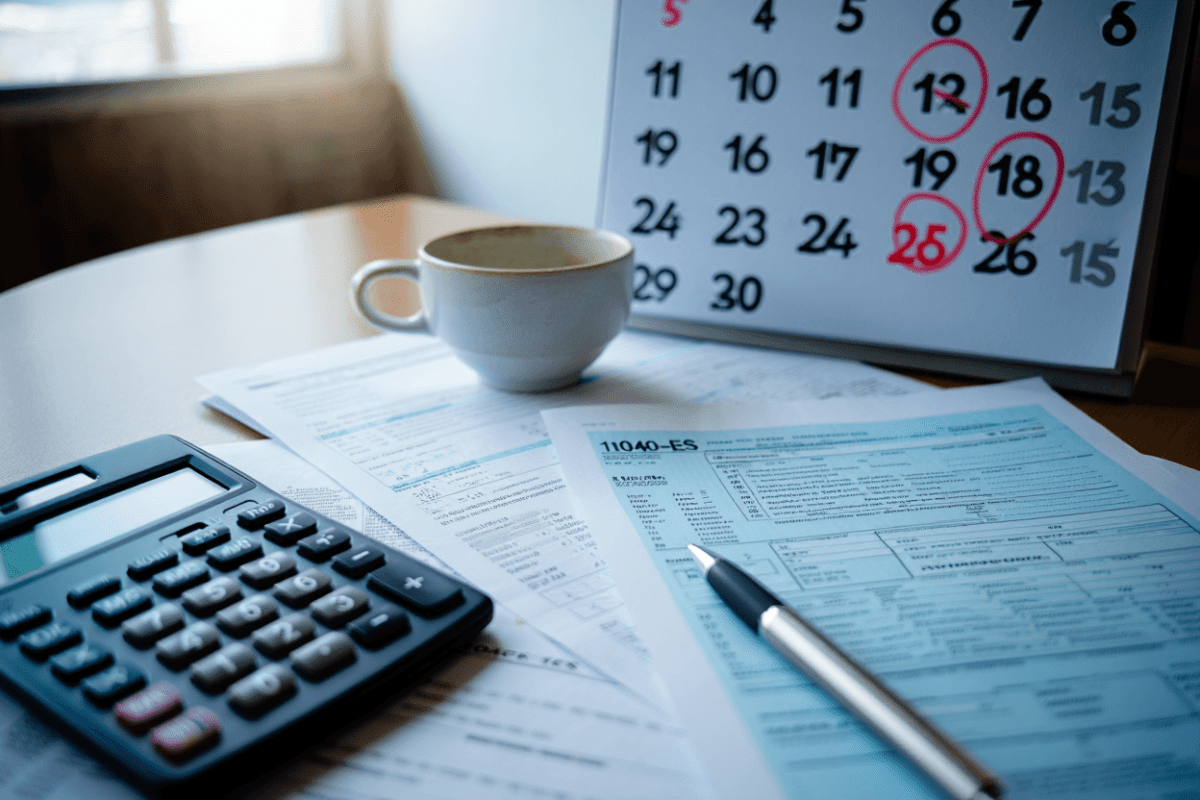
Self-employed workers and other independent earners have until June 15 to pay their second quarter estimated tax payments for 2026. This deadline applies to freelancers, gig workers, business owners, and anyone else whose income isn’t subject to employer withholding. Missing the deadline can result in penalties and interest charges.
Quick Facts
- June 15, 2026 is the deadline for Q2 estimated tax payments
- Estimated tax payments are due four times yearly: April 15, June 15, September 15, and January 15
- You must pay estimated taxes if you expect to owe $1,000 or more after withholding and credits
- Use Form 1040-ES to calculate and report your estimated tax payment
Who Needs to Make Estimated Tax Payments
Generally, you must make estimated tax payments if you expect to owe at least $1,000 in federal income tax for the year after subtracting any withholding and refundable credits. This includes self-employed individuals, freelancers, gig workers, and business owners who don’t have taxes withheld from their income. The requirement also applies to people with investment income, rental income, or other sources of unwithheld income.
According to the IRS, you must also meet a second condition: your withholding and refundable credits must be less than the smaller of either 90% of your current year’s tax liability or 100% of your prior year’s tax liability (or 110% if your prior-year adjusted gross income exceeded $150,000). This means if you had little or no tax liability last year, you can’t use that as an excuse to skip payments this year if you expect to owe significantly more.
How to Calculate and Pay Your Estimated Taxes
The IRS breaks the tax year into four payment periods. Income earned April 1 through May 31 requires a payment due June 15. Use Form 1040-ES, Estimated Tax for Individuals, which includes a worksheet to help you determine the correct amount to pay each quarter.
Most people divide their expected annual tax liability into four equal quarterly payments of approximately 25% each. However, if your income varies throughout the year, you can use an annualized method to adjust payments based on when you actually earn the income. Payment options include online through your IRS account, IRS Direct Pay, credit or debit card, the IRS2Go mobile app, or by mail with the Form 1040-ES voucher.
If you miss a payment, the IRS charges interest on the underpayment. According to TurboTax, the penalty rate is the federal short-term interest rate plus 3 percentage points, which for Q2 2026 is 6% annually. Interest compounds daily from the day after the due date until you pay or until April 15 of the following year, whichever comes first.
Remaining Payment Deadlines for 2026
After the June 15 deadline, self-employed workers and other independent earners will have two more quarterly payments to make in 2026. The third quarter payment is due September 15, covering income earned June 1 through August 31. The fourth and final quarterly payment is due January 15, 2027, for income earned September 1 through December 31. However, you can skip the January payment if you file your tax return and pay all taxes owed by February 1.
Keeping accurate records of your estimated payments throughout the year is critical. When you file your annual tax return, you’ll claim credit for all four quarterly payments on Form 1040, line 26, ensuring the IRS applies them to your tax liability correctly.
Sources
- Internal Revenue Service (IRS) — Official guidance on estimated tax deadlines, payment periods, and Form 1040-ES requirements
- TurboTax — Detailed explanation of who must pay estimated taxes, calculation methods, and 2026 penalty rates
- Wouch Maloney CPA — Confirmation that June 15, 2026 is the Q2 estimated tax payment deadline
- Block Advisors — Quarterly estimated tax payment schedule and due dates for 2026