Fidelity has slashed the minimum account balance required to access the SpaceX IPO from $500,000 to $2,000, dramatically expanding retail investor access to the company’s June 12 public debut. The move follows SpaceX’s decision to allocate 30% of shares to individual investors—far above the typical 5-10% reserved for retail in most IPOs.
Quick Facts
- Minimum account balance cut from $500,000 to $2,000, erasing roughly 99.6% of the prior barrier.
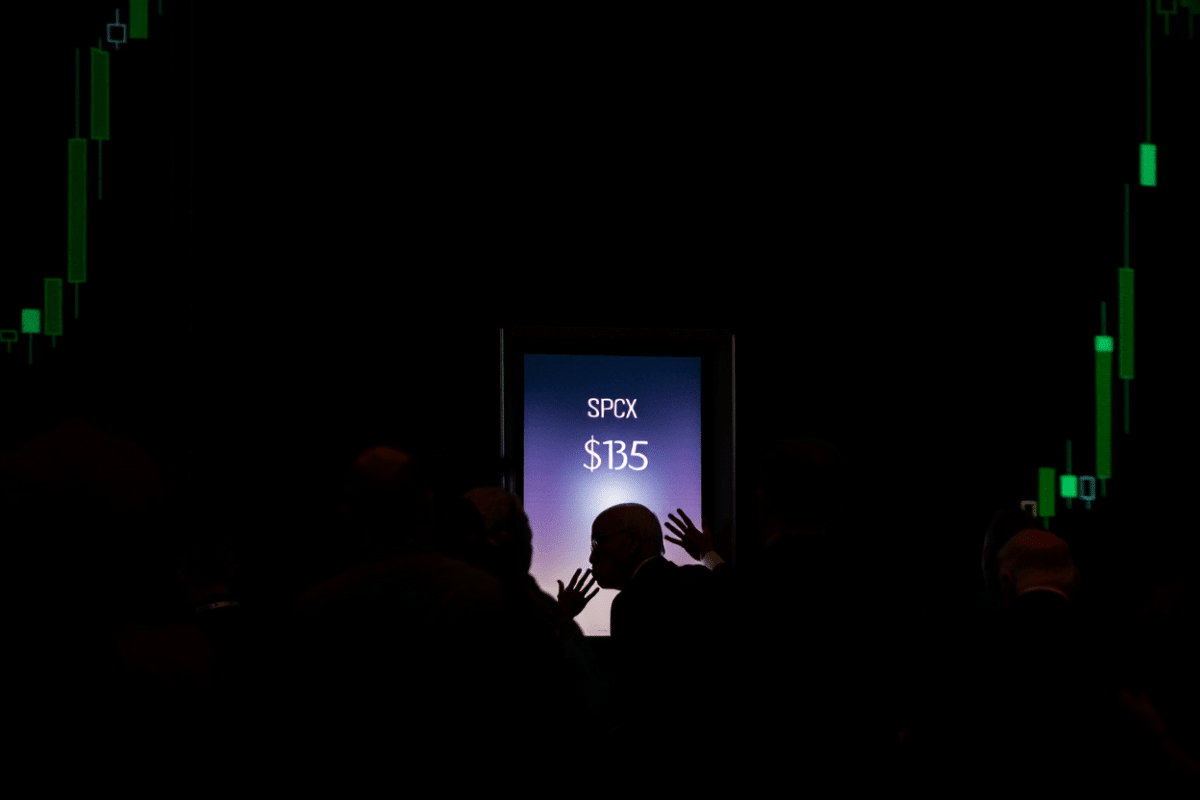
- IPO price: $135 per share, expected to raise $75 billion and value SpaceX at $1.75 trillion.
- Trading begins June 12, 2026 on Nasdaq under ticker symbol SPCX.
- Flipping restrictions apply: selling within 15 days triggers a six-month block; second offense brings a one-year ban; third is permanent.
Why Fidelity Lowered the Bar
Fidelity typically requires customers to have either $100,000 or $500,000 in a retail brokerage account to submit an indication of interest for an IPO. The dramatic cut to $2,000 reflects SpaceX’s unusually generous retail allocation. In its FAQ posted Thursday, Fidelity explained that most IPOs reserve only 5% to 10% of shares for individual traders, but SpaceX has committed to 30% for retail investors. “This is why we have decided to reduce IPO eligibility for this offering,” Fidelity stated. The move also positions Fidelity competitively against rivals like Robinhood and SoFi, which have no minimum investment requirement for SpaceX, while Charles Schwab maintains a $100,000 minimum.
What Retail Investors Need to Know
Access to the IPO price doesn’t guarantee an allocation. SpaceX plans to sell 555.6 million shares at $135 each, raising up to $75 billion—potentially the largest IPO on record, eclipsing Saudi Aramco’s 2019 debut. Fidelity and other brokers use their own criteria to decide which bids receive shares, factoring in account size and trading history. More importantly, anti-flipping rules are strict. At Fidelity, selling within 15 calendar days marks an investor as a flipper, triggering a six-month block from future IPOs. A second violation brings a one-year ban; a third is permanent. Robinhood uses a 30-day window with 60-day blocks, while SoFi also enforces a 30-day rule with escalating penalties up to a permanent ban. Investors must agree to these terms when submitting an indication of interest.
The Broader IPO Landscape
The $1.75 trillion valuation reflects steep growth assumptions around SpaceX’s AI and satellite businesses, but the company is currently unprofitable. SpaceX set to raise record $75B in largest IPO ever, and the offering has sparked significant institutional interest—JPMorgan and Bank of America have lined up investor roadshow events. Yet some advisors suggest caution. Barron’s-ranked advisors recommend waiting for the stock to trade freely, allowing lockup periods to expire and initial earnings reports to surface, before making a decision. Others note that exchange-traded funds already holding SpaceX shares from private rounds offer an alternative path to exposure without the IPO-day volatility or flipping restrictions.
Sources
- Barron’s — Fidelity’s $2,000 minimum, SpaceX’s 30% retail allocation, flipping rules, and advisor commentary.
- Yahoo Finance / BeInCrypto — Detailed breakdown of anti-flipping penalties across Fidelity, Robinhood, SoFi, Charles Schwab, and E*Trade.
- Fidelity official FAQ — Confirmation of $2,000 minimum and rationale for the reduction.
- CNBC, Zacks, Reuters — IPO price of $135, June 12 debut date, $75 billion raise target, and $1.75 trillion valuation.