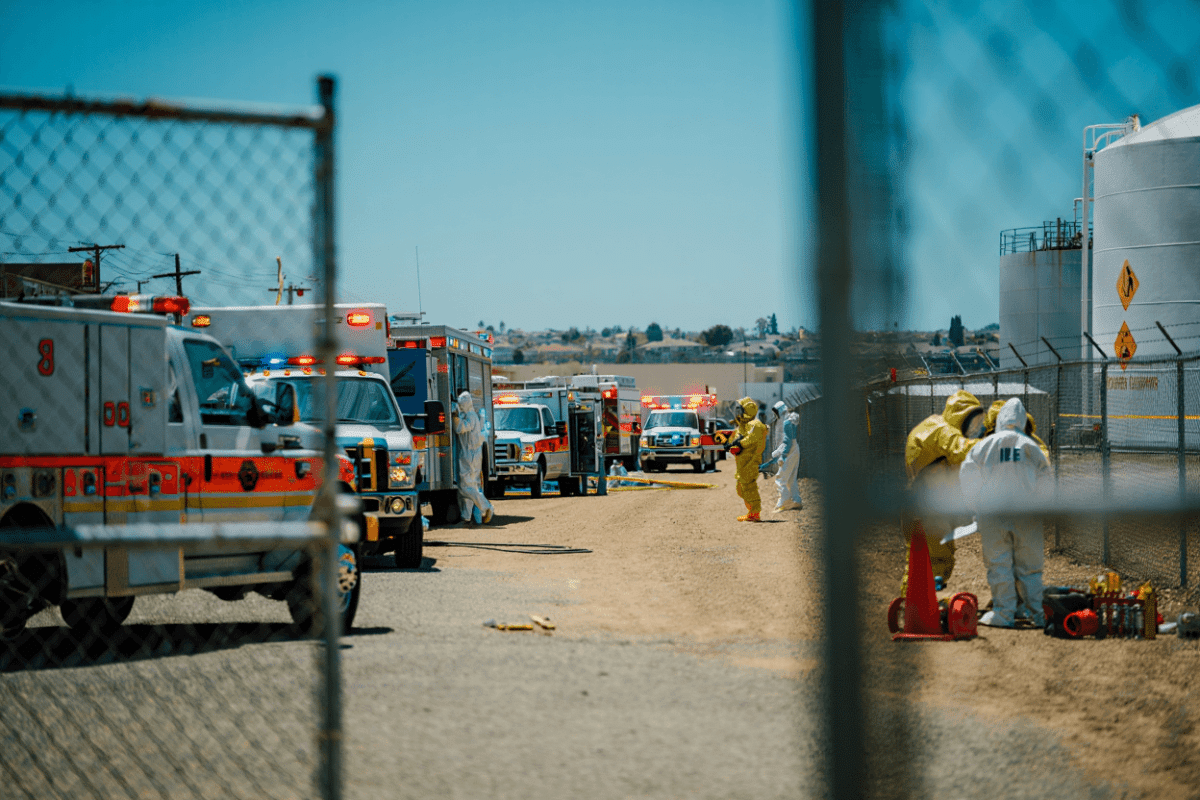
Explosion risk eliminated at a Garden Grove chemical facility in Orange County as of May 26, 2026. After 50,000 residents were evacuated over five days, authorities confirmed the critical threat has passed. Learn how emergency teams detected a crack that relieved dangerous pressure buildup in a flammable epoxy tank, allowing evacuation orders to be lifted and communities to return home safely.
🔥 Quick Facts
- 50,000 residents evacuated over five-day emergency response (May 21-26)
- Flammable epoxy chemical tank at GKN Aerospace manufacturing facility overheated to 92 degrees Fahrenheit
- Tank pressure relief achieved when a hairline crack developed on May 25, venting excess pressure safely
- All evacuation orders lifted by 7:30 PM on May 26 after no additional threats detected
- 785+ emergency personnel deployed across Orange County during multi-agency response
How a Garden Grove Chemical Crisis Became a Resolved Emergency
The Garden Grove chemical incident began on May 21, 2026, when facility operators discovered a leak from a storage tank containing flammable epoxy resin—a chemical compound used in aerospace manufacturing. The overheating tank created a pressure buildup that threatened to rupture, potentially releasing toxic fumes across densely populated neighborhoods. Orange County fire officials described the situation as extraordinarily dangerous: if the tank had burst, the atmospheric release could have caused significant vapor exposure to nearby residents.
The proximity of the GKN Aerospace facility to residential areas amplified the urgency. The manufacturing plant operates in an industrial zone adjacent to Garden Grove neighborhoods, meaning any catastrophic failure would directly impact civilians within minutes. Emergency management teams initiated immediate evacuations on May 21, establishing concentric danger perimeters that initially covered approximately 40,000 residents.
Pressure Relief: The Technical Breakthrough
On May 25, the situation took a critical turn when technicians discovered a hairline crack in the tank wall. Rather than worsening the danger, this crack became the breakthrough that averted disaster. The small opening allowed pressurized gas inside the tank to escape gradually, reducing internal pressure that had been building toward critical levels. Temperature monitoring systems showed the chemical cooling quickly once pressure vented to the atmosphere.
Emergency officials confirmed that the crack’s development was a turning point: the controlled release of pressure meant the tank could no longer rupture catastrophically. This discovery shifted the operational focus from preventing a worst-case scenario to controlled monitoring and managed pressure relief. Hazmat crews worked throughout May 25 to document the pressure decline, verify cooling rates, and confirm that no toxic vapor emissions were occurring. Air quality monitoring stations detected no chemical signatures in surrounding areas.
The Evacuation Timeline and Response Scale
| Timeline Event | Date & Status |
| Chemical leak detected | May 21, 2026 |
| Initial evacuations ordered (40,000+) | May 21-22 |
| Peak evacuation zones (50,000 residents) | May 23-24 |
| Tank crack detected, pressure relief begins | May 25 (critical breakthrough) |
| All evacuation orders lifted | May 26, 7:30 PM |
| Cleanup and accountability phase begins | May 27 onward |
The multi-agency response demonstrated unprecedented coordination. California mobilized 785+ emergency personnel, integrating Orange County Fire Authority, local law enforcement, EPA hazmat specialists, and county health officials. According to California State Government officials, this represented one of the largest hazmat mobilizations in the state’s recent history.
“The threat of a massive chemical explosion was eliminated. The crack in the tank, while initially concerning, allowed pressure to vent safely. Our teams worked around the clock to monitor conditions and ensure no vapor release occurred.”
— Orange County Fire Authority Officials, May 25, 2026 Media Briefing
What The Resolution Means for Industrial Safety in Southern California
The Garden Grove crisis exposed vulnerabilities in Southern California’s industrial oversight. Aerospace manufacturing facilities in densely populated areas create inherent risks that emergency planning does not always account for adequately. Environmental experts noted that the situation revealed how legacy manufacturing plants operate in close proximity to residential neighborhoods, a pattern repeated across Los Angeles and Orange County regions.
This incident has already prompted Garden Grove city officials to announce a comprehensive after-action review and accountability assessment. The city is examining facility emergency preparedness protocols and whether additional safeguards should be mandated for chemical storage operations. County supervisors are reviewing whether current hazardous material regulations adequately protect residents in mixed industrial-residential zones.
The Long-Term Implications Beyond May 26
As recovery transitions from emergency response to cleanup, new questions emerge. Government agencies must determine responsibility for evacuation costs, evacuation-related economic losses, and facility upgrades needed to prevent future incidents. GKN Aerospace, the facility operator, may face regulatory scrutiny regarding tank maintenance, aging infrastructure, and whether the company failed to anticipate the pressure buildup that nearly caused a catastrophic release.
The cleanup phase continues with environmental monitoring to ensure no residual chemical contamination affected soil or groundwater. Orange County Public Health officials have confirmed that no toxic vapor exposure occurred to evacuated residents, but ongoing air quality testing remains standard protocol for such incidents.
What Questions Remain About Preventing Future Chemical Threats Near You?
The Garden Grove evacuation raises important questions about your own neighborhood’s industrial profile. Many Southern California residents may not be aware of manufacturing facilities operating nearby that handle hazardous materials. How many aerospace, chemical, or petrochemical plants operate within 2-5 miles of your home? Do local emergency plans account for worst-case scenarios? The Garden Grove incident demonstrates that when industrial risk meets residential density, community safety depends entirely on detection speed and emergency response efficiency.
As California evaluates regulations following this near-miss, residents in affected areas are demanding greater transparency about which facilities operate nearby and what chemicals they store. This incident will likely reshape how hazardous materials oversight is conducted in Orange County and throughout Southern California for years to come.
Sources
- NBC News – Coverage of tank crack and pressure relief mechanism (May 25 reporting)
- BBC News – Confirmation of evacuation lifting and zero toxic vapor release (May 26-27)
- Los Angeles Times – Analysis of Southern California industrial risks exposed by incident (May 27)
- California State Government Office – Official statement on 785-person emergency deployment (May 24)
- Orange County Fire Authority – Daily operational briefings on tank monitoring (May 21-26)
- Wikipedia Garden Grove Chemical Leak – Comprehensive timeline and facility details