
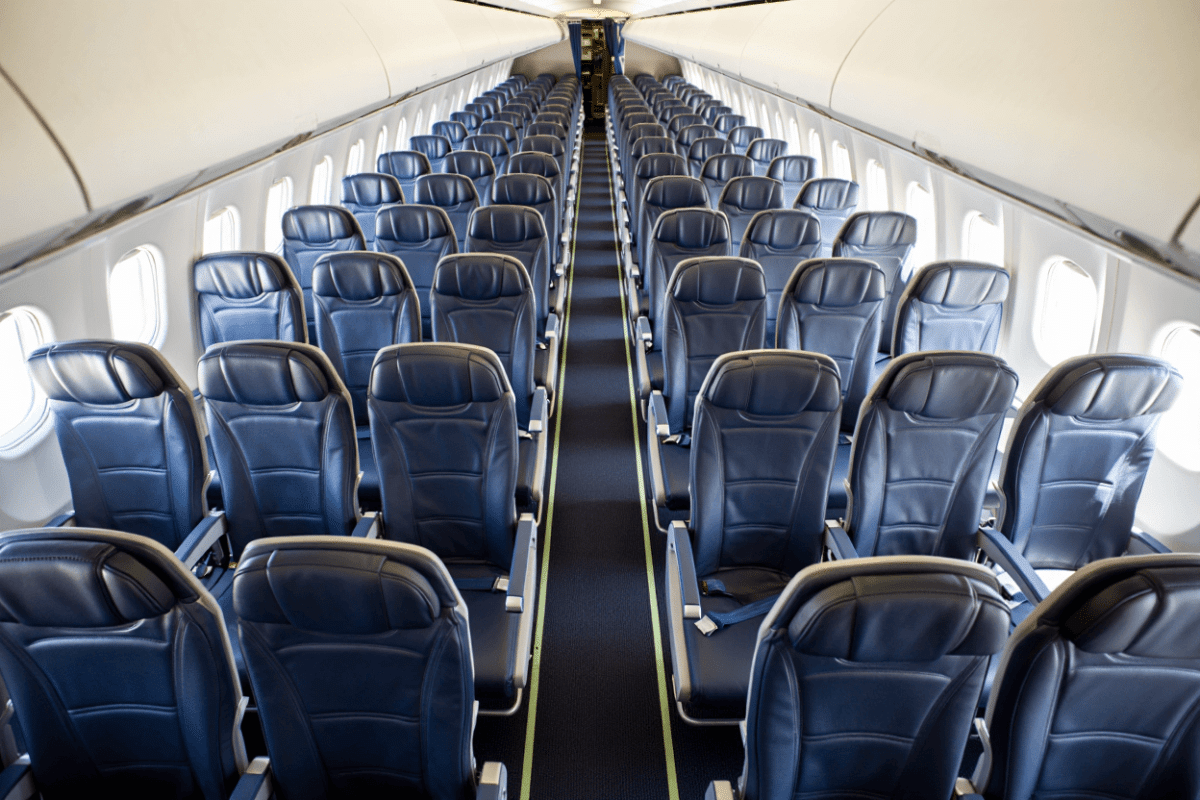
Southwest Airlines now requires passengers to purchase extra seats in advance and has eliminated the guaranteed refund policy that once protected customers. Starting January 27, 2026, the airline significantly restructured how extra seats work, limiting refunds to situations where flights depart with at least one open seat. The policy shift has generated substantial passenger debate over the past four months, with the airline now reconsidering its approach based on accumulated feedback.
🔥 Quick Facts
- Advance Purchase Required — Extra seats must be bought during booking, not at the airport
- 90-Day Refund Window — Passengers have 90 days after travel to request a refund
- Empty Seat Requirement — Refunds only qualify if the flight departed with at least one open seat
- Policy Start Date — New rules took effect on January 27, 2026, affecting all passengers needing extra space
- Recent Reconsideration — Southwest announced on May 28, 2026, that it may walk back the controversial policy
The January 2026 Policy Overhaul
Southwest Airlines ended decades of passenger flexibility by requiring extra seat purchases at the time of booking. Previously, customers could purchase an extra seat in advance or request one at the airport and receive a full refund if the flight had available seating. This new system fundamentally shifted the financial burden onto passengers upfront, eliminating certainty about refund eligibility.
The advance purchase requirement marks the airline’s most significant seating policy change since introducing assigned seating on January 27, 2026. For over 50 years, Southwest maintained open seating that allowed passengers to select their own seats boarding-time, creating a unique market position. The January 2026 transition bundled multiple policy changes, including the extra seat purchase restructuring that proved particularly contentious among traveling public.
How the Refund Mechanism Works Now
Under the updated policy, passengers who purchase an extra seat in advance can request a refund—but only if specific conditions are met. The flight must depart with at least one open seat available in the cabin. This creates a paradoxical situation: if the flight is entirely full, even passengers who paid for an extra seat receive zero refund, regardless of whether they ultimately needed the additional space.
Customers have a 90-day window after travel to submit their refund request. This timeframe is substantially shorter than many airline refund policies and requires passengers to document their flights and maintain records. The refund conditions represent a dramatic departure from Southwest’s previous “guaranteed refund” system, where any available empty seat on the flight resulted in automatic reimbursement after travel completion.
Additionally, extra seats purchased on flights that include partner carriers (code-share flights with other airlines) are non-refundable, creating another restriction that affects international and certain domestic itineraries.
Comparative Policy Analysis and Passenger Impact
| Policy Element | Pre-January 2026 | January 2026 Onward |
| Extra Seat Purchase Timing | Advance or at airport | Advance purchase required |
| Refund Eligibility | Guaranteed if empty seat available | Only if flight departs with open seat |
| Refund Timeframe | After flight, no time limit specified | Within 90 days of flight |
| Partner Carrier Seats | Refundable per carrier policy | Non-refundable |
| Flexibility for Passengers | High (defer decision until airport) | Low (commit financially in advance) |
The policy restructuring fundamentally changed passenger economics. Previously, customers could assess their needs at the airport with full visibility of actual cabin configuration. Now, passengers must commit funds during the booking phase, weeks or months before travel, without knowing final flight capacity or whether refund conditions will be satisfied.
What’s Driving the Recent Policy Reconsideration
On May 28, 2026—exactly four months after implementation—Southwest Airlines announced it is reconsidering the policy following sustained customer backlash and negative media coverage. Industry reports from People.com, Inc.com, and New York Post documented widespread passenger frustration regarding the restrictive refund conditions and advance purchase requirement.
The airline stated that passengers are no longer required to purchase an extra seat upfront when traveling on Southwest, signaling a potential rollback of the January mandate. This represents a significant policy reversal that acknowledges the controversial reception to the four-month-old rules. Southwest indicated alternative approaches being evaluated to balance passenger needs with operational logistics.
“The current policy requires passengers to pre-purchase additional seats or pay at the airport if an extra seat is needed. However, we recognize passenger feedback on this approach and are evaluating how to better serve all travelers while maintaining operational efficiency.”
— Southwest Airlines, official policy statement, May 2026
What Travelers Should Know About Booking Now
Passengers booking Southwest flights face evolving policy uncertainty as the airline reconsiders its January 2026 mandate. Those who previously purchased extra seats under the new rules and meet the 90-day refund window requirement—specifically that the flight departed with at least one open seat—remain eligible for reimbursement. However, the timeline for policy changes remains unclear, and travelers should monitor Southwest’s official website for definitive guidance.
Passengers with upcoming flights should contact Southwest directly for current policy status rather than relying on the January 2026 rules, as interim policy guidance may not yet be reflected across all booking channels. The airline operates dedicated customer service lines for customers of size and those requiring additional seating accommodations, and these representatives can provide the most current information on purchase requirements and refund eligibility.
The Points Guy, a leading travel industry publication, has been tracking these developments and recommended passengers verify Southwest’s official policy pages before booking to understand current requirements for their specific travel dates.
Will Southwest Completely Eliminate the Extra Seat Purchase Requirement?
The critical question facing Southwest Airlines is whether the May 2026 reconsideration signals a full rollback to pre-January 2026 policies or a modified middle-ground approach. Industry analysts suggest several possible outcomes: complete elimination of the advance purchase mandate (returning to the previous flexibility), selective refund eligibility expansion (loosening the “open seat” requirement), or a tiered system based on advance booking timing.
What remains certain is that the January 2026 policy generated sufficient passenger dissatisfaction to force the airline’s hand within four months—an unusually rapid reversal for major seating policies. Southwest’s competitive positioning as the most flexible airline regarding seating and refunds may have driven this quick reconsideration, as the new restrictions conflicted with the brand identity that attracted budget-conscious travelers for decades.
Sources
- Southwest Airlines Official Support — Current extra seat policy documentation and refund procedures
- People Magazine — Breaking coverage of policy reconsideration, May 28, 2026
- Inc.com — Industry analysis of Southwest policy reversal and four-month timeline
- New York Post — Consumer perspective on controversial refund restrictions
- Yahoo Travel — Initial policy documentation from January 2026 implementation
- ABC News / Facebook — Real-time policy update announcements
- The Points Guy — Ongoing travel policy tracking and passenger guidance










