SpaceX’s Starship V3 marked a significant engineering milestone on May 22, 2026, lifting off from Starbase, Texas at 5:30 PM CT for its 12th test flight. However, the Federal Aviation Administration declared the mission a “mishap” on May 27 after the Super Heavy booster experienced multiple engine failures during descent over the Gulf of Mexico. The FAA response has halted all further Starship launches pending investigation, marking a critical juncture in SpaceX’s development of the world’s most powerful operational rocket system.
🔥 Quick Facts
- Flight 12 launched May 22, 2026, at 5:30 PM CT from Starbase, Texas—first V3 test flight
- Super Heavy booster suffered engine failures during descent phase over the Gulf of Mexico
- FAA declared the event a mishap on May 27, 2026—five days after the test flight
- Starship grounded indefinitely pending full FAA mishap investigation
- V3 represents first major hardware redesign since Flight 11; both booster and ship experienced engine anomalies
The V3 Debut: A Mixed Engineering Achievement
Starship Flight 12 represented a watershed moment for SpaceX—the first orbital test of the Starship Super Heavy system’s third major iteration. Rather than being a failure, the mission achieved most of its primary test objectives, including successful stage separation, with both the ship and booster reaching space and completing their flight envelopes. This marked substantial progress from earlier variants, with engineers demonstrating improved thermal management, avionics integration, and propulsion architecture across the redesigned vehicles.
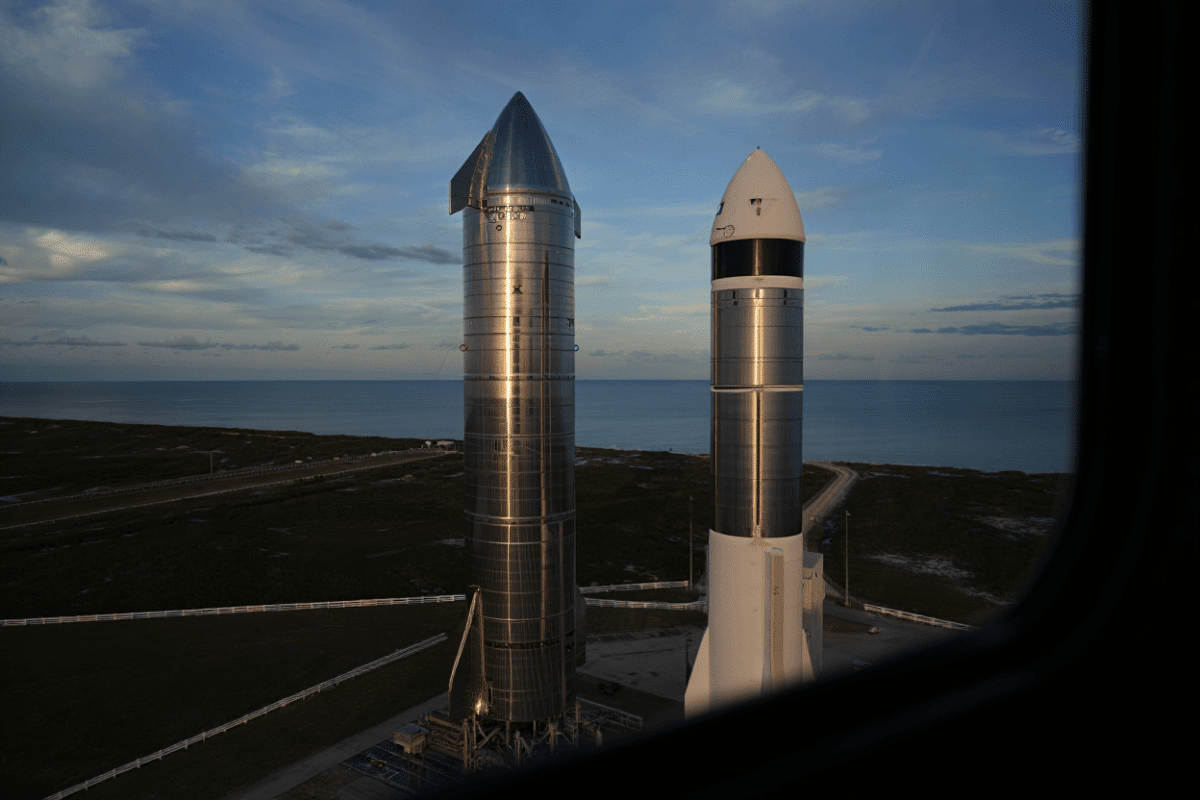
The V3 booster variant incorporated significant structural enhancements and engine layout modifications compared to the previous V2 design. Starship’s upper stage, designated Ship 39, carried mock payloads to simulate operational cargo scenarios. Both stages were designed to push specific boundaries—the booster tested new landing burn sequences in atmosphere, while the ship validated re-entry thermal protection on the expanded surface area of the larger V3 configuration.
Engine Anomalies Drive Regulatory Action
The critical issue that triggered the FAA’s mishap declaration centered on the booster’s descent sequence. According to multiple aerospace publications, the Super Heavy booster experienced unexpected engine performance degradation during its powered return to the Gulf of Mexico. At least one raptor engine exhibited abnormal behavior during the descent burn, which cascaded into secondary failures across the engine cluster.
The upper stage ship also reported engine anomalies during its flight profile, losing propulsive capability in a manner that required corrective autonomous maneuvers. Despite these technical challenges, both vehicles splashed down in preplanned hazard zones—no injuries or property damage occurred, and all debris fell within designated impact areas. This success in containment reflects SpaceX’s adherence to FAA safety protocols established across the test program’s history. The incident demonstrates how high-velocity flight test data reveals subsystem weaknesses that ground-based testing cannot fully predict, necessitating in-flight correction capabilities.
FAA Investigative Posture and Industry Context
| Timeline Element | Date / Status | Notes |
| Flight 12 Launch | May 22, 2026 | 5:30 PM CT from Starbase; V3 debut |
| Mishap Declaration | May 27, 2026 | FAA issued mandatory investigation order |
| Launch Status | Grounded | All Starship launches halted pending resolution |
| Previous Flight | Flight 11 | Completed successfully with V2 configuration |
| Investigation Scope | TBD | Engine failure root cause analysis required |
FAA mishap investigations are a standard procedure when launch or flight anomalies prevent missions from achieving intended objectives. Unlike incident reports, which address minor deviations, a mishap classification triggers a formal root-cause analysis process. SpaceX must investigate the engine performance degradation, identify all contributing factors—from manufacturing to operational procedures—and propose corrective actions. The agency will evaluate these findings before authorizing return to flight.
This represents the expected learning cycle of test flight operations. Each major vehicle iteration introduces new engineering unknowns that only become apparent under the extreme environments of actual flight. The V3’s scaled-up dimensions and modified engine cluster layout created novel thermal, pressure, and combustion dynamics that post-flight analysis can now address systematically. SpaceX engineers have documented extensive telemetry from the flight, enabling detailed forensic analysis of engine parameters in the moments preceding the anomalies.
Strategic Implications for Commercial Spaceflight
The grounding of Starship carries implications for SpaceX’s commercial timeline and FAA regulatory precedent. The company had been operating at an elevated test cadence, with Flight 12 representing the fastest pace between consecutive tests in the program’s history. This acceleration reflects growing confidence in the flight test methodology and data-accumulation strategy. However, the V3 design change introduced sufficient novelty to warrant cautious validation.
From a regulatory standpoint, FAA’s response underscores the agency’s commitment to rigorous investigation before return-to-flight clearance, despite industry pressure for accelerated development timelines. Historically, mishap investigations for Starship have taken between 4 and 8 weeks, depending on investigation complexity. Analysis of the booster’s engine performance will likely dominate the timeline, as understanding the precise moment and cause of degradation is essential to preventing recurrence.
“The mishap investigation is focused on understanding what happened to the booster during descent. We have complete flight data from telemetry systems, and our engineers are systematically reviewing every parameter to identify the failure sequence and any systemic issues that might affect future flights.”
— FAA Statement, May 27, 2026, via aerospace authority briefing
What Comes Next: Investigation Timeline and Flight Readiness Criteria
The FAA investigation process for Starship mishaps follows a well-established sequence. SpaceX engineers will conduct preliminary teardown analysis of recovered hardware, while FAA safety personnel monitor the investigation and request supplementary data as needed. The booster’s engines are typically the first focus areas, along with avionics systems that logged command sequences during descent.
Return to flight will require SpaceX to demonstrate either that the anomaly was a one-off hardware defect now remedied, or that systematic changes in design, manufacturing, or operational procedures prevent recurrence. If the engine cluster requires redesign, potential modifications might include element spacing, igniter redundancy, or thermal management improvements. Flight 13 will likely incorporate these refinements and undergo additional preflight validation before clearance.
The broader context shows that SpaceX’s V3 program represents the most ambitious advancement yet—the larger, heavier configuration promises superior payload capacity and range compared to V2, but requires equivalent investment in validation. This grounding, while operationally disruptive, is precisely the kind of disciplined approach that builds long-term confidence in the vehicle’s reliability for human spaceflight applications.
Does This Delay Affect SpaceX’s Broader Space Goals?
The Starship grounding will ripple through multiple programs that depend on the vehicle’s operational status. SpaceX had been advancing multiple development tracks in parallel—lunar lander qualification for NASA’s Artemis program, satellite deployment from orbital refueling depots, and in-space servicing demonstrations. None of these activities can proceed without demonstrated flight capability and FAA clearance. The investigation’s duration will determine whether downstream schedules shift by weeks or months. Industry observers estimate a 4 to 6-week investigation window is realistic given the documented flight data and prior investigation precedents, positioning a potential return-to-flight window in late June or early July 2026.
What Should Energy and Technology Investors Watch?
For stakeholders tracking SpaceX’s progress and the commercial spaceflight sector broadly, this grounding reinforces a fundamental principle: regulatory rigor and safety validation are non-negotiable, even for the world’s most advanced launch provider. SpaceX’s transparency throughout previous investigations and documented improvements across its test program history suggest this cycle will follow established patterns. The technical challenges revealed in Flight 12 are addressable through engineering iteration—they represent learning opportunities rather than fundamental flaws in the V3 architecture.
From a business continuity perspective, SpaceX’s large manifest of Falcon 9 missions continues uninterrupted, ensuring sustained revenue and operational continuity. The Starship grounding primarily affects development-stage milestones rather than near-term commercial operations. However, long-term value of the vehicle depends critically on overcoming this validation hurdle with disciplined analysis and demonstrated fixes.