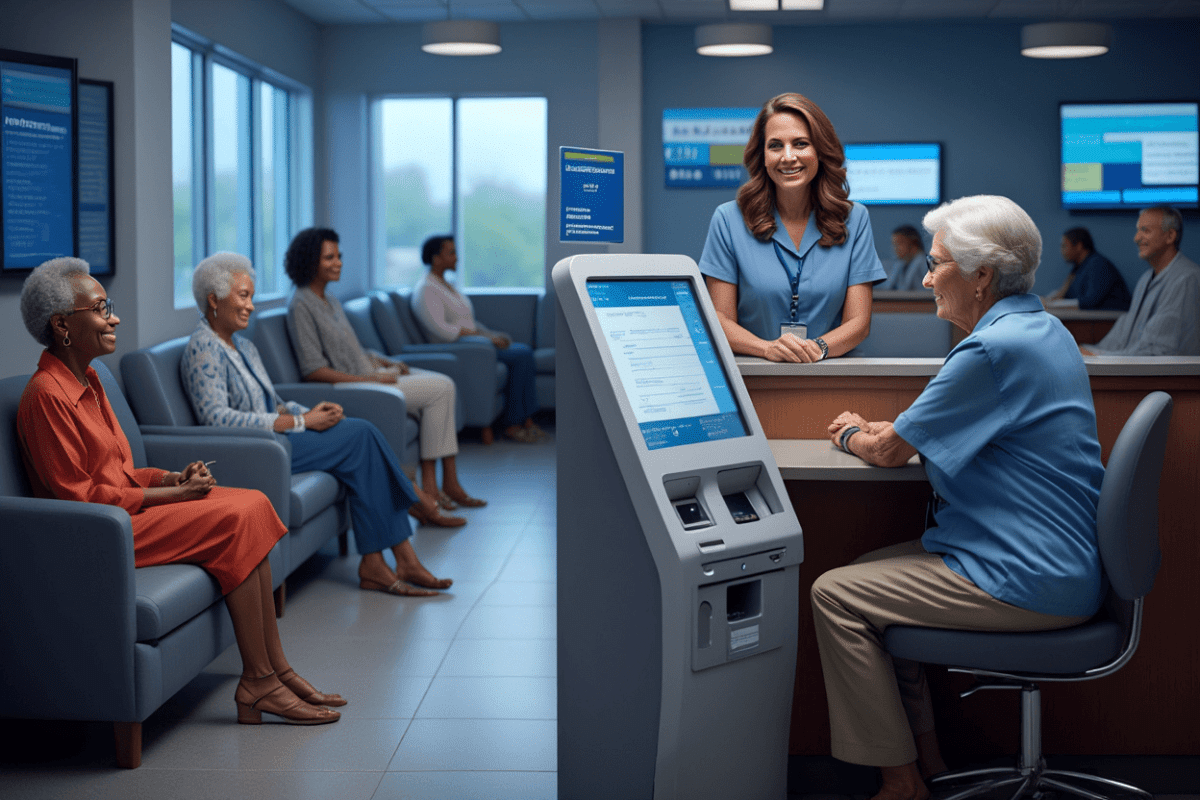
The Social Security Administration has significantly improved customer service in Ohio, reducing average wait times in field offices from approximately 30 minutes in fiscal year 2024 to just over 20 minutes in 2026. Social Security Commissioner Kijakazi Bisignano visited an office in Middleburg Heights, Ohio on May 22, 2026, to demonstrate the agency’s commitment to faster, more efficient service delivery across the nation.
🔥 Quick Facts
- Wait times reduced by approximately 33% from FY 2024 to FY 2026 in SSA field offices
- Commissioner Bisignano visited Ohio on May 22, 2026 to highlight customer service transformation
- 13.5 million public hours saved through March 2026 via reduced wait times agency-wide
- Digital-first modernization and appointment-based services driving improvements
Understanding Decades of Service Challenges
For years, Social Security field offices faced chronic crowding, with wait times regularly exceeding 45 to 60 minutes during peak periods. Many beneficiaries, particularly senior citizens and disabled individuals, found the in-person experience burdensome. The Social Security Administration operated under aging infrastructure, manual scheduling systems, and staffing constraints that limited capacity. By 2024, field office wait times had stabilized around 30 minutes—a modest improvement from previous years, but still far from optimal. This context frames the significance of the recent 20-minute achievement, which represents both operational progress and renewed focus on customer experience.
The Strategic Shift to Digital-First Operations
The path to reduced wait times began with a comprehensive digital-first transformation that the SSA initiated in 2024. The agency implemented appointment-based service models at field offices nationwide, replacing the previous walk-in system that created unpredictable wait times. My Social Security, the agency’s online account portal, expanded functionality, allowing beneficiaries to handle routine tasks—benefit verification, address changes, direct deposit updates—without visiting an office. The SSA’s automated phone menu system now handles routine inquiries, with nearly 90% of callers using self-service options by August 2025. For those requiring agent assistance, call wait times have dropped from 24 minutes (July 2025) to approximately 20 minutes by 2026.
Ohio’s Role in the National Improvement Trend
Ohio offices participated directly in this modernization rollout. The Middleburg Heights location, which Commissioner Bisignano visited on May 22, 2026, exemplifies the improvements achieved through appointment scheduling and streamlined workflows. Office staff received training in new systems, enabling them to process transactions faster. Field office performance metrics show Ohio tracking with national averages, with just over 20 minutes as the current benchmark. The state’s diverse population—urban centers like Columbus, Cleveland, and Cincinnati alongside rural areas—provides a representative test case for nationwide implementation.
| Metric | FY 2024 | FY 2026 (YTD) | Improvement |
| Average Field Office Wait Time | ~30 minutes | ~20 minutes | 33% reduction |
| Phone Service Wait Time (Peak) | 30-40 minutes | ~20 minutes | 33-50% reduction |
| Public Hours Saved (Agency-wide) | Baseline | 13.5 million (through March) | Significant time value |
| Appointment-Based Services | Limited availability | Standard nationwide | Full implementation |
The performance gains reflect both technology and staffing reorganization. The SSA restructured field office management in March 2026, centralizing examiner supervision and first-level manager oversight for better accountability. Digital intake systems and case tracking improvements reduced duplicate work and administrative delays. When beneficiaries arrive for appointments, staff can access their complete file instantly, eliminating the paper-shuffling that previously consumed time.
“These improvements demonstrate the power of digital transformation and operational efficiency. By streamlining processes and empowering our employees with better tools, we’re delivering faster service while maintaining the quality beneficiaries expect from Social Security.”
— Social Security Administration, official statement on customer service modernization, 2026
Implications for Beneficiaries and Future Service Delivery
The 20-minute achievement has measurable impact across Ohio’s senior and disabled population. Reduced wait times lower burden on elderly beneficiaries with mobility challenges, reduce time away from work for working-age individuals receiving benefits, and improve overall customer satisfaction. The 13.5 million hours saved agency-wide through March 2026 translates to significant public-sector value—beneficiaries can access services faster, freeing time for other responsibilities. Remote options have expanded: video call appointments launched in select Ohio offices, enabling beneficiaries to complete certain tasks from home. Language services improved, with Spanish-language representatives and materials now standard in Columbus and other high-Hispanic-population areas.
The SSA plans continued enhancements. User experience testing of My Social Security will expand functionality by end of 2026. Field offices will receive additional staffing in lines with demand—Ohio is slated for 12% expanded hours at peak-demand locations by fall 2026. The National 800 number (1-800-772-1213) will integrate AI-assisted responses to reduce hold times further. These initiatives build on May 2026 momentum.
What Challenges Remain in Social Security Customer Service?
Despite progress, obstacles persist. The SSA faces a projected $18 billion budget shortfall by 2033 that could pressure service staffing. Some beneficiaries remain digital-averse, requiring in-person support SSA must provide. Rural Ohio offices—particularly in Appalachian counties—still report wait times near 25 minutes due to geography and lower visit volume. Disability application backlogs average 6-8 months nationally, reflecting underlying case complexity that speed improvements cannot fully address. The SSA’s reliance on outdated mainframe systems for benefit calculation requires parallel digital systems, creating temporary inefficiencies during transition. Public awareness of digital services remains incomplete; many eligible beneficiaries still don’t know My Social Security exists. Will sustained investment maintain this momentum, or will economic pressures reverse gains?
Sources
- Social Security Administration Press Release (May 27, 2026) — Official announcement of Commissioner’s Ohio visit and field office performance metrics
- SSA Performance Dashboard (April 10, 2026) — National wait time reductions and hours saved data
- SSA News Release (July 23, 2025) — Earlier field office improvement report showing 23-minute wait times year-to-date
- Federal News Network (May 30, 2025) — Reporting on SSA’s AI integration strategy for wait time reduction