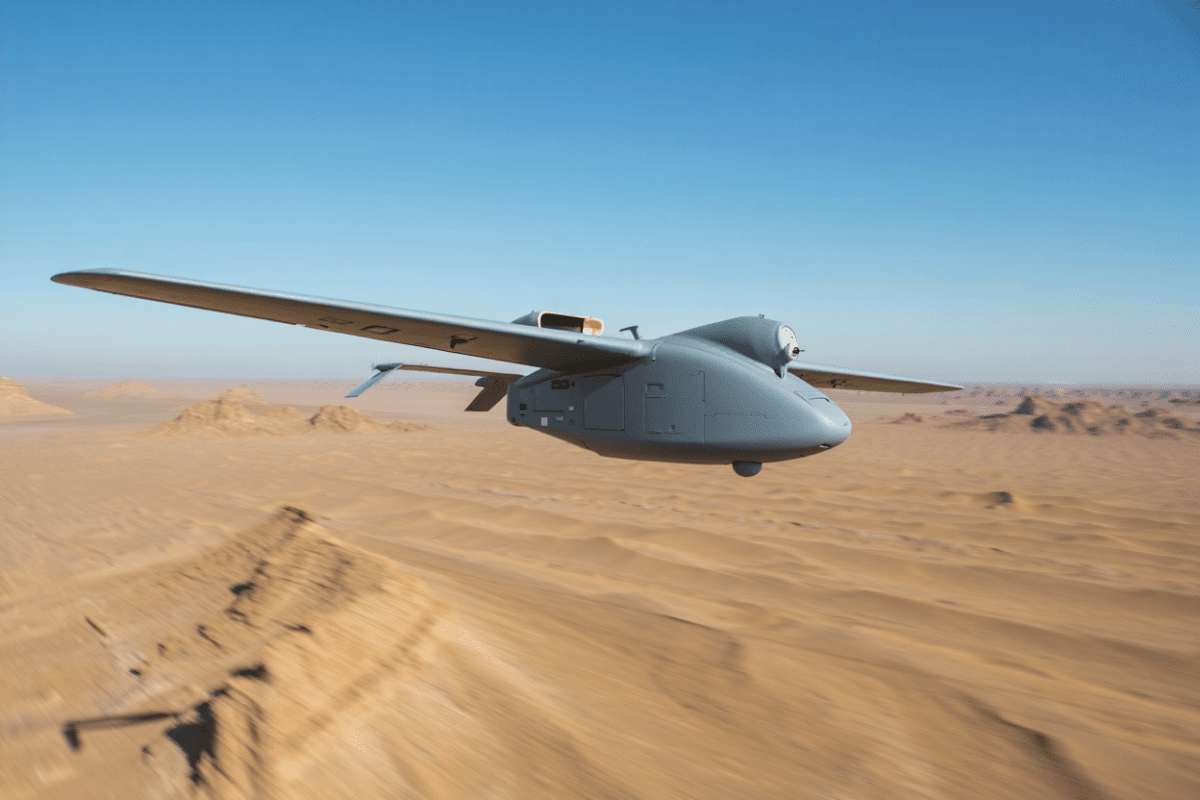
The U.S. Air Force finalized requirements in May 2026 for a next-generation successor to the General Atomics MQ-9 Reaper drone, marking a fundamental shift in unmanned combat strategy. The new platform prioritizes attritable design—meaning lower cost and higher acceptability of losses—alongside mass production capability and open-architecture flexibility. This decision follows combat losses in Iran operations that reduced the active fleet to 135 aircraft, forcing military planners to rethink drone acquisition and deployment models.
🔥 Quick Facts
- Requirements officially approved May 13, 2026 by the U.S. Air Force, ending 18 years of exclusive Reaper reliance
- Attritable design trades survivability for affordability, enabling mass production at significantly reduced per-unit cost
- MQ-9A production ceased in 2025 by General Atomics, creating urgent gap in drone inventory
- Active Reaper fleet dropped from 300+ to 135 aircraft due to combat attrition in contested airspace
- Current MQ-9B costs $30–50 million fully equipped; successor target is substantially lower
Why the Air Force’s Reaper Dependency Created a Strategic Vulnerability
Since its introduction in the mid-2000s, the MQ-9 Reaper became the centerpiece of U.S. air dominance in limited conflicts. The aircraft’s 27-hour endurance, 240-knot cruise speed, and 3,850-pound payload capacity proved invaluable for surveillance and strike missions across two decades of operations. However, this single-platform dependency exposed critical weaknesses when adversaries deployed sophisticated air defenses capable of targeting expensive, relatively slow-moving drones.
The 2025 combat losses in Iran accelerated this reality. Reports indicate 54 confirmed Reaper losses reduced operational capacity sharply, with replacement costs exceeding $1.6 billion in lost airframes alone. At $34 million per aircraft baseline cost (2024 dollars, excluding sensor packages), each loss carries enormous budget implications. Pentagon decision-makers concluded that current acquisition models were unsustainable for peer-competitor scenarios.
The New Attritable Doctrine: Building Drones to Lose
The successor platform represents a deliberate inversion of traditional military procurement philosophy. Rather than maximizing survivability through advanced sensors and defensive systems, the new design permits controlled loss rates. “Attritable” means the platformis engineered for mass production, modular upgrades, and lower per-unit cost—allowing operators to field three or four replacement drones for the cost of protecting one Reaper.
Open architecture frameworks enforce this flexibility, enabling rapid sensor integration and payload swaps without re-certificating entire aircraft. This mirrors commercial aviation principles—standardized interfaces, plug-and-play components, and rapid manufacturing cycles. Air Force officials have noted that the new drone must support multiple mission sets simultaneously, from electronic warfare jamming to reconnaissance to strike operations, rather than requiring mission-specific variants.
Historical precedent exists in military aviation. The F-35 jet family uses modular design for international interoperability. Collaborative Combat Aircraft (CCA) programs now emphasize affordable, distributed swarms over single high-value assets. The Reaper replacement extends this logic into the unmanned domain.
Technical Requirements and Capability Tradeoffs
Verified Air Force specification documents released in May 2026 outline distinct performance bands compared to the legacy Reaper:
| Capability | MQ-9 Reaper (Current) | Successor (Target Range) |
| Unit Cost (Flyaway) | $34M baseline | $8–15M (estimated) |
| Endurance | 27 hours (standard) | 12–18 hours acceptable |
| Max Altitude | 50,000 feet | TBA |
| Payload | 3,850 lbs (mixed) | 1,500–2,000 lbs (modular) |
| Production Method | Limited production runs | High-volume assembly lines |
| Maintenance Hours/Flight Hour | 10–15 hours | 3–5 hours (simplified design) |
The dramatic cost reduction—from $34M to $8–15M baseline—enables acquisition of 2–4x more airframes within existing budget envelopes. Trade-offs include reduced endurance and lower altitude capability, acceptable for regional ops against non-near-peer competitors but requiring layered fleet architecture for near-peer scenarios. AI data center efficiency improvements may eventually support autonomous swarm coordination, amplifying the effect of distributed smaller platforms.
“This is not about replacing one expensive drone with another expensive drone. The successor represents a completely different operational model—buy more, expect losses, restore capability faster. It’s the commercial manufacturing ethos applied to military aviation.”
— Steven Brinkley, Deputy Director, Air Force Futures Division
Production Challenges and Competitive Dynamics
The shift toward mass production and open architecture creates opportunities for new entrants alongside General Atomics, the incumbent Reaper producer. Defense contractors expanding AI-driven autonomous systems and manufacturing capabilities are expected to compete for the follow-on contract, which could exceed $50 billion across the system lifecycle.
General Atomics ceased MQ-9A production in 2025, signaling deliberate supplier preference for the next platform. However, the open-architecture mandate means other U.S. defense primes—Northrop Grumman, Boeing, and Lockheed Martin—can bid independently or as teaming partners. Commercial aerospace expertise in rapid prototyping and modular design could favor unconventional candidates over traditional warbird builders.
International allies including Canada, Australia, and NATO partners have signaled interest in the successor platform, potentially expanding the production base. Export controls and technology transfer restrictions will shape final partner selections, but the sheer production volume—estimated 500+ aircraft in initial tranches—justifies distributed manufacturing facilities.
What Happens to Existing Reapers? Fleet Modernization Amid Transition
The 135 remaining MQ-9A aircraft will not retire immediately. Air Force strategy calls for parallel fleet operations spanning 2026–2035, with Reapers backfilled by successor platforms as production ramps. Older airframes will likely receive sensor and avionics upgrades to extend service life, particularly for intelligence, surveillance, and reconnaissance (ISR) missions where endurance remains advantageous.
This overlap period creates inventory management complexity. Training pipelines, spare parts ecosystems, and pilot proficiency requirements must accommodate dual platforms. Modular open-architecture compatibility theoretically allows cross-platform sensor utilization, but practical integration testing could reveal integration challenges. Historical precedent—the F-16 to F-35 transition—took nearly two decades, suggesting realistic successor maturation timelines extend to early 2030s for full operational IOC.
Could Attritable Doctrine Change U.S. Military Doctrine Permanently?
Success of the Reaper successor will ripple across the entire Department of Defense acquisition strategy. Collaborative Combat Aircraft programs for manned-unmanned teaming already embrace attritable principles. Loyal Wingman platforms developed by Boeing and Northrop Grumman assume losses as operational costs.
Conversely, questions persist about attritable effectiveness against near-peer competitors like China and Russia who field sophisticated air-defense networks. Swarm tactics require numerical superiority that current U.S. budgets cannot sustain indefinitely. Adversary capability acceleration—hypersonic missiles, AI-enabled targeting, and electromagnetic resilience—could render the cost arithmetic obsolete within years. Congressional budget hawks may resist the acquisition volumes needed to sustain true attritable doctrine.
Sources
- Breaking Defense – Air Force Requirements Approval, May 13, 2026
- The War Zone – MQ-9 Replacement Technical Specifications, May 13, 2026
- Air and Space Forces Magazine – Fleet Reduction Analysis and Combat Losses, May 13, 2026
- Aviation Week – Requirements Document Clearance, May 12, 2026
- Inside Defense – Modular Architecture Details, May 13, 2026
- General Atomics Aeronautical Systems – Production Status and Platform Specifications