Show summary Hide summary
- 🔥 Quick Facts
- KURU’s Path from Bootstrap to Series A: A Twenty-Year Journey
- KURUSOLE Technology: The Innovation That Unlocked Institutional Interest
- Market Opportunity: Where $216.9 Billion Meets Unmet Demand
- Funding Metrics and Capital Deployment Strategy
- Competitive Positioning and Category Leadership Implications
- What This Funding Means for the Therapeutic Footwear Industry
- What Happens Next: Growth Phase Scenarios
- Is KURU’s Heel-First Approach the Future of Footwear Design?
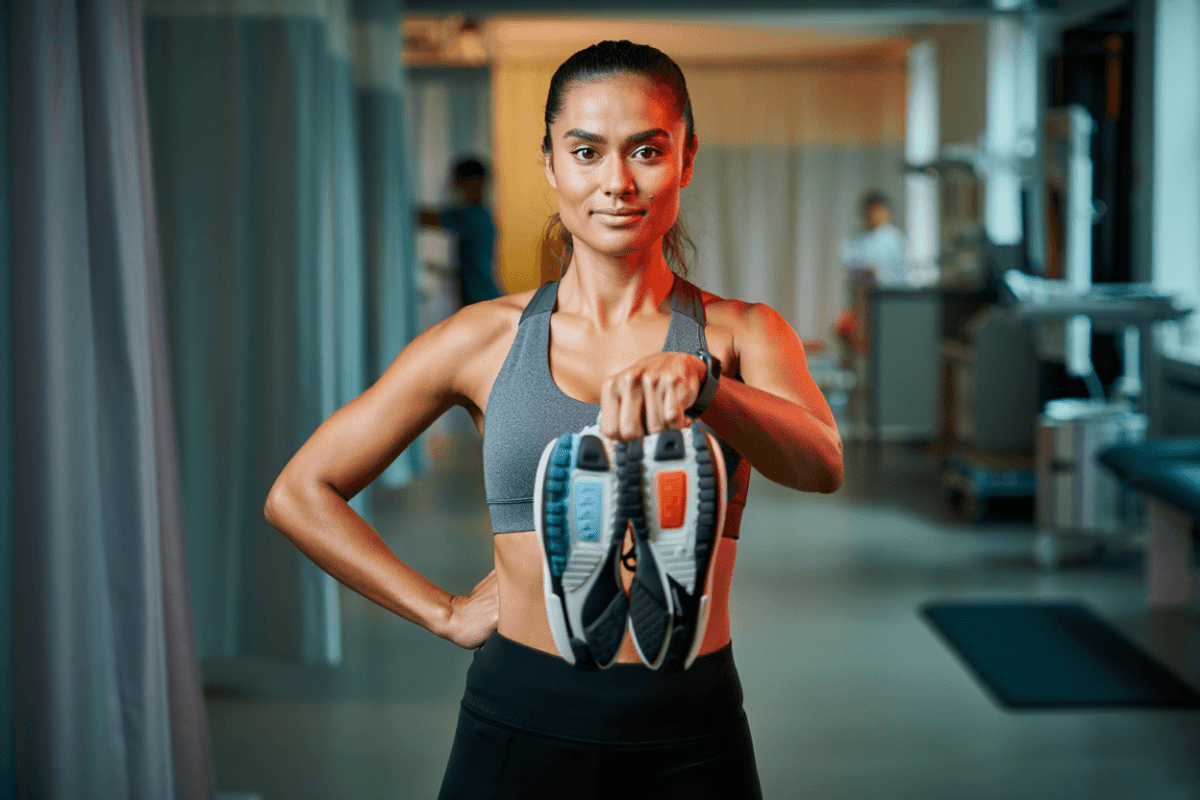
KURU Footwear secured $11.6 million in Series A funding, marking the company’s first major institutional capital raise since its 2006 founding. The Salt Lake City-based brand closed the round on February 23, 2026, advancing its mission to dominate the heel-first footwear category through patented KURUSOLE technology. This funding signals investor confidence in a category often overlooked by major athletic brands but increasingly recognized as essential for the booming performance foot health market.
🔥 Quick Facts
- $11.6 million raised in Series A funding, closing February 23, 2026
- KURUSOLE technology features patented triple-layer heel-cupping system
- Salt Lake City headquarters, founded by Bret Rasmussen in 2006
- Women’s footwear market reaching $381.2 billion by 2036 at 5.8% annual growth
- Direct-to-consumer model achieved 10-15% organic annual growth pre-Series A
KURU’s Path from Bootstrap to Series A: A Twenty-Year Journey
Bret Rasmussen founded KURU Footwear in 2006 with a vision that began in his fifth-grade classroom. The brand remained privately held and largely bootstrapped for nearly two decades, growing steadily through direct-to-consumer channels without traditional venture capital. This approach proved remarkably resilient: internal growth rates of 10-15% annually demonstrated product-market fit in a niche many incumbents neglected.
The heel-first design philosophy emerged from frustration with conventional footwear. Most athletic and casual shoes prioritize midfoot or forefoot dynamics, leaving heel support as an afterthought despite the heel absorbing up to 3x body weight with every step. KURU identified a gap: the growing segment of consumers dealing with plantar fasciitis, heel pain, and arch collapse—problems affecting millions of Americans annually.
Snowflake set to report Q1 2027 earnings tomorrow with analyst expectations at $1.32B revenue
KURU Footwear raises $11.6M in Series A funding for heel-first shoe innovation
KURUSOLE Technology: The Innovation That Unlocked Institutional Interest
The centerpiece of KURU’s competitive moat is KURUSOLE, the company’s patented heel support system. Unlike passive heel cushioning used in competitors’ designs, KURUSOLE employs a triple-layer adaptive structure that dynamically cups the heel while allowing controlled flex during the gait cycle. The technology preserves the natural fat pad beneath the heel—critical anatomy often compressed by traditional shoe designs—while providing targeted arch support and shock absorption.
This engineering approach distinguishes KURU from both legacy athletic brands and emerging wellness-focused competitors. While brands like Hoka One One emphasize maximal cushioning and Altra pioneered zero-drop platforms, KURU owns the “heel-hugging” category explicitly. Podiatrists consistently recommend KURU shoes to patients with heel pain, noting the technology’s clinical effectiveness without requiring expensive custom orthotics. The company’s own 2024 Foot Pain Trends Report revealed the therapeutic footwear segment projected to grow from $3.3 billion in 2022 to $6.9 billion by 2032—a 109% expansion in just one decade.
Market Opportunity: Where $216.9 Billion Meets Unmet Demand
The broader women’s footwear market—KURU’s primary demographic—is valued at $216.9 billion in 2026 and projected to reach $381.2 billion by 2036 at a compound annual growth rate of 5.8%. Within this landscape, the comfort-focused and therapeutic segments are expanding dramatically faster than fashion-driven categories. This creates a unique venture opportunity: a niche that mainstream incumbents (Nike, Adidas, Skechers) historically underserved because heel comfort doesn’t translate to aspirational brand messaging.
KURU’s Series A investors recognized this dynamics. The company demonstrated how direct-to-consumer distribution bypasses traditional retail friction, enabling higher margins than wholesale models. Similar direct-distribution strategies have proven effective across digital-native consumer brands seeking rapid scaling and customer data access.
Funding Metrics and Capital Deployment Strategy
The $11.6 million Series A represents institutional validation of a business model proven across two decades of independent operation. The capital will likely deploy toward three vectors: product line expansion (men’s offerings, athletic subcategories), geographic expansion (international direct-to-consumer distribution), and marketing acceleration to capture share from pain-conscious consumers increasingly searching “best shoes for heel pain” and “plantar fasciitis footwear.”
Customer acquisition cost (CAC) metrics likely improved post-Series A through programmatic performance marketing, content sponsorships, and podiatrist partnership programs. The company’s track record of 715% transaction growth and 794% revenue growth (year-over-year, from earlier case studies) suggests KURU possesses strong retention dynamics—critical for venture-backed unit economics.
| Metric | Value/Status |
| Series A Funding Amount | $11.6 million |
| Closing Date | February 23, 2026 |
| Founding Year | 2006 (20-year bootstrap period) |
| Headquarters | Salt Lake City, Utah |
| Primary Technology | KURUSOLE patented heel-support system |
| Target Market Growth (2022-2032) | $3.3B → $6.9B (109% expansion) |
“KURU sneakers are a wonderful option for people who have a history of heel pain and/or plantar fasciitis, and I recommend them to people with both high and low arches and anyone looking to prevent new issues from presenting by maintaining good foot alignment and protection.”
— Dr. Evans, Podiatrist (featured in podiatry endorsements, 2024)
Competitive Positioning and Category Leadership Implications
KURU’s Series A validates a thesis that traditional athletic brands largely conceded: specialized heel support commands a distinct market segment separate from running, lifestyle, or fashion categories. Competitors like Vionic (orthopedic heritage, now owned by Brown Shoe Company) and emerging DTC brands chase similar positioning, but KURU’s two-decade head start in heel-first engineering creates advantage in brand narrative and community trust.
The funding also suggests confidence in expansion beyond the “injured foot” positioning into broader wellness categories. Podiatrists, physical therapists, and occupational health programs increasingly recommend specialized footwear as preventive intervention, expanding TAM beyond reactive pain-relief seeking. KURU’s ability to scale partnerships with healthcare providers represents a defensible moat competitors cannot replicate quickly.
What This Funding Means for the Therapeutic Footwear Industry
The Series A signals that venture capital has finally recognized therapeutic and performance-health footwear as a secular growth trend, not a niche segment. Foot pain affects over 20% of American adults in any given year, yet the majority self-treat or ignore symptoms rather than invest in specialized footwear. KURU’s customer acquisition success proves this willingness-to-pay is higher than skeptics anticipated.
For investors, the moment is significant: health-conscious consumers increasingly view preventive footwear as part of holistic wellness spending, alongside fitness, nutrition, and sleep optimization. KURU occupies the intersection of therapeutic necessity and lifestyle aspiration—a rare positioning in footwear that newer growth capital increasingly rewards.
What Happens Next: Growth Phase Scenarios
With $11.6 million in capital, KURU faces three possible trajectories. Aggressive scaling aims to establish category dominance domestically and internationally before larger competitors launch defensive offerings. International expansion targets European and Asian markets where plantar fasciitis awareness and premium pricing tolerance are high. Vertical integration could include manufacturing partnerships or retail presence in specialty wellness channels.
The filing and execution will reveal KURU’s priorities. Early signals suggest focus on expanding product offerings beyond women’s core lines, enhancing direct-to-consumer marketing efficiency, and building podiatrist referral networks as a customer acquisition channel.
Is KURU’s Heel-First Approach the Future of Footwear Design?
Broader industry trends suggest heel support will become standard rather than specialty within five years. Aging demographics, increased awareness of foot biomechanics, and digital-native brands proving market viability all point toward major incumbents launching competitive heel-support lines. KURU’s advantage lies in having established the category narrative and built community credibility years before larger competitors committed resources.
The success of KURU’s Series A may also signal that footwear innovation is shifting away from celebrity athlete endorsements and toward authenticity-driven, health-outcome marketing—a distribution model direct-to-consumer brands execute more effectively than traditional wholesale chains.
Sources
- Signal Base — KURU Footwear Series A funding announcement and deal metrics, February 2026
- KURU Footwear Official — 2024 Foot Pain Trends Report, therapeutic footwear market projections
- Future Market Insights — Women’s Footwear Market analysis, 2026-2036 CAGR and valuation data
- Crunchbase — KURU Footwear funding history and investor network validation
- LinkedIn — Bret Rasmussen founder background and company milestones
- Yahoo Health — Podiatrist endorsements and clinical validation of KURU technology