
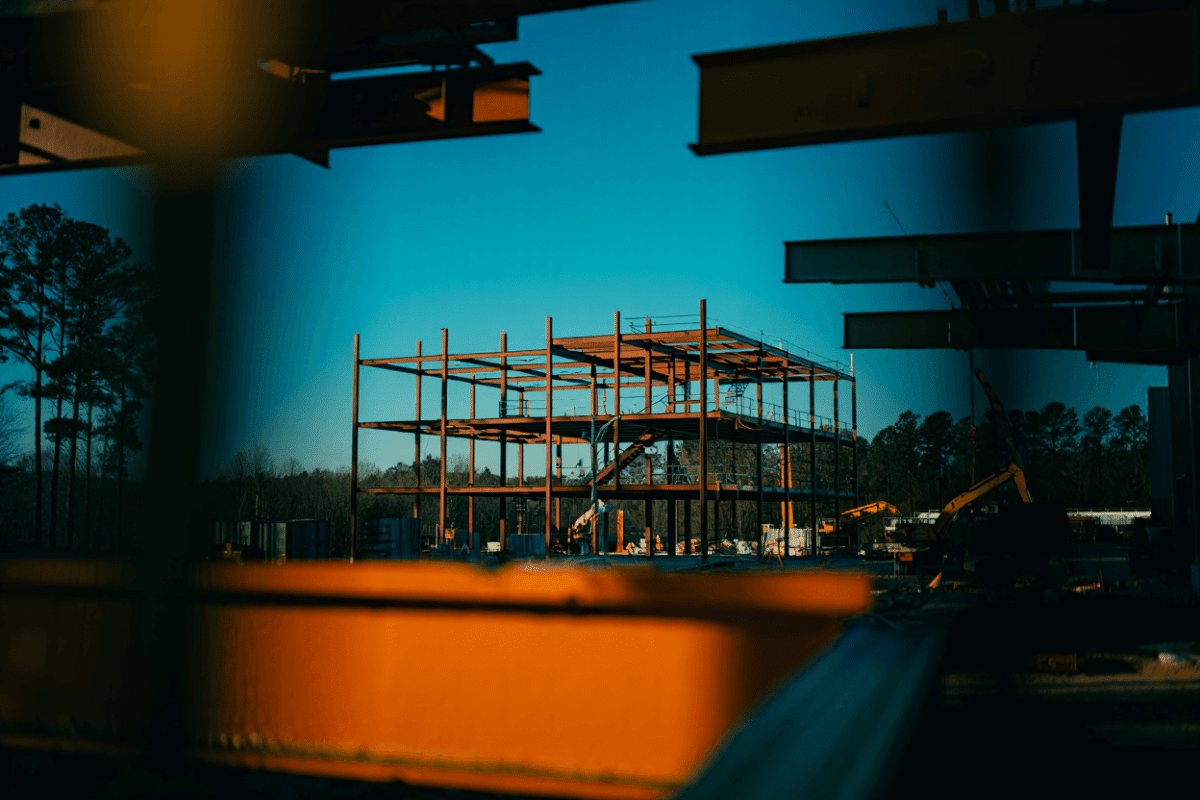
Lockheed Martin broke ground on May 21, 2026 on a new 87,000-square-foot Munitions Production Center in Troy, Alabama, marking a major expansion of THAAD (Terminal High Altitude Area Defense) interceptor manufacturing capacity. The facility, designated Building 47, will nearly double the existing production space at the company’s Troy operations and accelerate output of the critical air defense system as the U.S. military responds to heightened global missile threats.
🔥 Quick Facts
- Building 47 adds 87,000 sq ft of production space, nearly doubling total capacity
- Lockheed Martin investing over $9 billion through 2030 to scale missile production
- THAAD production to increase from 96 to 400 interceptors annually
- May 21, 2026 groundbreaking follows January 2026 framework agreement with U.S. Department of War
- About $1.25 billion already spent ahead of contract finalization
Strategic Context: THAAD’s Role in U.S. Missile Defense
THAAD represents one of the most advanced air defense systems deployed by the U.S. military and allied nations. The system intercepts and destroys incoming aircraft, cruise missiles, and ballistic missiles during their final approach phase, providing critical protection for military installations and civilian populations. Since its development by Lockheed Martin, THAAD has become the backbone of U.S. air defense doctrine, with systems deployed across the Middle East, Europe, and the Asia-Pacific region.
The May 2026 groundbreaking reflects urgent military demand. In January 2026, Lockheed Martin and the U.S. Department of War signed a seven-year framework agreement to quadruple THAAD production capacity—a dramatic shift from the previous annual rate of 96 interceptors to a targeted 400 per year by 2033. This acceleration addresses strategic concerns about sustained ammunition supplies in potential multi-front conflicts and international allied commitments.
Building 47: Manufacturing Breakthrough and Production Scale
The new Munitions Production Center represents significant engineering infrastructure investment. Located within Lockheed Martin’s existing Troy, Alabama campus in Pike County, Building 47 will house dedicated production lines for THAAD interceptors alongside support for the NGI (Next Generation Interceptor) program, a successor system in development. The 87,000-square-foot facility consolidates manufacturing processes previously distributed across multiple structures, enabling faster throughput and improved quality control.
Troy Operations has long served as the core manufacturing hub for Lockheed Martin’s missile programs. The facility currently operates 54 buildings with 6 major production factories, employing thousands of skilled workers. Building 47 will integrate seamlessly into this ecosystem, leveraging existing supply chains, quality systems, and workforce expertise. According to company announcements, the expansion will generate new full-time jobs over the next three years, though specific job numbers have not been disclosed publicly. The facility is expected to boost Regional employment as construction and operational staffing commence.
Financial Scope and Investment Timeline
The broader investment strategy underscores the Pentagon’s commitment to accelerated munitions production. Lockheed Martin has committed over $9 billion through 2030 to scale production across its missile and munitions portfolio. Of this total, approximately $1.25 billion has already been spent ahead of formal contract finalization, demonstrating the company’s confidence in the strategic direction. This massive capital allocation positions Lockheed Martin to capture significant market share in the expanding global missile defense market—a sector experiencing unprecedented demand from U.S. allies in Europe, the Middle East, and Asia.
| Investment Metric | Value | Timeline |
| Total Lockheed Investment | $9+ billion | Through 2030 |
| Pre-Finalization Spend | $1.25 billion | Already committed |
| Current THAAD Production | 96 interceptors/year | 2026 |
| Target THAAD Production | 400 interceptors/year | By 2033 |
| Building 47 Space | 87,000 sq ft | Construction underway |
| Capacity Increase | Nearly doubled | Troy facility |
“Lockheed Martin’s more than $9 billion investment through 2030 is already delivering tangible results to meet heightened munitions demand. The new Munitions Production Center in Troy is a testament to our commitment to scale manufacturing, ensuring America’s arsenal of freedom remains robust and ready.”
— Official Lockheed Martin Statement, May 2026 Press Release
Global Implications and Allied Exports
THAAD demand extends far beyond U.S. military procurement. The U.S. Department of State approved a $4.5 billion sale of THAAD systems to the United Arab Emirates in March 2026, one of several international orders in the pipeline. Germany, Poland, South Korea, and other NATO allies have also expressed interest in acquiring systems to reinforce air defenses against emerging threats. This export potential represents significant long-term revenue for Lockheed Martin, effectively extending the useful life of Troy Operations well into the 2030s.
The acceleration at Troy also reflects supply chain diversification. BAE Systems, a key subcontractor supplying THAAD seeker technology, signed its own seven-year production agreement in March 2026 to quadruple seeker output. L3Harris Technologies received a $400 million contract in February 2026 to expand production of solid rocket booster motors, the propulsion component critical to interceptor performance. This ecosystem-wide scaling demonstrates coordinated Pentagon strategy to eliminate production bottlenecks across the entire supply chain.
What Does This Mean for U.S. Defense Posture and Industrial Capacity?
The Troy expansion signals that U.S. military planners expect sustained, elevated demand for air defense systems. Historical patterns show that once production accelerations like this begin, they rarely reverse—wars exhaust munitions rapidly, and stockpiles built during peacetime become strategic reserves. The four-fold increase in THAAD capacity suggests military leadership believes the international security environment will remain tense through at least 2033.
For Alabama specifically, the investment reinforces the state’s position as a critical hub for advanced weapons manufacturing. Locally, the facility will support hundreds of direct manufacturing jobs and thousands of indirect positions in supply, logistics, and services. The May 21 groundbreaking comes as Lockheed Martin plans to invest $150 million more across its Pike County operations through the mid-2020s, part of a broader commitment to American manufacturing that rivals corporate investment announcements in other strategic sectors. Will production targets be met if global tensions ease, or will inventory management constraints limit output before 2030?
Sources
- Lockheed Martin News Release – “New Lockheed Martin Facility to Support America’s Arsenal of Freedom,” May 21, 2026
- U.S. Department of War Press Office – Framework Agreement Announcements, January-March 2026
- Reuters – “Lockheed Martin breaks ground on Alabama missile plant,” May 21, 2026
- Alabama Local Media – Regional coverage of Troy Operations expansion and job creation
- Defense Industry Analysts – THAAD production capacity assessments and supply chain analysis










