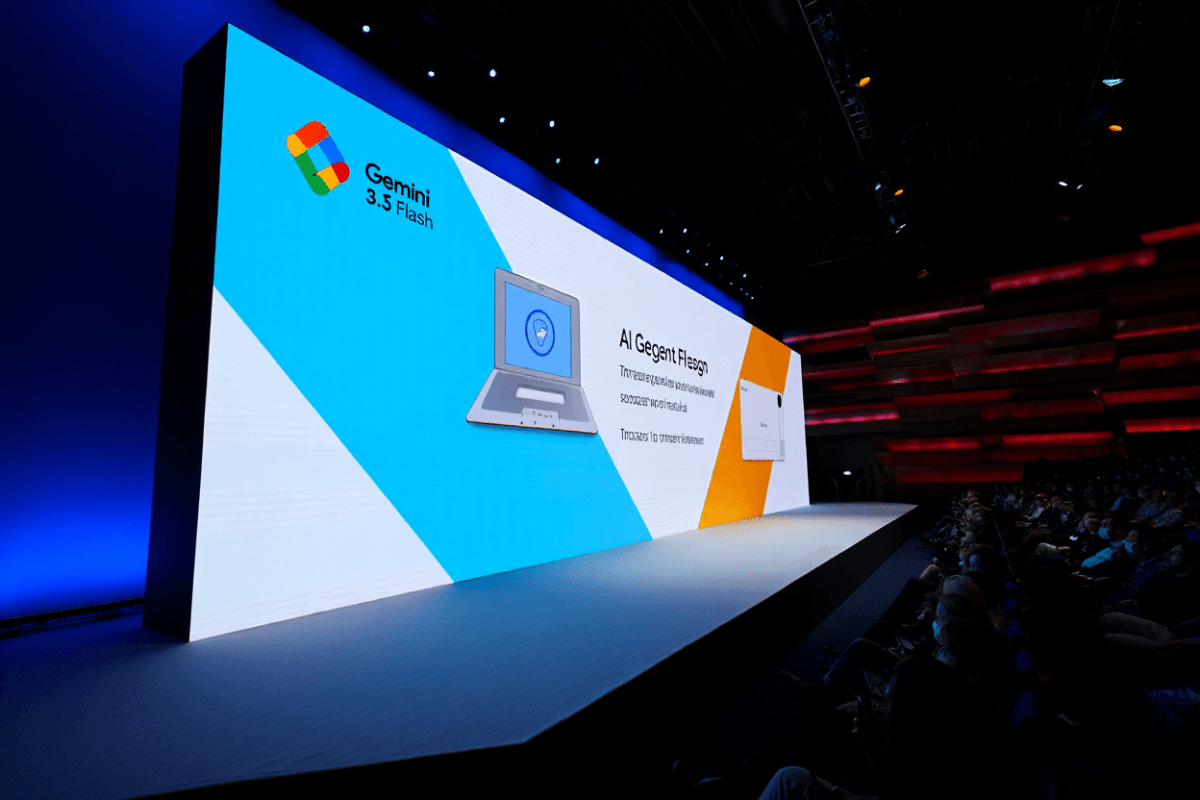
Google unveiled its most significant search engine overhaul in **25 years** on **May 19, 2026**, integrating AI-powered tools directly into the core search experience. Announced at **Google I/O 2026**, the update introduces AI Mode, powered by the new Gemini 3.5 Flash model, enabling users to leverage autonomous agents for complex searches, real-time information monitoring, and background task execution simply by asking questions.
🔥 Quick Facts
- Google announced its biggest search update in 25 years on May 19, 2026
- Gemini 3.5 Flash powers the new AI Mode with 1-million-token context window
- Search agents can monitor topics in the background and alert users proactively
- AI Overviews now appear on 48% of searches, up from 34.5% in December 2025
- May 2026 Core Update rollout began May 21 and will complete within two weeks
What This Update Means for How People Search
The May 2026 Google Search overhaul fundamentally reshapes search interaction. Google has moved beyond simple keyword matching toward agentic AI—systems that reason, plan, and execute multi-step tasks autonomously. Users no longer formulate searches as questions; they issue commands to agents that handle research, comparison, booking, and tracking tasks end-to-end.
The search box itself receives its first major redesign in over 25 years, though Google clarified the interface remains recognizable. The real transformation occurs behind the interface, where Gemini 3.5 Flash delivers reasoning capabilities matching larger flagship models while operating at significantly faster speeds. This technical shift reflects Google’s strategic pivot from traditional search toward conversational, agent-driven discovery.
Core Features: AI Mode and Search Agents Explained
AI Mode operates as Google Search’s primary gateway to these new capabilities. When activated, Gemini 3.5 Flash analyzes queries across multiple web sources in real-time, synthesizing information with reasoning checks to verify accuracy. Unlike previous AI Overviews, which simply summarize results, the new approach enables agents to take action—booking parking before an event, tracking price changes on products, monitoring news about companies or topics, and answering follow-up questions without requiring manual re-queries.
Information agents represent the breakthrough innovation. These autonomous systems run continuously in the background, monitoring topics users designate. When relevant updates occur—stock price movements, breaking news, research developments, competitor announcements—agents proactively alert users rather than requiring active searches. This inversion of search workflow marks a fundamental departure from 25 years of user-initiated, reactive search behavior.
The Google cloud infrastructure supporting these agents processes customer data with enhanced encryption and privacy controls, addressing enterprise concerns about agent autonomy and data handling. Similar strategic pivots toward AI agents are reshaping technology sector workforces, as companies restructure around agentic capabilities rather than traditional tool development.
Technical Architecture and Model Improvements
| Feature | Specification | Previous Standard |
| Primary Model | Gemini 3.5 Flash | Gemini 2.0 (various versions) |
| Context Window | 1 million tokens | 32K-100K tokens |
| Benchmark Performance | Outperforms Gemini 3.1 Pro across multiple dimensions | Flagship models required for complex reasoning |
| Speed Advantage | 4x faster processing than previous models | Baseline latency |
| Multimodal Input | Processes text, images, audio, video simultaneously | Limited multimodal support |
| Agent Deployment | Native support for autonomous task execution | Chatbot-first design paradigm |
Gemini 3.5 Flash achieves frontier-level reasoning while maintaining the speed profile of smaller models. This efficiency breakthrough enables Google to deploy agents across 2 billion+ daily searches without infrastructure constraints. The one-million-token context window allows agents to analyze entire research documents, financial reports, webpage archives, and conversation histories in single processing passes—capabilities previously requiring multiple API calls or fragmented workflows.
“We’re bringing our advanced model capabilities to Search with new AI features, enabling you to use agents just by asking a question.”
— Google Search Leadership, blog.google announcement, May 19, 2026
Implications: Redefining Search for Businesses and Consumers
Website publishers and e-commerce platforms face immediate adaptation requirements. AI agents frequently generate summaries of product information, pricing comparisons, and shipping details without directing users to destination sites. This capability may reduce click-through traffic while increasing data requirements for agent training. Google’s recent announcements suggest software companies are already cutting workforce percentages amid AI competition, signaling broader market transformation.
For **consumers**, the update delivers measurable productivity gains. Researching vacation destinations no longer requires 20+ manual searches; agents can simultaneously compare flights, accommodations, attractions, and weather across entire region categories. Background agent monitoring eliminates the need to repeatedly search for job postings, apartment listings, or price drops—notifications arrive when conditions match specified preferences.
The February 2026 Discover Core Update’s emphasis on expertise, local relevance, and original analysis gains critical importance. Search agents will depend on high-quality source material to generate accurate summaries. Publishers who invested in deep expertise signals, geographic targeting, and original reporting will see their content prioritized when agents compile research summaries, increasing visibility and authority signals even if direct click-through traffic declines.
When Will These Features Reach All Users?
The May 2026 Core Update, which began rolling out on **May 21, 2026**, will complete its global deployment within two weeks. AI Mode and search agents will initially reach users with Google One AI Premium subscriptions and select markets, with broader rollout planned for **June-July 2026**. Google stated that agent features including autonomous task execution (booking, tracking, scheduling) will arrive by **June 2026’s end**, requiring Android 12 as minimum operating system.
Timing implications matter for content creators. Publishers have approximately 30 days before agent-powered summaries significantly impact search traffic for their categories. This window provides time to audit content for expertise markers Google’s agents consider when prioritizing sources: author credentials, data freshness, methodological transparency, and original research citations.
What Happens to Traditional Search Results in This AI-Driven Future?
Google confirmed that traditional search results (blue links, organic rankings) will persist alongside AI Mode. Users will toggle between modes based on task requirements—using agents for exploratory research and traditional search for fact verification or direct website navigation. This dual-mode structure means SEO remains relevant, but expertise-first content strategies gain urgency. Agencies report that AI training data quality directlyaffects agent output quality, creating feedback loops where high-expertise content receives increasing agent prioritization, driving traffic concentration toward authority publishers.
Sources
- CNN – Google’s biggest search engine overhaul announcement, May 19, 2026
- Google Official Blog – “A new era for AI Search,” May 19, 2026
- TechCrunch – Google AI agents and Gemini 3.5 Flash technical specifications
- Google Cloud – Gemini 3.5 Flash performance benchmarks and agentic AI capabilities
- Advanced Web Ranking – AI Overview adoption metrics (48% of searches by March 2026)
- Search Engine Land – May 2026 Core Update rollout timeline and impact analysis