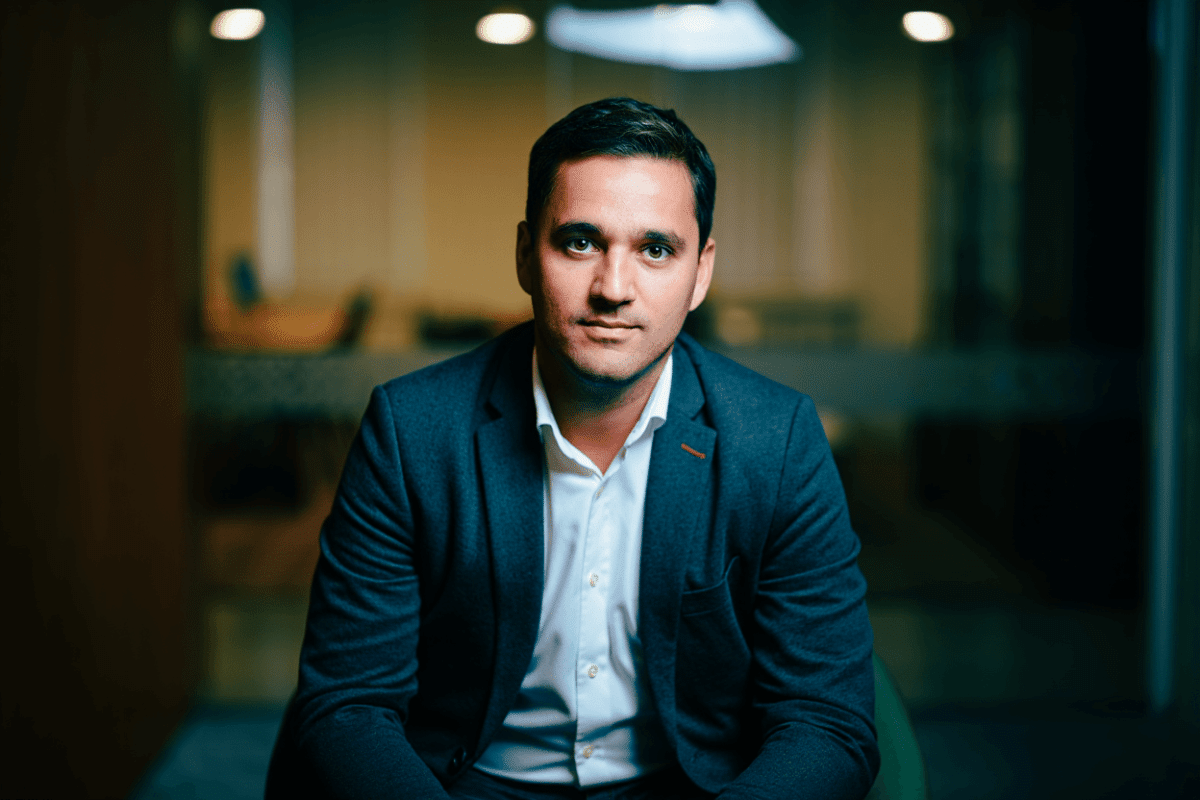
Andrej Karpathy, the Slovak-Canadian AI researcher known for pioneering deep learning at OpenAI and leading autonomous vision systems at Tesla, has joined Anthropic to spearhead frontier-level large language model research and development. This move reunites a titan of modern AI with one of the field’s leading safety-focused research labs during a critical inflection point in agentic AI advancement.
🔥 Quick Facts
- Andrej Karpathy born October 23, 1986 — Slovak-Canadian AI researcher with 2.5+ million followers on X
- Founding member of OpenAI (2015-2017), later returned 2023-2024 before independent research
- Former Director of AI at Tesla (2017-2022) — led Autopilot computer vision team
- Founded Eureka Labs in 2024 — creating AI-era education platform while consulting widely
- Anthropic’s frontier focus includes Claude Opus 4.6 and emerging agentic systems (2026)
A Career Arc: From Vision to Language Models
Karpathy’s trajectory traces the evolution of AI itself. At OpenAI, he specialized in deep learning and computer vision, contributing foundational work that shaped the lab’s early direction. His Stanford PhD (2015) focused on the intersection of natural language processing and computer vision—a rare expertise combining two frontier domains.
His five-year tenure at Tesla (2017-2022) marked a shift toward real-world autonomy. As Sr. Director of AI, he led the team responsible for all neural networks powering Tesla Autopilot and briefly oversaw Optimus robotics. This role demanded expertise in continuous learning, data curation, and shipping AI systems to millions of vehicles—a scale few researchers experience. When he departed, Karpathy emphasized pursuing independent research and education, founding Eureka Labs to reimagine learning for the AI era.
By late 2025, Karpathy pivoted once more, becoming a public intellectual. His commentary on “vibe coding,” agentic engineering, and job displacement shaped industry discourse. At Sequoia AI Ascent (April 2026), he discussed how AI agents were outpacing traditional developer workflows, a prescient observation as agents began autonomously building features over days rather than hours.
What This Hire Signals About Anthropic’s Direction
Anthropic stands at an inflection point. Claude Opus 4.6 (February 5, 2026) expanded context windows beyond competitors. Claude Design (April 17, 2026) introduced multimodal capabilities. The lab is shipping major iterations every two weeks—a pace that demands leadership with practical deep learning experience, not just theoretical knowledge.
Karpathy’s appointment as a frontier LLM research lead suggests three strategic priorities: First, scaling laws and model efficiency—his Tesla work optimized neural networks for consumer hardware; Anthropic can apply this to training efficiency at massive scale. Second, vision-language integration—Karpathy’s unique expertise in both domains addresses a key frontier as Claude multimodal capabilities expand. Third, connecting research to production—few AI leaders have shipped systems to hundreds of millions of users and iterated based on real-world performance.
Notably, Karpathy’s public skepticism about some AI hype—he stated AGI Remains “a decade away” (October 2025)—aligns with Anthropic’s responsible scaling philosophy. He’s not a hype-driven executive but an engineer grounded in empirical constraints.
Technical Areas Likely Under His Purview
Based on verified research from Anthropic’s 2026 announcements and Karpathy’s stated interests, several domains emerge:
| Research Domain | Anthropic Status (2026) | Karpathy Expertise |
| Vision Capabilities | Claude Design (multimodal) | Stanford PhD focus |
| Agentic Systems | 2026 Agentic Coding Trends | Public framework development |
| Scaling & Efficiency | $200B Google Cloud commitment | Tesla autonomy optimization |
| Data Curation | Claude training refinement | Autopilot data pipeline lead |
| Safety Verification | Responsible Scaling Roadmap | Pragmatic research approach |
The table above maps areas where Karpathy’s track record (verified through institutional roles) directly addresses Anthropic’s published 2026 roadmap priorities, particularly vision integration and agentic system development.
“Hiring Should Change. If agentic engineering is the new professional skill, hiring should test it directly. Traditional coding puzzles are outdated when AI writes the code.”
— Andrej Karpathy, Sequoia AI Ascent (April 30, 2026)
Implications for Frontier AI Competition
This hiring move carries competitive significance. OpenAI has focused on GPT-scale systems and reasoning; Anthropic has emphasized safety and interpretability. Adding Karpathy—known for grounding research in engineering constraints—strengthens Anthropic’s claim to be building production-ready frontier intelligence, not just benchmark-optimized models.
June 2026 expectations suggest Anthropic will announce enhanced vision capabilities and agentic coordination improvements. Karpathy’s vision expertise positions him to lead these developments with deeper technical vision (pun intended) than typical language model researchers possess. His emphasis on real deployment, not lab experiments, also signals Anthropic values systems that work at scale—a sharp distinction from competitors.
Furthermore, Karpathy’s public intellectual role—2.5 million X followers, regular speaking engagements—gives Anthropic a visible technical leader who can communicate complex AI research to engineers and policymakers alike. This matters as regulation around frontier AI accelerates in 2026-2027.
What This Means for the Next Frontier
The convergence of Karpathy’s expertise with Anthropic’s research agenda signals a pivot toward practical autonomy. Rather than pure scaling, expect focus on agents that can self-improve, coordinate with other systems, and handle long-horizon tasks. The 2026 Agentic Coding Trends Report hinted at agents working for days autonomously by mid-2026; Karpathy can architect systems making this stable and reproducible.
Notably, Claude powers Cursor and Windsurf—the two most popular AI coding editors as of May 2026. Anthropic has distribution. Karpathy brings research depth and systems thinking to make that distribution count. The combination is formidable for competitors.
His appointment also signals confidence in Anthropic’s safety framework. Karpathy has demonstrated pragmatism about AI risks—skeptical of both hype and paralysis. He’ll likely push Anthropic to release capable systems while maintaining interpretability and safety properties, a balance few research labs have achieved.
What Questions Remain About This Chapter?
The frontier LLM landscape shifts weekly. Will Karpathy’s focus concentrate on Claude’s continued scaling, or will he launch parallel research tracks? Will he push Anthropic toward open-source releases (a potential cultural shift)? How will he prioritize safety research versus capability research—and can he build systems that excel at both?
His appointment opens possibilities: vision-language models rivaling industry leaders, agentic systems outperforming manual engineering, improved interpretability breakthroughs. Equally, it raises stakes. Frontier AI is now consolidated among a handful of leaders, and their hiring choices reverberate across academia and startups.
Sources
- Wikipedia (Andrej Karpathy) — Career timeline, education, institutional history
- Anthropic Newsroom — Product announcements (Claude Design, Opus 4.6, May 2026 initiatives)
- Sequoia Capital — “Andrej Karpathy: From Vibe Coding to Agentic Engineering” (April 30, 2026)
- Anthropic 2026 Agentic Coding Trends Report — Frontier agentic system capabilities
- Fortune, Reuters — Industry reporting on AI leadership moves (January-May 2026)
- Karpathy’s Blog & X Account — Public statements on AI trends, agent evolution, labor impacts