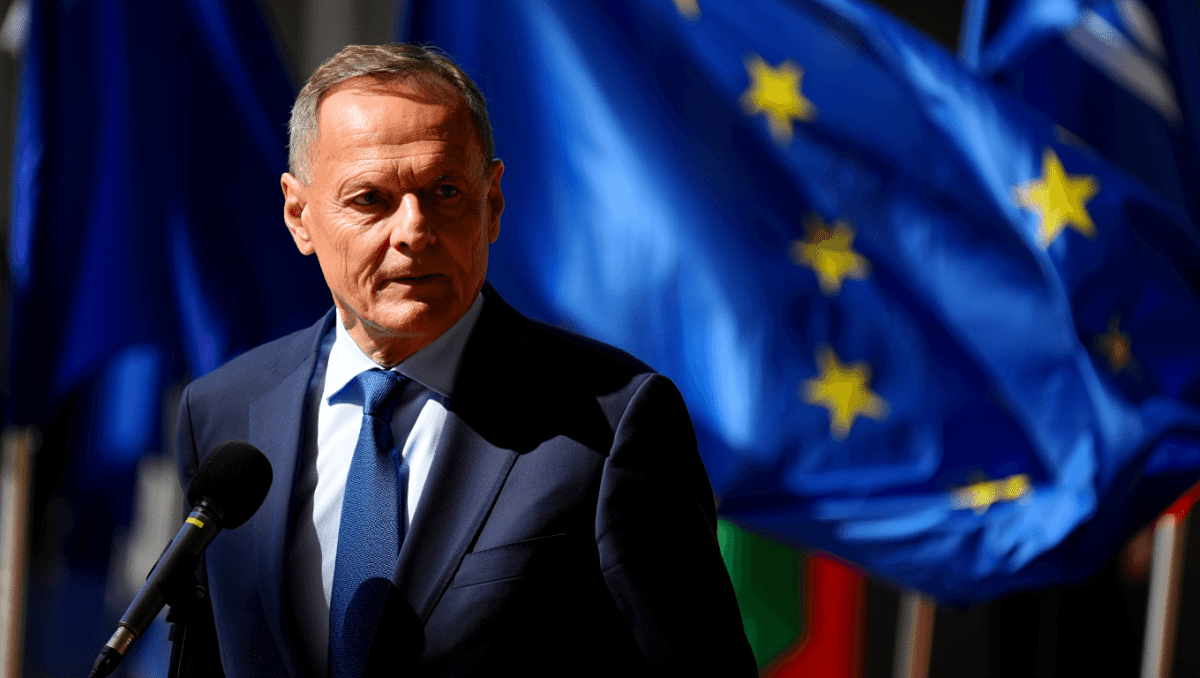
Germany’s Chancellor Friedrich Merz just shook Europe’s budget framework today, calling for a sweeping overhaul of the EU’s fiscal system. His bold push signals intense negotiations ahead for the 2028-2034 budget. Here’s what’s at stake in this continental clash.
🔥 Quick Facts
- Timeline: December 2026 is the unofficial EU summit deadline for a budget deal
- Budget Size: The European Commission proposed €2 trillion ($2.3 trillion USD) for the next cycle
- Core Conflict: Defense spending demands clash with traditional agricultural subsidies and regional aid
- Merz Position: Opposes new joint EU debt while supporting increased investments in defense and competitiveness
Merz Demands a Radical Shift in EU Spending Priorities
Friedrich Merz delivered a watershed speech calling for the EU’s outdated budget system to be replaced. The German Chancellor argues that the current structure doesn’t reflect modern security threats or economic competition. He wants less money flowing to traditional agricultural subsidies and more funding redirected to defense capabilities and technological innovation. This represents a dramatic pivot from previous German positions that protected farm spending.
Merz is leveraging Germany’s economic leverage as Europe’s largest economy to reshape the entire budget negotiation. His proposal directly challenges nations that depend heavily on EU regional development funds and agricultural protections, including Poland, Hungary, Greece, and Spain. The speech made clear that Germany will not quietly accept budget increases without fundamental structural change.
Security Spending Versus Subsidies: The Battle Lines Form
The core battle pits increased security investment against preserving farm subsidies that consume roughly 40% of the entire EU budget. Rising tensions over NATO commitments, Russian threats, and strategic autonomy have made defense spending a non-negotiable priority for Germany and other Eastern European nations. Meanwhile, France, Spain, and agricultural interests resist any cuts to subsidies that sustain rural economies across the bloc.
The European Parliament itself wants to expand the total budget beyond the Commission’s €2 trillion proposal. This creates a perfect storm of competing interests. The December 2026 EU summit will become a high-stakes showdown where budget hawks like Merz face off against nations defending their traditional spending allocations.
Key Positions in the Budget Conflict
| Country/Actor | Position | Core Interest |
| Germany (Merz) | Overhaul structure, increase defense | Fiscal restraint, security spending |
| EU Parliament | Expand budget beyond €2 trillion | Increased investment capacity |
| France, Spain, Greece | Protect subsidies and regional aid | Agricultural and cohesion funds |
| Poland, Hungary | Defense investment, regional support | Security and development funds |
Germany’s Domestic Pressures Fuel EU Ambitions
Merz’s push for reform reflects Germany’s own budget crisis and security needs. The German government has approved a €524.5 billion domestic budget for 2026 with record defense spending increases. Critics note the irony: Germany opposes new joint EU debt while simultaneously borrowing heavily at home through the €780 billion debt-funded infrastructure fund. This contradiction fuels frustration among smaller EU members who need Brussels’ financial support. Merz’s message is clear: Berlin must fix its own house before funding European projects.
The German Chancellor also signals that NATO defense commitments are reshaping priorities across Europe. With U.S. security guarantees under scrutiny, European nations must invest in independent military capabilities. This geopolitical shift gives Merz leverage to argue that budget restructuring isn’t optional but essential for continental survival.
“The speech showed how battle lines were being drawn over the 2028-2034 EU budget, where calls for increased security spending vie for funds with traditional priorities.”
— Reuters, May 14, 2026
Can Europe Reach Compromise Before December 2026?
The December 2026 EU summit represents a critical juncture where fundamental disagreements must be resolved. France, Spain, and agricultural lobbies show no signs of accepting major subsidy cuts. Meanwhile, Merz and Germany show steel in their negotiating stance. The European Commission’s €2 trillion proposal already represents compromise, but the reality suggests even higher demands may emerge.
Expect months of diplomatic maneuvering, side agreements, and horse-trading before world leaders gather in December. Smaller nations may demand concessions on cohesion funding while accepting modest subsidy adjustments. Eastern European countries face their own tension: they need Western European support for development but also want robust defense spending. The final deal will reveal which concerns ultimately prevail in shaping Europe’s financial future.
Sources
- Reuters – Germany’s Merz calls for EU budget overhaul as battle looms (May 14, 2026)
- Financial Times – Friedrich Merz vows to oppose new EU debt despite Germany’s borrowing spree (May 14, 2026)
- POLITICO – Battle of the Budget: EU Parliament vs. Germany (April 28, 2026)