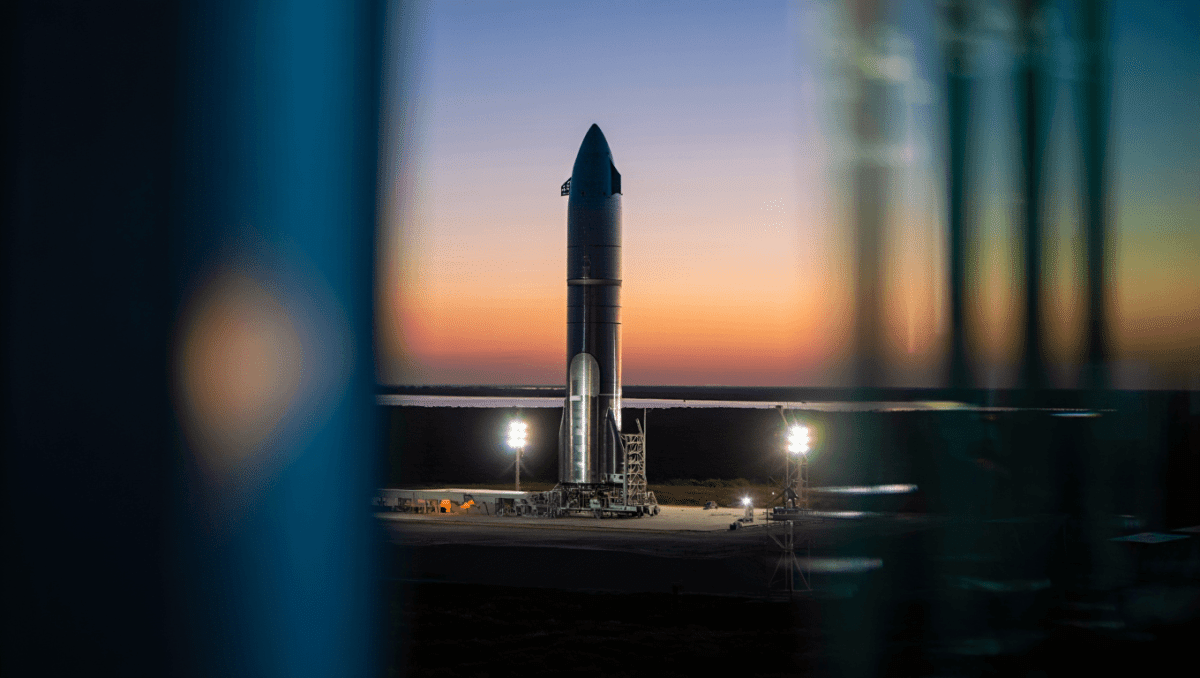
SpaceX just locked in the moment everything changes. The company is targeting Tuesday, May 19, 2026, for the spectacular debut of Starship Version 3, its most revolutionary megarocket yet. After months of intensive engineering, this upgraded titan will finally thunder from Starbase in South Texas.
🔥 Quick Facts
- Launch Window: May 19, 2026, opening at 5:30 PM EDT with a 90-minute window
- Vehicle: Starship V3 Super Heavy booster paired with Ship 39 for Flight Test 12
- New Raptor 3 Engines: All 33 booster engines produce 280 tons of thrust per engine, delivering unprecedented power
- Key Upgrade: 25 percent increase in propellant volume, new thermal tiles, and optimized feedline systems
The Third Generation Finally Arrives
This isn’t just another test flight. Starship V3 represents SpaceX‘s most aggressive redesign yet, incorporating lessons from previous flight attempts. Engineers completely overhauled the propulsion system, expanded fuel capacity, and reimagined the structural architecture. The new design allows all 33 engines to start simultaneously and enables faster, more reliable flip maneuvers during the orbital insertion sequence.
Flight Test 12 will be the first opportunity to validate these sweeping changes in a real launch environment. SpaceX completed a successful full-duration static fire test on May 12, with 5,000 metric tonnes of propellant loaded into the fully stacked rocket, signaling readiness for tomorrow’s pivotal attempt.
Raptor 3 Engines Redefine Rocket Power
The new Raptor 3 generation engines are the heartbeat of this upgrade program. Each booster engine delivers 280 tons of thrust, with designs targeting 300 tons in future iterations. Mass of the sea-level engines has been reduced to 1,525 kg from the previous 1,630 kg, achieving approximately 1 ton of vehicle-level mass savings. The engines feature 350 bar chamber pressure, enabling superior efficiency and reliability.
Beyond raw numbers, SpaceX redesigned the entire engine flow path and power cycle. The new methane-oxygen combustion process and improved fuel injector architecture create engines that are simpler to manufacture and more resilient to failure modes that plagued earlier variants.
Where V3 Dominates Previous Versions
| Upgrade Area | V3 Achievement |
| Propellant Capacity | +25% increase in total volume |
| Engine Start Sequence | All 33 engines start simultaneously |
| Thermal Protection | Redesigned silica tile geometry |
| Feed System | Vacuum-jacketed feedlines, larger transfer tubes |
The tile redesign addresses ablation concerns from earlier flights, with new geometries providing superior thermal distribution. Feedline infrastructure received major attention, featuring substantially larger transfer tubes connecting engines to fuel tanks. Grid fin locations have been repositioned for improved aerodynamic control authority during reentry sequences.
“This test flight on May 19 will push us closer to Mars. Version 3 brings major upgrades including new Raptor engines and improved reusability. Which V3 feature excites you the most for the future of space travel?”
— SpaceX, Official Statement
The Road to Orbital Perfection Continues
Success tomorrow means proving that V3 can execute a flawless booster separation and ship-to-orbit insertion. Engineers will monitor 1,000-plus design changes in real-time, tracking everything from dynamic pressures to thermal responses. If all systems perform nominally, SpaceX moves one step closer to reliable, rapid reusability and eventual human missions to Mars.
The stakes are enormous. Starship Flight 12 represents the validation test for next-generation architecture. Future flights will attempt booster catch, controlled ship landing, and full propellant transfer demonstrations, each building toward the goal of true full reusability.
Will May 19 Bring the Historic Win Rocket Community Craves?
Speculation runs high. Starbase‘s recent launch rehearsal suggests SpaceX feels confident in readiness, yet weather and last-minute technical issues remain constant variables in spaceflight. The 90-minute launch window provides flexibility, though Texas coastal weather in May can be unpredictable.
What’s certain is that Version 3 represents a quantum leap forward in capability and design maturity. Whether May 19 delivers complete success or reveals areas requiring refinement, the data gathered will accelerate the entire Starship program toward operational status faster than any previous iteration.
Sources
- Spaceflight Now – SpaceX targets May 19 for debut of Starship Version 3, detailed technical analysis
- Space.com – SpaceX fuels Starship V3 megarocket for first time ahead of crucial test flight
- Investing.com – SpaceX unveils Starship V3 with major design overhauls and upgraded engines