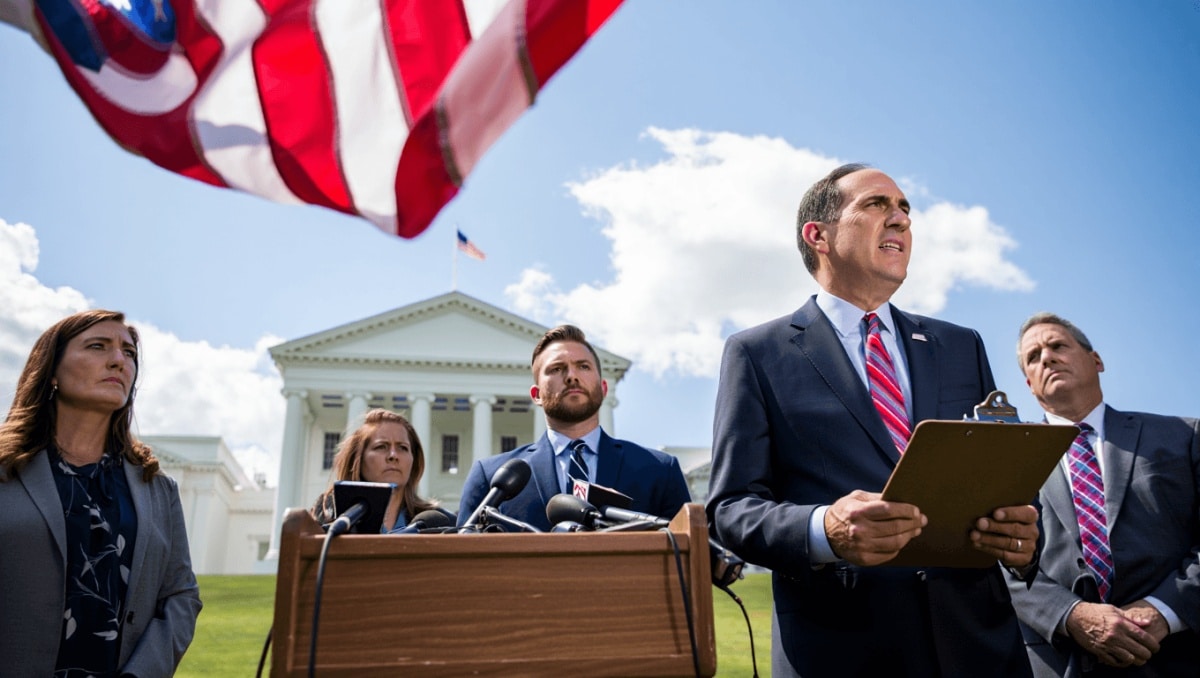
Virginia’s proposed congressional map has triggered sharp objections from Republican leaders who say the new lines disadvantage rural voters — a dispute that could reshape competitive races and prompt fast-moving legal fights ahead of the 2026 midterms. The controversy centers on how population shifts and drafting decisions translate into political power across the state’s urban, suburban and rural communities.
Supporters of the plan argue it corrects decade-old imbalances and follows legal criteria, while critics say the map fragments rural counties and concentrates conservative voters in fewer districts. That clash is unfolding at a sensitive moment: both parties view Virginia as a bellwether for control of closely contested seats in Congress.
Why the fight matters now
Every map redraw affects who gets represented and how. In this case, changes to district boundaries could alter the composition of several competitive districts, forcing incumbents to rethink campaigns and giving challengers new opportunities. More broadly, the dispute illustrates a wider national trend: redistricting battles are increasingly decisive in shaping which voices count most at the ballot box.
Republican opponents have specifically raised concerns that the proposed plan uses two common redistricting techniques — splitting rural communities across multiple districts and packing conservative voters into a small number of seats — which they say dilutes rural influence on federal policy priorities such as agriculture, broadband and local infrastructure.
Proponents counter that the map aligns with population shifts documented in the latest census, aims for compactness where possible, and complies with legal safeguards such as the Voting Rights Act. They also note that growth in urban and suburban areas inevitably requires boundary adjustments to keep districts roughly equal in population.
Immediate implications
A contested map sets off several near-term consequences:
- Legal risk: Expect expedited lawsuits from those who claim the plan violates state law or federal protections. Courts can order revisions or temporarily uphold the lines while challenges proceed.
- Campaign shake-up: Candidates may find themselves in new districts or facing different partisan balances, prompting strategic pivots, new fundraising appeals and candidate recruitment.
- Local governance: County and municipal officials may need to adjust outreach and constituent services if communities are split between representatives.
- Voter perception: Public confidence in the fairness of elections can be affected when maps become hotly contested, influencing turnout and civic engagement.
Key things to watch
The timeline and next steps will determine how quickly the dispute affects voters and campaigns:
- Whether legal filings arrive within days or weeks and how state courts respond.
- Any emergency hearings or injunctions that could delay the map’s implementation for upcoming primaries or the general election calendar.
- Responses from national party committees, which may redirect resources depending on how the new lines change competitive dynamics.
- How local media and community groups frame the changes, particularly in rural counties that say their influence is at stake.
Perspective: part of a broader pattern
Across the United States, redistricting cycles after the census regularly provoke partisan disputes. The strategic choices that mapmakers make — whether to keep communities intact or divide them, whether to prioritize competitiveness or protect incumbents — can have lasting political consequences. Virginia’s current controversy is a microcosm of that larger pattern.
Some analysts caution that while maps matter, they are only one factor among voter turnout, candidate quality and national political currents. Still, in closely divided states, a single redrawn district can tip the balance of power in Congress.
For voters, the immediate takeaway is practical: watch local notices about public hearings, follow court developments, and check any updates from election officials about district assignments before filing deadlines and ballots are finalized.
As the debate moves from legislative halls to courtrooms and campaign war rooms, the outcome will signal not just who represents parts of Virginia, but how the state balances competing claims about fairness, community integrity and political influence.