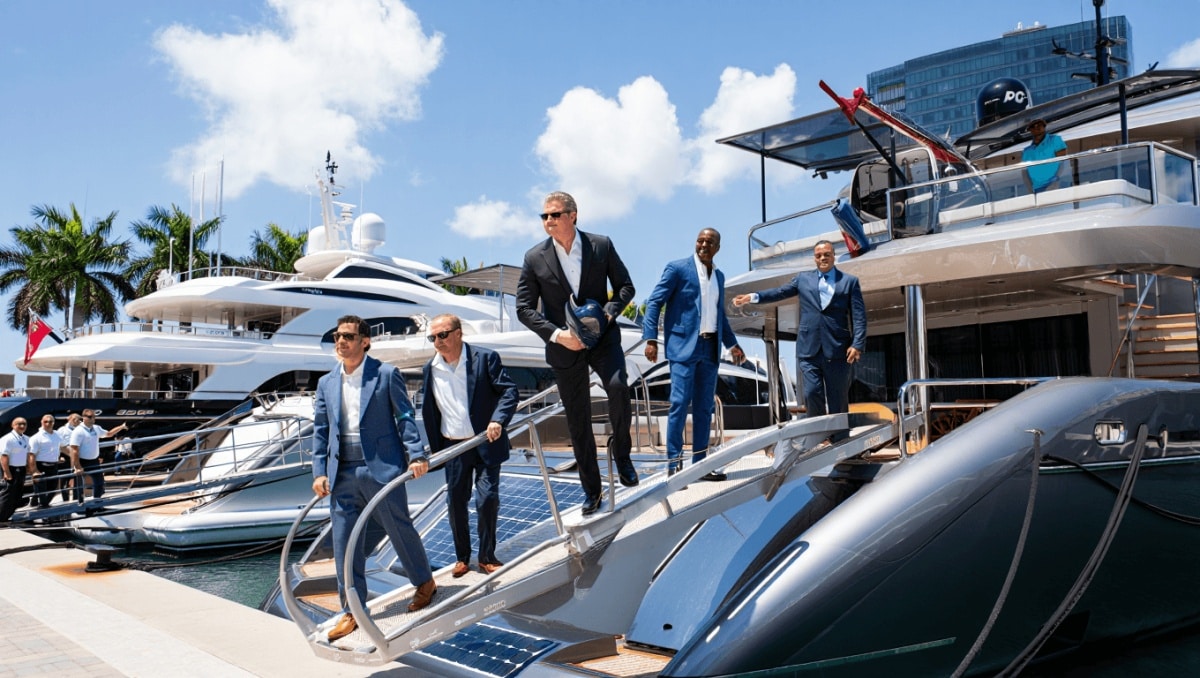
A new industry report shows the superyacht market is moving faster and in a different direction than a decade ago: younger, tech-focused billionaires are buying larger, greener vessels, reshaping demand and the fleets that serve them. That shift matters now because it’s driving sales, new-build specifications and long-term investment across yachting and luxury hospitality.
Fraser Yachts’ latest figures paint a clear picture of growth. In 2025, preowned superyacht sales—the dominant segment of the market—reached $6.4 billion, a jump of about 36% from the previous year. Sales of newly built superyachts over 30 meters also rose, up roughly 6% year-on-year.
The profile of buyers is changing. Once largely the preserve of older owners easing into retirement, today’s purchasers often arrive from sectors such as technology and finance, and they tend to be younger and family-oriented. Rather than starting small and scaling up over time, many are entering the market with large, fully equipped vessels as their first yacht.
That trend is reflected in the rising number of very large new builds: the tally of new yachts longer than 80 meters climbed from 13 to 19 in just one year. Buyers are asking for features that mirror their land-based lifestyles—advanced connectivity for remote work, family entertainment areas and bespoke adventure gear—while demanding greater attention to environmental performance.
“Younger owners are expecting their yachts to be both a family platform and a mobile workplace,” said Anders Kurtén, CEO of Fraser Yachts, describing how client priorities have shifted. The industry is responding by combining luxury finishes with systems that support extended stays and corporate use at sea.
- Size and scale: More first-time buyers are choosing 50–60 meter yachts, skipping smaller starter boats.
- Technology: Improved connectivity, automation and media systems to enable working and entertainment onboard.
- Sustainability: Increasing demand for low-emission propulsion and energy-saving design features.
- Family-focused amenities: Watersports equipment, onboard cinemas, and child-friendly recreation spaces.
At the high end, the market’s ambitions are visible in headline-grabbing sales. A flagship example sold last year—named Breakthrough—measures about 119 meters and reportedly changed hands for a last asking price near $793 million. Available for charter at roughly $4 million a week, the yacht combines conventional luxury (tennis court, helipad, infinity pool) with a notable engineering first: it relies on hydrogen fuel cells to enable near-emission-free cruising.
The move toward cleaner propulsion is not yet universal, but brokers and builders say more owners are prioritizing it. For some buyers, sustainability is becoming a deciding factor when specifying new vessels; for others, it is an important upgrade or option.
| Metric | 2025 figure | Change vs. 2024 |
|---|---|---|
| Preowned superyacht sales (value) | $6.4 billion | +36% |
| New builds sold (>30 m) | — | +6% |
| New builds >80 m | 19 units | Up from 13 |
| Largest sale highlighted | Breakthrough — 119 m | Asking price ~$793M |
Looking ahead, demand could expand significantly. Altrata’s 2025 World Ultra Wealth Report forecasts a roughly 31% rise in the global ultrawealthy population between 2025 and 2030. Fraser Yachts estimates that increase could mean more than 160,000 additional individuals potentially able to charter or buy superyachts, creating fresh pressure on builders, marinas and service providers.
That clustering of wealth also feeds demand cycles. High-end owners tend to congregate in seasonal hotspots—think winter gatherings in the Caribbean—driving concentrated charter and service revenues and encouraging further investment in infrastructure and vessels tailored to those patterns.
For the industry, the implications are concrete: shipyards must blend advanced engineering and cleaner powertrains with the luxury fittings and connectivity younger buyers expect; brokers and charter operators will need to market family-friendly, tech-forward experiences; and regulators and ports may face new pressure to expand fueling and docking options for low-emission yachts.
Ultimately, the superyacht market’s growth is more than a status-symbol story. It reflects how shifting wealth, technology and environmental concerns are changing one of the most visible corners of the luxury economy—and how quickly manufacturers and service companies must adapt to keep pace.