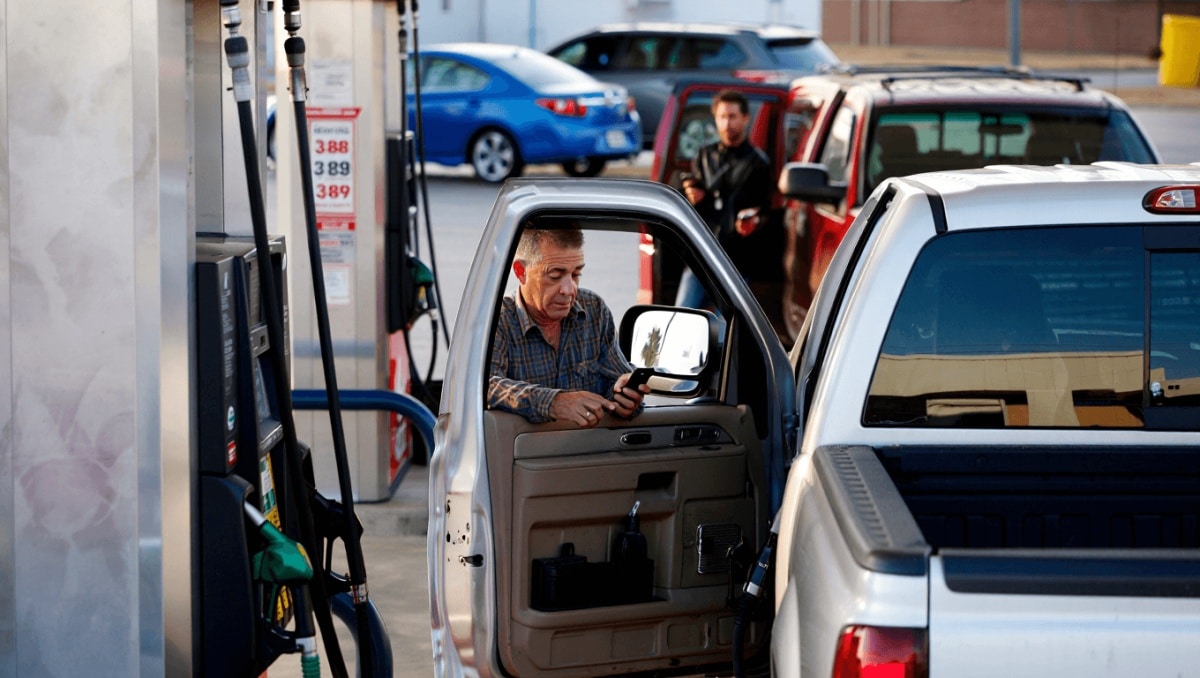
Drivers across the United States are seeing steeper bills at the pump as oil markets react to escalating conflict in the Middle East. Prices have climbed sharply since late February, pushing the national average up sharply and leaving some states facing increases far above the countrywide trend.
Energy markets reacted quickly after the escalation because the region sits astride key shipping lanes that carry a large share of the world’s oil and liquefied natural gas. The result: more expensive gasoline for American consumers and renewed pressure on household budgets and inflation measures.
How bad is the spike?
Data compiled from AAA’s Fuel Price Tracker on March 30 show a nationwide rise in pump prices over the prior month of roughly 33.38%. For the first time since 2023, the average price of regular gasoline exceeded $3.00 per gallon in every state. Twelve states reported averages above $4.00 per gallon, and California led the nation with an average near $5.88 on March 30.
State-to-state differences remain large because of local taxes, distance from refineries and fuel distribution hubs, and other regional factors. Still, a cluster of states is experiencing price growth that far outpaces the national increase.
- Why this matters now: rising fuel costs flow through the economy — raising shipping and commuting costs, adding to consumer bills, and complicating efforts to rein in inflation.
- Supply channel at risk: much of the volatility stems from disruptions near the Strait of Hormuz, a chokepoint for roughly one‑fifth of global crude and LNG shipments.
- Short-term outlook: prices can remain volatile while military and geopolitical risks persist.
States with the fastest month-to-month increases
Below are the 10 states where pump prices rose the most in percentage terms over the past month, using AAA averages reported on March 30 compared with figures from one month earlier.
| Rank | State | Avg price (Mar 30) | Avg price (one month earlier) | Month-to-month change |
|---|---|---|---|---|
| 1 | Utah | $4.20 | $2.75 | +52.4% |
| 2 | Idaho | $4.26 | $2.97 | +43.4% |
| 3 (tie) | Tennessee | $3.63 | $2.56 | +41.7% |
| 3 (tie) | Indiana | $3.99 | $2.82 | +41.7% |
| 5 | Arizona | $4.68 | $3.31 | +41.3% |
| 6 | Mississippi | $3.58 | $2.54 | +41.1% |
| 7 (tie) | Louisiana | $3.61 | $2.56 | +40.8% |
| 7 (tie) | Kentucky | $3.72 | $2.64 | +40.8% |
| 9 | New Mexico | $3.86 | $2.76 | +39.9% |
| 10 | Wyoming | $3.83 | $2.74 | +39.7% |
What readers should keep in mind
Short-term price swings are driven by immediate supply concerns and market sentiment; shipping disruptions and threat perceptions can raise crude prices quickly. Over time, local factors — such as state fuel taxes, how close a state is to refining and distribution infrastructure, and seasonal demand — determine how much of the crude price change shows up at the pump.
Many states saw peak prices in mid‑2022; current averages in some markets are approaching or matching those earlier highs. For households that rely on driving, persistently higher fuel costs reduce discretionary spending and can add to broader inflationary pressure.
AAA’s tracker provides the underlying state averages used here; the figures compare prices reported on March 30 with those from roughly one month prior. That comparison highlights how quickly retail fuel costs can shift when global energy markets are unsettled.
For now, consumers should expect continued volatility while geopolitical tensions remain elevated. Even modest changes in shipping risk or refinery throughput can ripple through wholesale and retail fuel pricing.