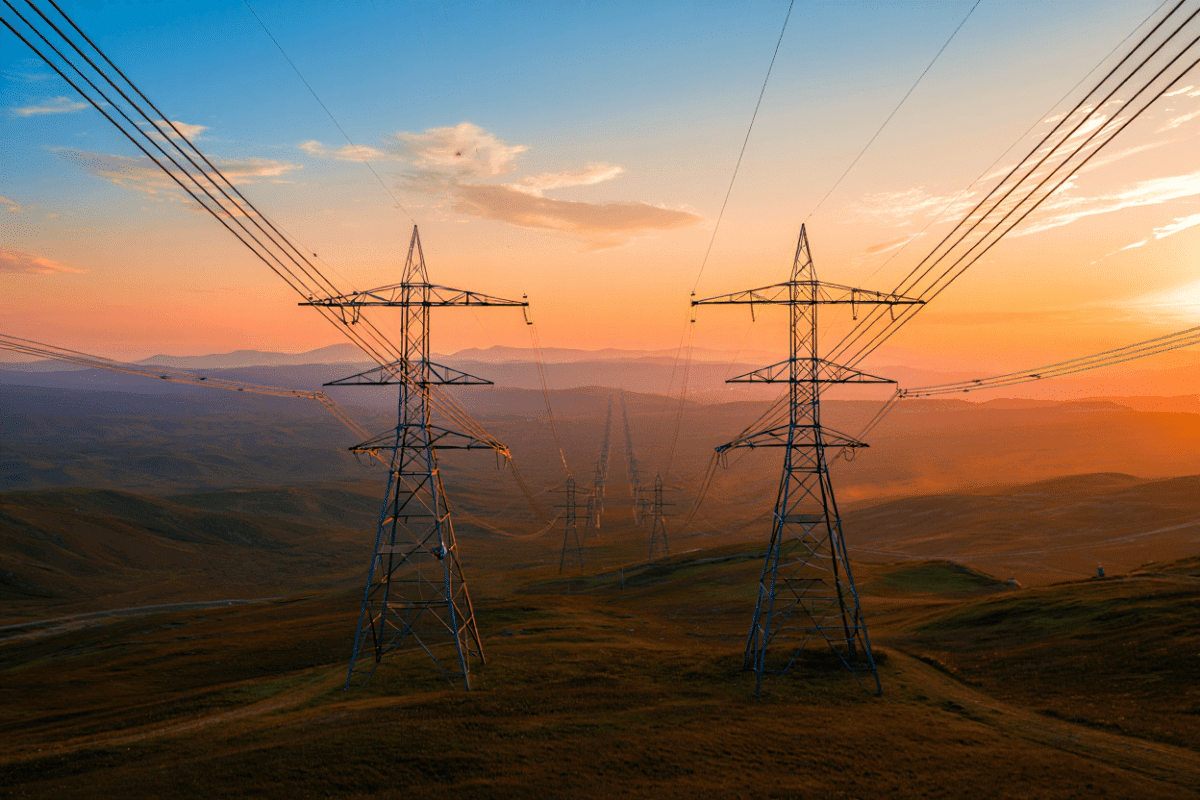
American Electric Power just unlocked $2.6 billion in growth capital to fuel its biggest grid transformation ever. The Columbus utility is priced for explosive expansion through 2030 as data center demand reshapes America’s power landscape.
🔥 Quick Facts
- Stock Offering: $2.6 billion priced at $127 per share on May 12, 2026
- Capital Plan: $78 billion investments through 2030, up from previous $72 billion
- Network Scope: 5.6 million customers across 11 states with nation’s largest transmission system
- Earnings Growth: Operating CAGR expected to exceed 9% through 2030
Why This Stock Offering Matters for Electric Grids
AEP‘s capital raise signals confidence in long-term energy demand growth. The $2.6 billion offering, structured with forward contracts settling by May 2028, gives the utility immediate cash flexibility. Lead managers include Bank of America, Goldman Sachs, and Morgan Stanley, anchoring institutional interest.
The company plans to deploy proceeds toward utility subsidiaries, potential acquisitions, and debt reduction. This dual strategy strengthens balance sheets while enabling aggressive grid modernization. AEP‘s transmission assets, spanning 40,000 line miles, already form America’s backbone network.
How Data Centers Are Reshaping AEP Growth
Data center demand exploded this year, forcing AEP to expand its entire capital plan by $6 billion. The utility now expects 63 gigawatts of new contracted load by 2030, roughly equivalent to 50 coal plants. This acceleration came directly from Q1 2026 earnings when management announced the upgraded $78 billion five-year commitment.
Cost offsets will reach $16 billion for existing customers through signed agreements, balancing rate pressure. Operating earnings CAGR now targets over 9% annually, up from initial guidance, reflecting confidence in load growth sustainability.
Investment Breakdown Across America’s Largest Utility Network
| Investment Category | Amount/Details |
| Transmission Assets | $30 billion of $78 billion plan focus |
| Renewable & Storage | $7 billion for solar, wind, battery systems |
| Generation Capacity | 8.7 gigawatts gas turbine secured |
| Additional Opportunities | Over $10 billion beyond base plan potential |
“We plan to invest $78 billion from 2026 through 2030 to enhance service for customers and support the growing energy needs of our communities.”
— American Electric Power, Official Earnings Guidance
AEP’s Strategic Position in the Energy Transition
The Columbus-based utility controls 252,000 miles of distribution lines and operates 32,000 megawatts of diverse generation. Nearly 18,000 employees maintain this critical infrastructure across Ohio, Texas, Virginia, Indiana, Kentucky, Oklahoma, and beyond. AEP Ohio, AEP Texas, and other regional subsidiaries anchor local economies.
First-quarter 2026 results delivered $1.61 GAAP earnings per share, beating estimates. Full-year guidance stands at $6.15 to $6.45 per share. The path to 9% earnings growth depends on successful capital deployment and regulatory rate approvals.
What Questions Remain for Utility Investors and Regulators?
Can AEP execute a $78 billion program without construction delays or cost overruns? Labor shortages and supply chain volatility threaten major infrastructure projects. Will state regulators approve timely rate recovery for all transmission work?
The forward contract structure, settling by May 2028, gives AEP two years to assess market conditions before finalizing share issuance. This flexibility protects against equity dilution if valuations decline. Ultimately, data center growth must sustain beyond 2030 to justify the aggressive investment thesis now priced into utility rates.
Sources
- American Electric Power – Official press release on pricing and capital plan announcement
- PRNewswire – Detailed earnings and forward-contract documentation
- Reuters – Analysis of AEP capital plan and data center demand drivers