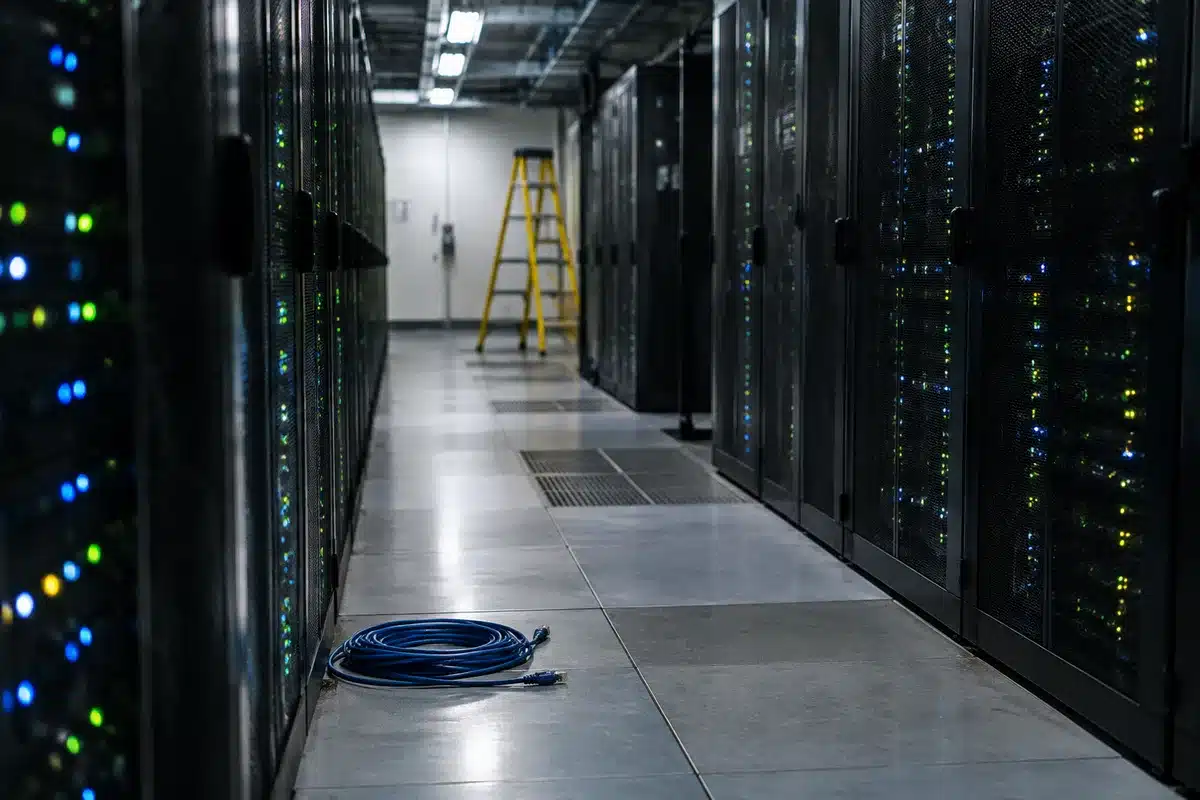
The U.S. Commerce Department’s new licensing rule that took effect on November 19 restricts access to advanced chips and aims to curb overseas data‑centre use of U.S. processors, officials and industry sources told Reuters, complicating artificial intelligence development that depends on rented compute.
Reuters reported that the rule imposes licensing requirements on computing arrangements at data centres outside the United States above a threshold roughly equivalent to 750 Nvidia H100 chips, and that operators already providing covered services have 90 days to apply for licences. The measure is intended to prevent firms from accessing advanced U.S. AI chips remotely without export approvals, Reuters said.
At the same time, Reuters reported a separate data‑security concern: a cybersecurity researcher told Reuters that confidential links and information submitted to Chinese AI startup MiniMax were later accessed by unidentified parties, even after users asked that their data not be retained. The researcher, HD Moore of Dragos, said some secret links appeared in a Feishu chat channel and were opened from devices in Beijing and Shanghai, Reuters reported.

Traders have already shown sensitivity to regulatory and security risks tied to artificial intelligence. CNN reported market volatility and an AI‑led technology sell‑off late last week as investors reacted to a mix of leadership news and policy uncertainty, underscoring how chip controls and data‑access worries can ripple into markets.
How the rule works: Reuters explains the U.S. measure closes a route some foreign firms used to harness U.S. chips by renting hosted compute abroad, and it also broadened licence requirements for shipments of advanced chips to several Southeast Asian countries. Reuters quoted people familiar with the rule and cited the November 19 effective date.
What this means for AI developers and customers
Companies that rent overseas compute to train large models could face delays or higher costs if overseas providers fall under the licence threshold or stop offering services, Reuters reported, citing AI developers who said their release schedules may slow without access to overseas Nvidia‑class processors. That could extend development cycles and push some work into smaller, local data centres that lack capacity.
Security and trust are separate but related pressures. Reuters’ reporting on MiniMax and the Dragos researcher raised questions about whether confidential information sent to third‑party AI models can be reliably protected, prompting at least one provider to stop forwarding requests to the affected model, Reuters said.
Investors and customers are watching both threads: policy limits that affect where and how advanced chips can be used, and evidence that data sent to some models might be exposed. CNN’s coverage of recent market moves shows investors are already pricing that combination into technology stocks.
Sources
- Reuters — explained the Commerce Department rule, the November 19 effective date, the 750‑H100 equivalent threshold and industry reactions.
- Reuters — reported that researcher HD Moore said confidential links sent to MiniMax were later accessed and detailed responses from Atlas Cloud and MiniMax.
- CNN — described recent AI‑related market volatility and investor reaction to technology and leadership news.