NASA has cleared the PRobe far-InfraRed Mission for Astrophysics, known as PRIMA, to enter Phase B of development, advancing the new space telescope toward preliminary design and technology work.
Phase B approval moves PRIMA into detailed design and technology maturation, the step NASA uses before a confirmation review that would greenlight construction and later launch preparations.
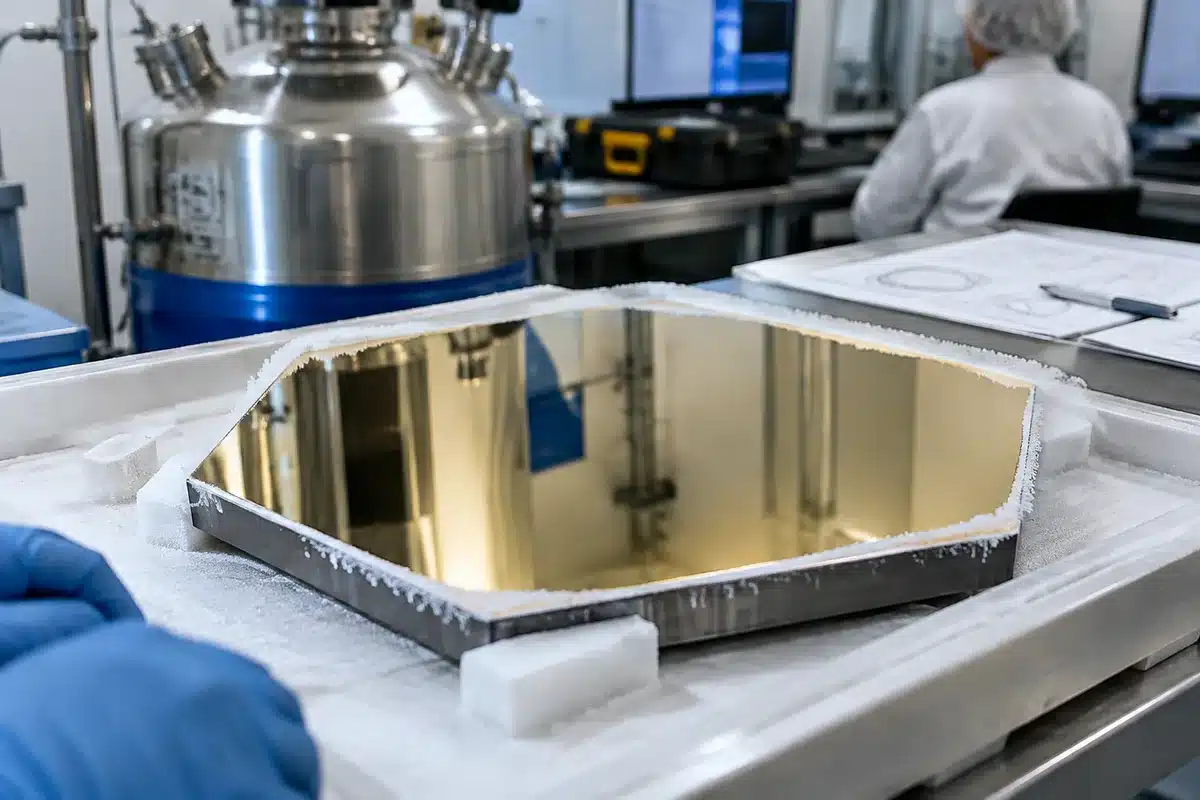
PRIMA is a far-infrared space telescope centered on a 1.8-meter primary mirror and cooled to about 4.5 kelvins to detect faint far-infrared light, and the mission is targeting a 2033 launch window, according to reporting on the program.

The mission is described as the first in NASA’s new Probe Explorers class and would observe dust and gas that Earth’s atmosphere blocks, filling a gap in far-infrared astronomy that has persisted since the Herschel observatory ended science operations about two decades ago.
NASA management and the Jet Propulsion Laboratory are named as players in coverage of PRIMA, with JPL identified as the managing center for the mission’s development and design work in published reports.

The telescope design calls for instruments including an imager to map dust emission and a spectrometer to trace gas and heavy elements, capabilities that would let astronomers study galaxy and star formation in wavelengths inaccessible from the ground.
PRIMA’s Phase B status is still contingent on a later confirmation review and on partner decisions; reporting notes possible participation by Japanese institutions and that domestic reviews in Japan are ongoing.
Why it matters: a new far-infrared space telescope would let scientists measure the cold dust and gas that shape galaxies and planetary systems, offering complementary science to NASA’s Webb and Roman missions.
For business and industry readers, PRIMA also represents a multi-year procurement and technology program: coverage cites the mission’s planned five-year primary science lifetime and the program-scale budget context for Probe-class missions.
More on how this fits into the calendar can be found in our coverage of recent launch activity and space-industry events.
Related reading: World Space Week 2026 theme ‘Rocket Revolution’ and Launch today: live global rocket schedule.
Sources
- autoevolution — reported PRIMA’s clearance into Phase B, estimated mission cost, telescope size and 2033 target launch window.
- Wisevoter — described Phase B advancement, JPL management, instrument suite (imager and spectrometer) and Japan participation under domestic review.