Tesla has closed the book on custom orders for its flagship sedan and SUV, leaving only a few hundred units in stock, CEO Elon Musk confirmed on X this week. The move signals a decisive shift in the company’s lineup and accelerates Tesla’s pivot away from traditional car models toward robotics and autonomous concepts.
The decision follows years of declining demand for the Model S and Model X as Tesla’s lower-priced Model 3 and Model Y dominated sales. With bespoke production ending, the company says assembly capacity will be repurposed for new projects — a change with immediate business and regulatory implications.
Where Tesla stands now
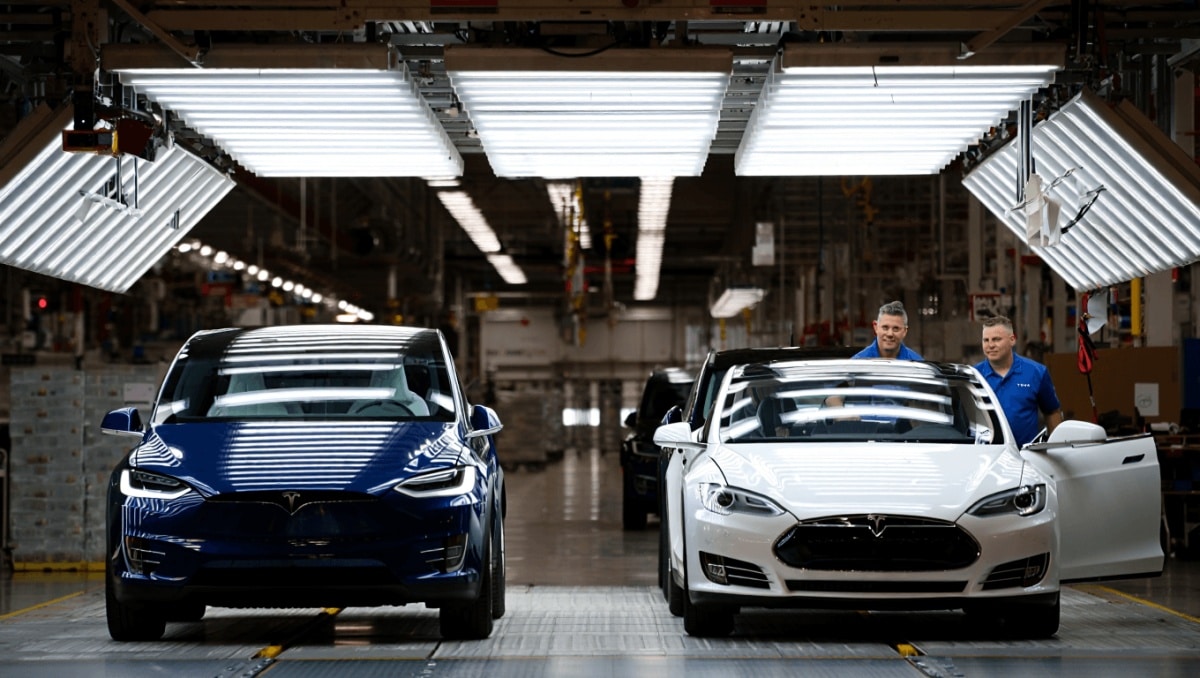
Tesla announced plans to halt production of the Model S and Model X early this year; Musk’s latest post confirms that customer configurations are no longer being accepted. Only a limited number of inventory cars remain available, the company says.
Historically, combined sales for the S and X peaked in 2017 at about 101,312 units, then slid to roughly 50,850 in 2025 (that figure now also includes the Cybertruck). By contrast, Tesla’s broader output in recent years has remained in the millions, underscoring how S and X volumes became a smaller slice of the business.
What Tesla plans to build next
Tesla intends to convert the freed factory capacity to produce the Optimus humanoid robot at its Fremont, California plant, and to ramp up the Cybercab in Austin, Texas. Both projects are central to Musk’s argument that Tesla is transitioning toward an AI-focused company rather than a conventional automaker.
Production timelines are tight on paper: Tesla says the first Cybercab rolled off an assembly line in February and mass production was expected to start this month. Optimus remains in development and has not yet entered mass production.
Why this matters: short-term and long-term stakes
- For buyers: Remaining new Model S and Model X units will be limited to dealer or factory inventory; customization is no longer an option.
- For Tesla: Shifting assembly to robots and robotaxis reduces the company’s reliance on luxury EV margins but raises execution risk.
- For regulators and cities: The Cybercab’s design—intended to operate without steering wheels or pedals—triggers safety and legal questions that must be resolved before widespread deployment.
From luxury halo cars to mass-market models
The Model S, introduced in 2012, and the Model X, which arrived in 2015, were pivotal in reshaping public and industry views about electric cars. Early on, they helped force traditional automakers to take EVs seriously.
But Tesla’s mainstream breakthrough came with the Model 3 and Model Y. Those models carried the company into high-volume markets and established Tesla as a major global EV seller—while simultaneously shrinking the relative importance of the S and X platforms.
Tesla still sells thousands of Model 3 and Model Y vehicles, though recent delivery trends have shown slowing momentum. In the first quarter reported earlier this year, Tesla delivered 358,023 vehicles worldwide, a modest increase from the previous year but below some analysts’ expectations.
Regulatory and technical hurdles for the Cybercab
The Cybercab is the most consequential and controversial of Tesla’s new bets. Designed to operate as a true driverless vehicle, the concept eliminates conventional controls—a feature that collides with current U.S. safety standards requiring steering wheels and pedals.
Public records from the Federal Register and the National Highway Traffic Safety Administration show no clear evidence Tesla has applied for an exemption that would allow the Cybercab to legally operate without those controls. That regulatory step is likely to be decisive.
Beyond hardware exemptions, the Cybercab relies on Tesla’s Full Self-Driving software to navigate public roads. While the company has demonstrated progress and limited driverless testing, it has not yet shown that the system can perform safely and reliably at scale.
Permitting regimes add another layer of complexity. States such as California require specific approvals to deploy and charge for rides in driverless vehicles, so even a production-ready Cybercab would still face operational hurdles before carrying fare-paying passengers legally.
How other players affect the path forward
Zoox, the autonomous-vehicle unit owned by Amazon, has already secured a federal exemption to demonstrate passenger robotaxis without steering wheels or pedals. That precedent could inform regulators’ thinking and provide a potential pathway for other companies seeking similar allowances.
Still, Zoox’s progress does not guarantee success for Tesla. Autonomous mobility at scale involves software validation, safety cases, insurance frameworks and local approval processes—any of which could delay or limit commercial rollout.
Perspective
Tesla’s withdrawal of custom orders for the Model S and Model X closes a chapter in its automotive history. The move also makes clear that the company is prioritizing its vision of an AI-driven future, where robotics and autonomous fleets play the starring roles.
That strategy carries upside if Tesla can clear regulatory hurdles and prove its software at scale. But it also concentrates risk: success requires not only manufacturing skill but robust safety demonstrations, regulatory buy-in and reliable autonomous performance on public roads.
For consumers and investors, the near-term effect is practical—limited availability of two legacy models and a clearer timetable for Tesla’s next-generation projects. In the longer term, the shift will test whether Tesla’s bet on AI can replace the revenue and credibility formerly generated by its high-end EVs.