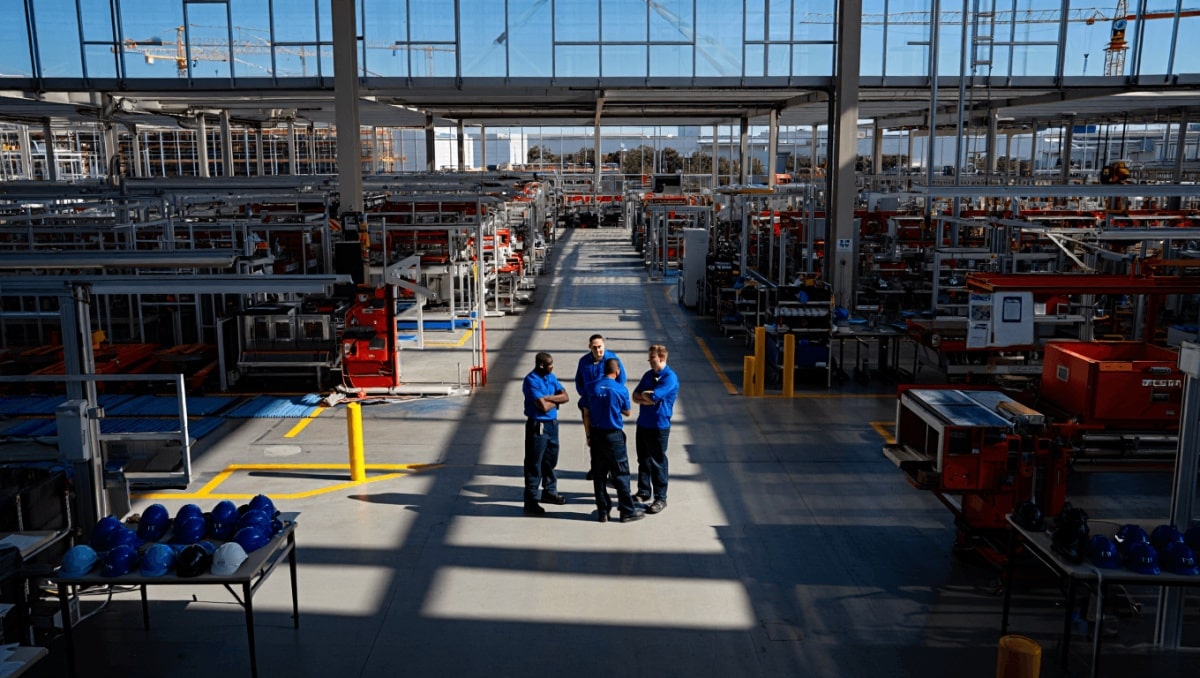
Tesla’s sprawling manufacturing complex near Austin cut its local payroll sharply last year, shedding roughly one in five jobs even as the automaker added staff globally. The reduction, detailed in a regulatory filing flagged by the Austin American-Statesman, raises fresh questions about the plant’s role in the region as the company navigates weaker sales.
The compliance filing shows the Austin facility’s workforce fell from 21,191 employees in 2024 to 16,506 in 2025 — a drop of about 22%. At the same time, Tesla’s overall headcount climbed from 125,665 to 134,785 over the same period, according to the company’s submissions to the U.S. Securities and Exchange Commission.
Company statements did not specify which divisions or shifts bore the brunt of the cuts. The plant, which became a major employer in the area after opening in 2022, remains a central part of Tesla’s U.S. operations: Tesla relocated its headquarters to the site in 2021 and has poured substantial capital into the campus.
- Austin plant headcount: 21,191 (2024) → 16,506 (2025)
- Change: ~22% reduction at the Texas factory
- Global workforce: 125,665 (2024) → 134,785 (2025)
- Investment in facility to date: more than $6.3 billion
Why the timing matters
These staffing shifts arrive amid Tesla’s second consecutive year of shrinking vehicle sales, a trend that has prompted investors and analysts to scrutinize costs and capacity across the company. Cutting roles at a major U.S. campus while hiring elsewhere suggests management is reshaping where and how the company allocates labor.
For Austin residents and regional officials, the contraction could have practical consequences: fewer local payrolls affect consumer spending, municipal tax receipts and the broader ecosystem of suppliers and service providers that grew around the plant.
What we still don’t know
Tesla’s filings provide raw totals but stop short of granular detail. It remains unclear whether reductions were concentrated in manufacturing lines, administrative functions, construction crews, or contractor roles tied to the facility’s ongoing build-out.
The company has not issued a new public statement explaining the workforce changes at the Austin site. Without that clarity, local impact assessments are necessarily provisional.
As Tesla balances a softer sales backdrop with continued investment in its Texas complex, the evolving staffing picture will be a key metric to watch for both local stakeholders and investors tracking the company’s operational priorities.