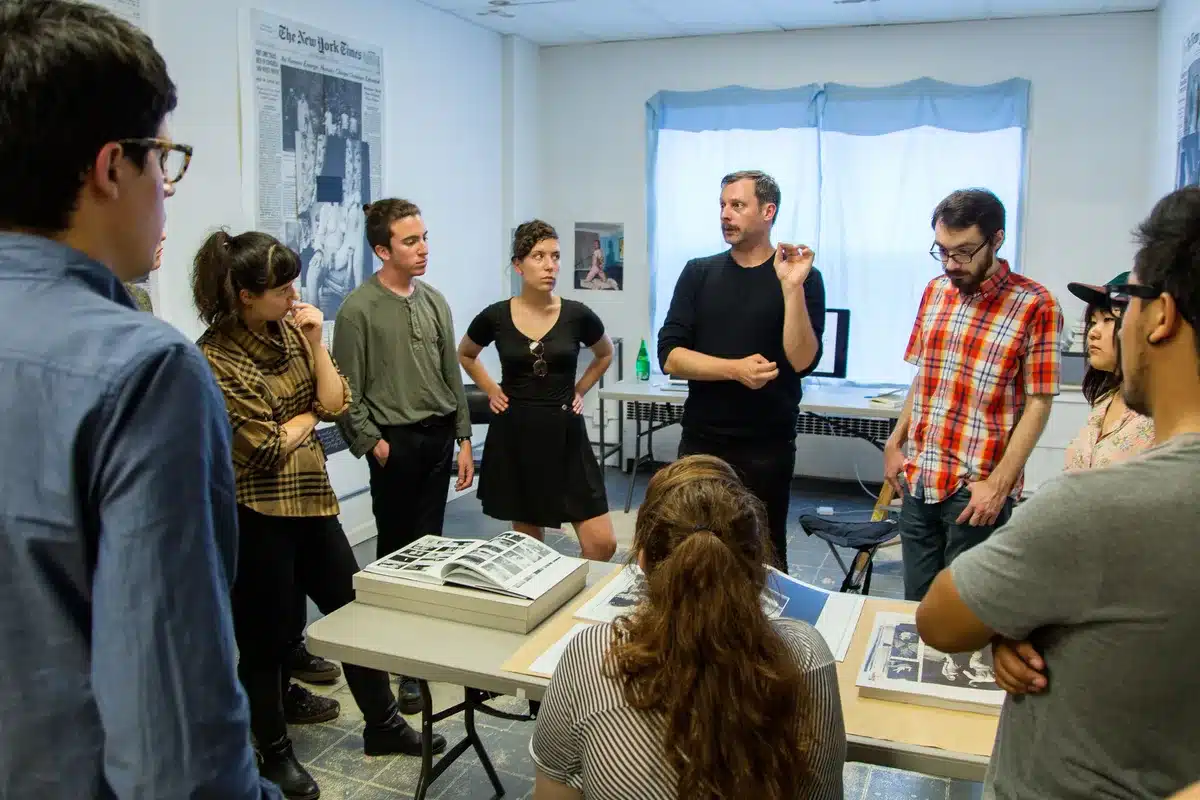
Leigh Ledare’s the task stages a three-day Group Relations conference in which 28 strangers, a film crew and trained consultants were placed together to probe how group dynamics and stereotyping emerge.
Ledare filmed the sessions as a 118-minute multi‑chapter work titled The Task, adapting the Tavistock method of studying group relations and intentionally foregrounding the camera as an active force in the room.
The sessions assembled a cross-section of participants and ten psychologists (described in credits as consultants), and the film edits material from multiple large-group meetings into seven chapters that track how authority, silence and projection shape conversation.
Critics writing at Hyperallergic and Slate note that Ledare’s modification—placing cameras and the artist inside a Tavistock-style container—creates moments when participants become aware of being observed and begin to perform or to question the watcher–doer relationship.
Hyperallergic reported the film grew out of Ledare’s larger exhibition The Plot at the Art Institute of Chicago and that the movie was shown at the True/False Film Festival after its installation run.
The Science Gallery Bengaluru program page and Ledare’s own site say the work was developed as a staged three‑day conference that asked participants to ‘‘enact a temporary institution whose purpose is to study itself,’’ a setup intended to reveal unconscious group processes.

Viewers and reviewers described scenes where the group’s dynamics—interruptions, silent bids for power, and escalating hostilities toward the crew—become the film’s subject, turning the camera into a provocateur rather than a neutral recorder.
Because Ledare’s intervention changes how consultants and participants relate, critics say The Task reads as both an ethnography of group behavior and a reflection on how surveillance and performance shape public discourse.
Sources
- Leigh Ledare (official site) — production details, length, staging and description of the three‑day Group Relations conference.
- Hyperallergic — reporting on the film’s origin in Ledare’s The Plot exhibition and on how camera presence shifts participant behavior.
- Slate — review describing the film’s Tavistock roots, the seven‑chapter structure and how participants and consultants appear in the conference.
- Science Gallery Bengaluru — programme notes listing the film’s participants, consultants and the conference framing used to examine group dynamics.