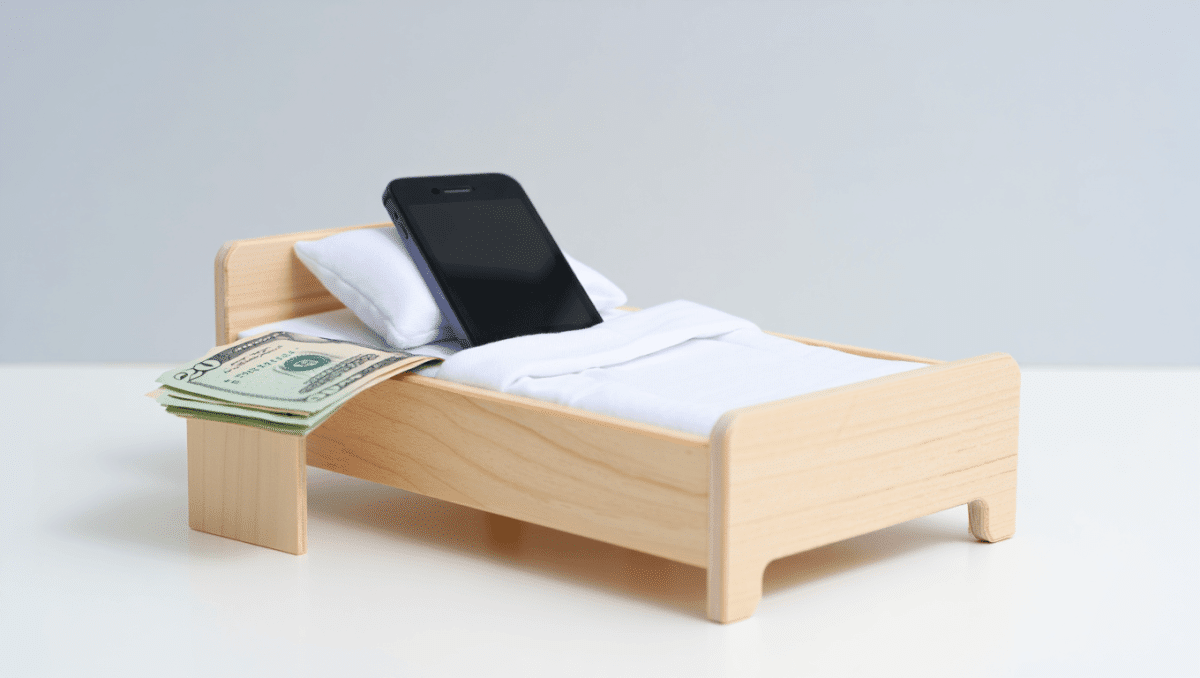
IKEA has quietly introduced a playful new way to curb nighttime screen use: a diminutive bed designed to hold your smartphone — and a program that rewards people who leave their devices tucked in overnight. The move blends a tangible nudge toward better sleep with a retail incentive, raising fresh questions about how brands are trying to shape daily habits.
The product, called the Phone Sleep Collection, pairs a small, bed-like cradle for a phone with a marketing scheme that pays users for staying offline after lights-out. IKEA frames the effort as a practical step toward improved rest and calmer bedtime routines, while also offering shoppers a financial perk in the form of store credit for participating.
How it works — at a glance
Details about exact mechanics vary by market, but the concept is straightforward: users place their phones in the tiny bed and avoid using them overnight; in return, IKEA issues vouchers or discounts. The initiative blends a physical prop with a behavioral reward to encourage less screen time.
- Physical product: a small bed-shaped holder meant to sit on a nightstand.
- Behavioral nudge: a reminder or ritual to put the phone away before sleep.
- Incentive: shopping vouchers or store credit for participants who remain screen-free overnight.
The campaign taps into a wider trend among companies promoting better sleep and more mindful device use, reframing a household object as both a practical accessory and a prompt to change behavior.
Why this matters now
Screen time before bed is linked to poorer sleep quality for many people, and public attention to digital wellbeing has grown. By offering a low-cost prop plus a monetary nudge, IKEA is testing whether retail incentives can produce measurable changes in how people use their phones at night.
For consumers, the implication is immediate: a small change in habit could be rewarded with tangible savings. For retailers, it’s an experiment in loyalty-building that reaches beyond traditional promotions and into everyday routines.
Potential benefits and pitfalls
The idea is appealing for several reasons, but it also raises practical questions.
- Potential benefits
- Creates an easy-to-follow bedtime ritual that may improve sleep onset.
- Combines a physical cue with a measurable reward, which can increase adherence.
- Provides a novel way for a retailer to engage customers on lifestyle issues rather than just products.
- Potential pitfalls
- Effectiveness depends on user honesty or on how the reward is tracked — transparency matters.
- Raises questions about what data, if any, is collected to verify participation.
- Could be seen as a marketing gimmick if the health benefits are overstated.
Without clear, independently verified results, it’s hard to know whether a novelty object plus a voucher will generate lasting habit change. Still, the approach is notable because it frames consumer wellbeing as a retail opportunity rather than a purely health-driven one.
What to watch next
Observers should look for how IKEA measures success and whether the program expands beyond initial test markets. Key indicators will include participation rates, the size and distribution of vouchers, and any data-sharing practices tied to verifying screen-free nights.
If widely adopted, this tactic could inspire other brands to design physical prompts that pair with rewards — a new frontier in lifestyle marketing that blends behavioral science with traditional retail offers.
For now, the Phone Sleep Collection is a curious intersection of design, wellbeing and commerce: small, tangible, and deliberately simple — and it highlights how everyday objects can be repurposed to shift habits in the digital age.