
Brent crude oil surged past $100 per barrel on September 9, reaching $100.84 in intraday trading as escalating military tensions in the Middle East stoked fears of supply disruptions through the Strait of Hormuz. The benchmark price rose 1.83% from the previous day and marks a significant breach of a psychological barrier that traders and analysts watch closely.
The jump comes on the heels of intensified US-Iran hostilities, including recent American strikes on Iranian oil tankers and Iran’s threats to restrict shipping through the Strait of Hormuz, a chokepoint through which roughly 20% of the world’s oil passes daily. The rally reflects market concerns that a prolonged conflict could choke off crude supplies and trigger a global energy shock.

Over the past month, Brent has climbed 13.68%, and year-to-date the benchmark is up 47.75%, driven largely by geopolitical risk. The current surge echoes the oil market’s response to Russia’s invasion of Ukraine in February 2022, when Brent first crossed $100 per barrel for the first time since 2014. That conflict pushed crude to as high as $135 per barrel before prices moderated, according to historical data from the U.S. Energy Information Administration.
Goldman Sachs warned on September 8 that oil prices may rally as high as $120 per barrel if attacks on shipping in the Persian Gulf and Red Sea intensify. The bank said in a note that “Brent might exceed $120 per barrel if 2027 average Gulf output remains 4 million barrels per day below pre-war levels,” signaling that sustained supply disruption poses a material upside risk to crude valuations.
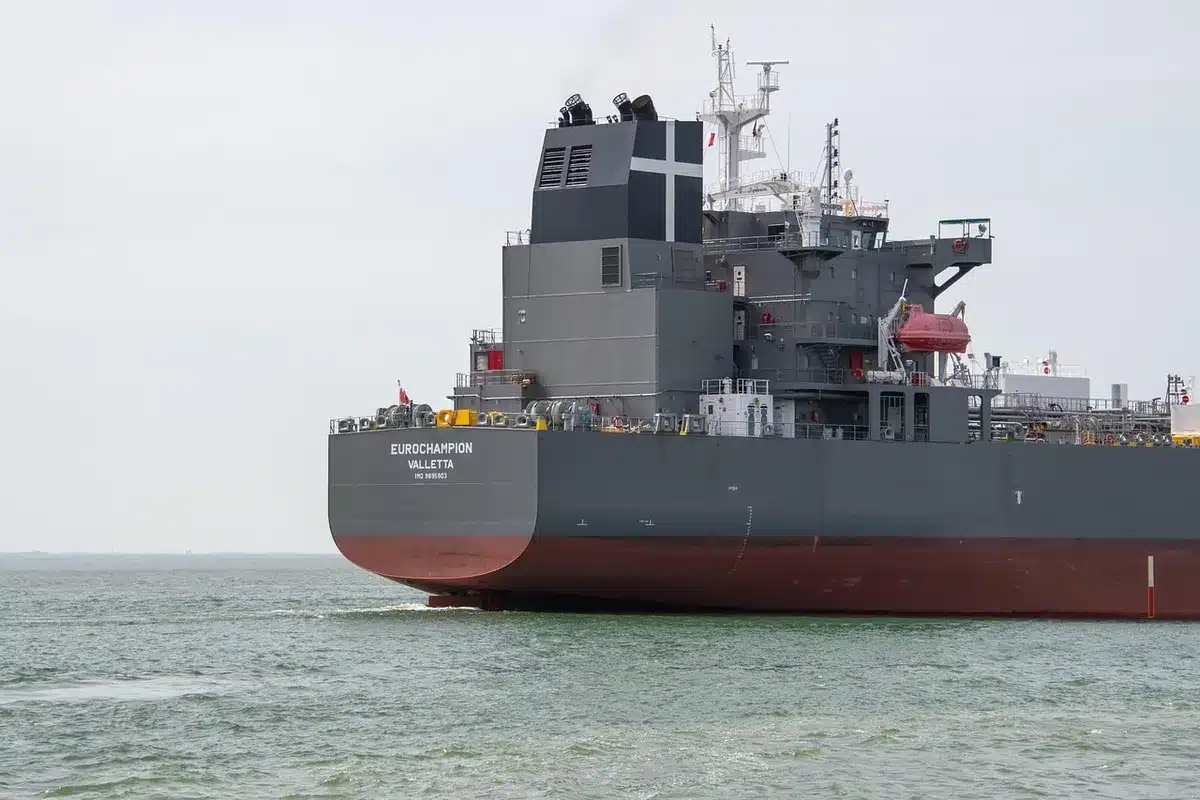
The Strait of Hormuz disruption is the core driver of current pricing. Iran has warned it will announce a restricted zone outside the strait in coming days, and data on transits through the waterway show shipping has already slowed considerably. When the conflict first escalated in March 2026, Brent reached as high as $119.13 per barrel before pulling back, according to reporting from the time. A prolonged closure, analysts note, would transform an oil shock into a broader inflation and growth shock across global economies.
Market sentiment reflects both the immediate risk and the uncertainty around how long tensions will persist. Gas prices have held near $4.15 a gallon as Iran war strains global oil supply, and the Dow Jones fell 1% as oil prices surged on Middle East tensions, signaling that equity markets are pricing in both energy inflation and potential demand destruction from higher crude costs. Mortgage rates have hit a 13-month high at 6.91% amid Middle East tensions, reflecting broader financial market stress.
Sources
- Investing.com — Brent crude oil futures price at $100.84, prior close $97.92
- Trading Economics — Brent rose to 99.72 USD/Bbl on September 9, 2026, up 1.83%; up 13.68% over past month, 47.75% year-to-date
- Reuters — Goldman Sachs said oil prices may rally as high as $120 a barrel if attacks on shipping rise; Iran will announce restricted zone
- CNBC — Brent crude touched $100, with intraday price of $100.58
- Anadolu Agency — Brent crude pulled back below $100 after surging to $119.13 per barrel on March 19, 2026, amid Middle East conflict
- NBC News — Oil hit $100 per barrel for first time since July 2022; previous surge was after Russia invaded Ukraine in February 2022
- LSE Business Review — A short closure of the Strait of Hormuz by Iran is an oil shock; a long closure becomes an inflation and growth shock