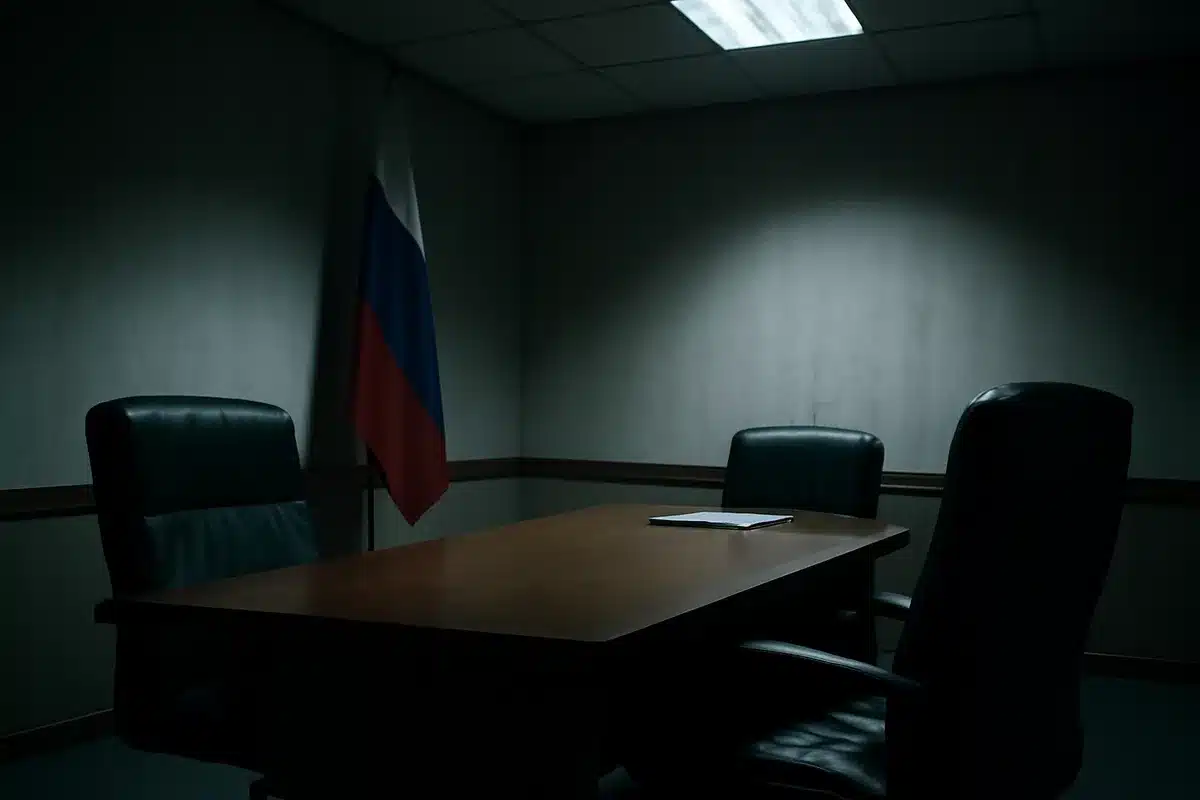
Iceland’s Foreign Minister Thorgerdur Katrin Gunnarsdottir summoned U.S. Ambassador Billy Long on September 8 after President Trump posted a map on Truth Social depicting Iceland as U.S. territory, joining Canada, Greenland, Mexico, and Caribbean islands under an American flag overlay.
The Foreign Minister conveyed to Long that the image was “wholly inappropriate,” according to Iceland’s Ministry of Foreign Affairs. The map, shared on Monday evening, represents an escalation of Trump’s repeated statements about Arctic territorial ambitions that have roiled diplomatic relations across the North Atlantic.

This is not Long’s first diplomatic stumble regarding Iceland. In January 2026, before his Senate confirmation as ambassador, Long joked to colleagues on the House floor that Iceland would become the 52nd U.S. state and he would serve as its governor. Iceland’s government demanded answers, and thousands of Icelanders signed a petition calling on the Foreign Minister to reject his nomination.
Long was confirmed by the U.S. Senate in May 2026 and arrived in Reykjavik in late August. The timing of Trump’s map posting—just days after Long’s arrival—has deepened tensions between Washington and Reykjavik.
Iceland has watched Trump’s Arctic rhetoric with growing alarm. The island nation lies roughly 180 miles from Greenland, which Trump has repeatedly sought to acquire or control. When Trump made similar territorial claims about Greenland earlier in 2026, Iceland became concerned about its own sovereignty and security.
Those concerns influenced Iceland’s recent political calculations. On August 29, Icelanders voted against reopening European Union membership negotiations. According to reporting on the referendum, Trump’s designs on Greenland had featured prominently as a backdrop to the debate, with some Icelanders viewing EU membership as a hedge against U.S. pressure. The rejection of EU talks was widely seen as a rebuke to external interference, though the vote was narrow and reflected deeper divisions within Icelandic society about the country’s strategic future.
Gunnarsdottir has been candid about the security implications for Iceland. In comments to media, she expressed concern about Trump’s Arctic ambitions and their destabilizing effect on the region. Iceland, a NATO member with no standing military of its own, relies on the U.S. military presence at Keflavik Air Base and broader alliance security commitments for defense.
The summoning of an ambassador is a formal diplomatic protest—a way for a host nation to register displeasure without severing relations. It signals that a statement or action is considered unacceptable and demands explanation or clarification. In this case, Iceland’s move underscores how seriously Reykjavik takes the map and the broader pattern of Trump’s territorial rhetoric.
Trump has posted multiple maps and images in recent months depicting expanded U.S. territory. In addition to the latest map, his social media account has featured AI-style images showing a U.S. flag planted on Greenland with a sign reading “GREENLAND – U.S. TERRITORY EST. 2026.” He has also floated renaming the Strait of Hormuz the “Trump Strait” and suggested renaming New Mexico to “New America.” These posts, while often presented as provocative or joking, have had real diplomatic consequences.
Canada, Denmark (which oversees Greenland), and now Iceland have all formally objected to Trump’s territorial imagery. Trump’s map showing Canada, Greenland, and Mexico as U.S. territory sparked similar diplomatic protests from Ottawa and Copenhagen. The cumulative effect has been to strain relationships with key NATO allies at a time when Arctic security coordination is increasingly vital.
For Iceland, the stakes are particularly acute. The nation sits at a crossroads between its traditional security alliance with the United States and a growing pull toward European integration. Trump’s rhetoric has accelerated that calculation, even as Iceland rejected formal EU membership talks. The summoning of Ambassador Long signals that Iceland will not tolerate further territorial claims or dismissive rhetoric about its sovereignty.
Sources
- Le Monde — Iceland’s Foreign Minister summoning of U.S. Ambassador Billy Long, the map posted by Trump, and ministry statement characterizing the image as inappropriate.
- Anadolu Agency — Confirmation that Foreign Minister Thorgerdur Katrin Gunnarsdottir summoned Ambassador Billy Long over the map.
- Brussels Signal — Details of the summoning and timing relative to European Commission investment in Greenland.
- The Hill — Trump’s posting of the map on Truth Social on September 7, showing U.S. flag over North America, Iceland, and Caribbean islands.
- RÚV (Iceland Public Broadcasting) — Details of Foreign Minister Gunnarsdottir’s summoning of Ambassador Long and her characterization of the image.
- The Economist — Background on how Trump’s Arctic threats are pushing Iceland toward Europe and the impact on Iceland’s EU membership referendum.
- ABC News — Context on Trump’s Greenland threats and their impact on Icelandic politics and the mood in Iceland.
- Fox News — Iceland’s vote against resuming EU membership negotiations on August 30, 2026, with Trump’s Greenland push cited as backdrop.
- The Guardian — Billy Long’s “52nd state” joke in January 2026 and the petition calling for rejection of his nomination.
- Time — Long’s apology for the “52nd state” comment and the backlash from Iceland.