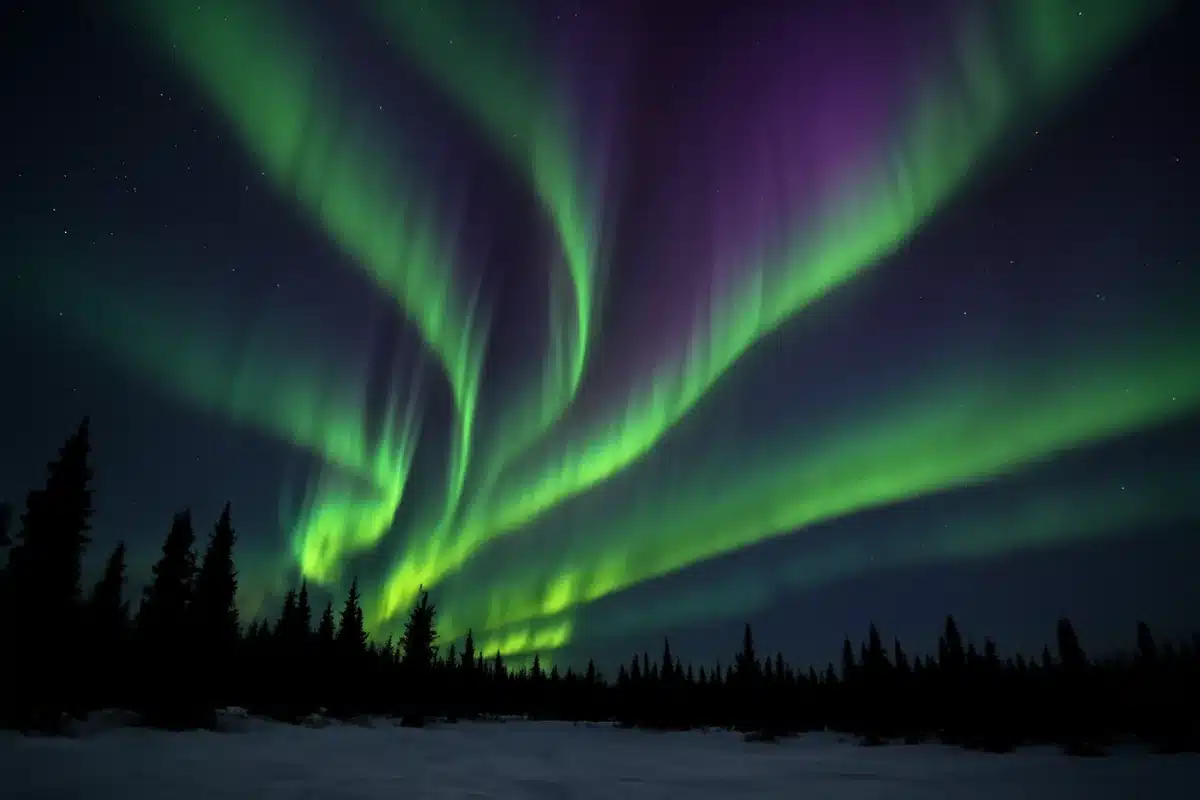
A geomagnetic storm is hitting Earth today, with the first coronal mass ejection (CME) arriving and triggering a G1 minor geomagnetic storm at 7:30 UTC on September 8, according to EarthSky. Multiple CMEs from solar flares that erupted on September 5 and 6 are expected to reach Earth and potentially combine, bringing the possibility of stronger G1 to G3 geomagnetic storms through September 8 and 9.
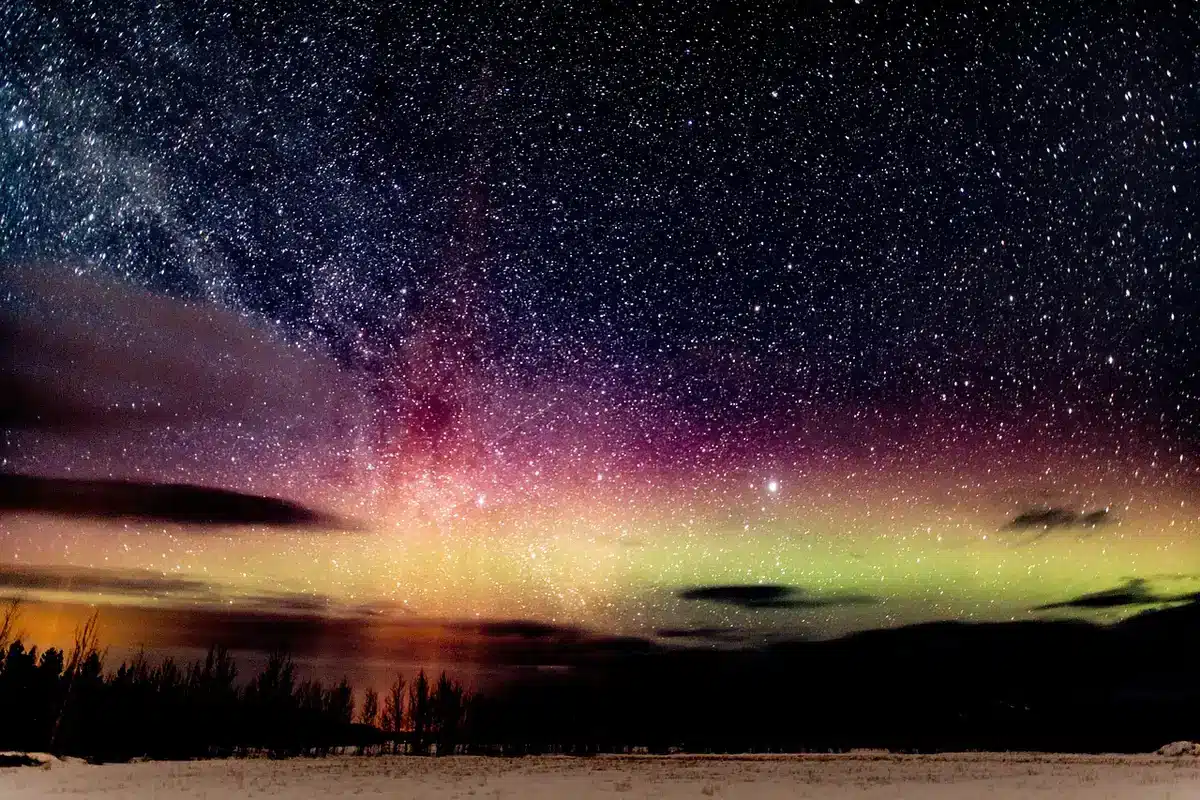
The aurora borealis is already visible across parts of the northern United States, with forecasters predicting that the display could extend to around 20 states if stronger G2 (moderate) geomagnetic storm conditions develop. NOAA’s Space Weather Prediction Center currently forecasts a G1 storm, while the UK Met Office says there is a chance of G2 conditions. Under G1 conditions, aurora may be visible from dark locations across parts of Alaska, North Dakota, Maine, Minnesota, Vermont, Montana, New Hampshire, South Dakota, Washington, Wisconsin, and Michigan. A G2 storm could push the display farther south into Oregon, Wyoming, Nebraska, Iowa, Illinois, Indiana, Ohio, Pennsylvania, and New York.
The geomagnetic storm stems from a series of solar eruptions. On September 5, the sun fired an M1.0 flare from Plage Region 4520, which triggered a minor solar radiation storm and launched a CME. The same day, Active Region 4524 produced a fast C8.5 flare with an associated CME traveling at approximately 1,110 kilometers per second, which reached Earth late on September 7 or early on September 8. A slower CME from a C6.5 flare on September 5 arrived around 2:52 UTC on September 8. An additional coronal hole high-speed stream is also contributing to the disturbance, according to EarthSky.
Geomagnetic storms occur when charged particles from the sun’s atmosphere interact with Earth’s magnetic field, causing significant disturbances. According to NOAA, these storms result from variations in the solar wind that produce major changes in the currents, plasmas, and fields in Earth’s magnetosphere. When the solar wind’s magnetic field points southward, it can couple effectively with Earth’s magnetic field, allowing solar energy to enter the magnetosphere and trigger auroral displays.
Infrastructure and Power Grid Impacts
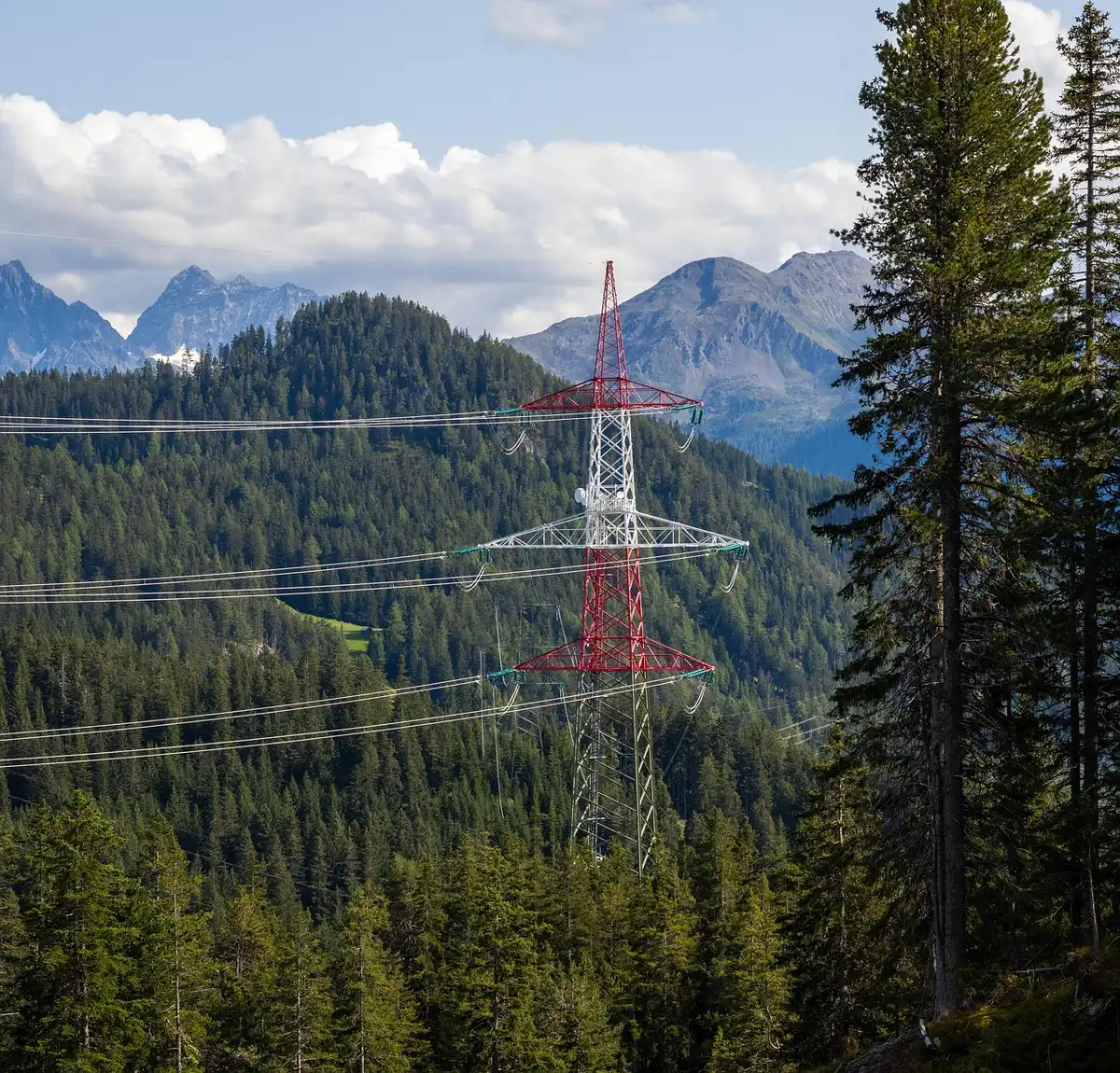
While the visual spectacle of the aurora draws most attention, geomagnetic storms can pose risks to critical infrastructure. Severe geomagnetic disturbances generate geomagnetically induced currents (GICs) that can flow into power grid infrastructure, potentially damaging transformers and relays, according to Newsweek. These currents can cause malfunctions in power grid control and protection systems, affecting their operation and stability. The power grid is designed to withstand solar storms around two to three times more powerful than historical events, according to CNN reporting on power grid resilience.
Beyond the electrical grid, geomagnetic storms can disrupt satellite operations, interfere with GPS and radio communications, and affect high-frequency communication systems, according to the U.S. Geological Survey. September is particularly favorable for aurora activity because of the Russell-McPherron effect, a seasonal phenomenon where Earth’s magnetic field orientation around the equinoxes makes it more likely to interact effectively with the solar wind’s magnetic field, according to Forbes. This makes aurora statistically more common around the equinoxes, which occurs on September 22.
The best viewing opportunities for tonight and early Wednesday morning will be from dark locations away from city lights. At lower latitudes, observers should look toward the northern horizon. Even when aurora is faint to the naked eye, smartphone cameras in night mode or manual camera mode can reveal colors and structure that aren’t immediately visible, according to Forbes. Exposures of several seconds can reveal fainter displays, though shorter exposures work better when the aurora is bright or moving rapidly.
Sources
- EarthSky — Real-time solar activity updates and geomagnetic storm forecast for September 6–8, 2026, including CME arrival times, storm level predictions, and aurora visibility zones.
- Forbes — Northern lights forecast for September 8–9, including NOAA and UK Met Office predictions, state-by-state aurora visibility, and the Russell-McPherron effect explanation.
- NOAA Space Weather Prediction Center — Geomagnetic storm scale definitions, G1–G5 classifications, and solar wind/magnetosphere interaction mechanisms.
- Newsweek — Power grid infrastructure impacts from geomagnetic storms, including transformer and relay damage risks.
- CNN — Power grid resilience analysis and capacity to withstand solar storms relative to historical events.
- U.S. Geological Survey — Broader space weather impacts including satellite operations, GPS, and radio communication disruptions.