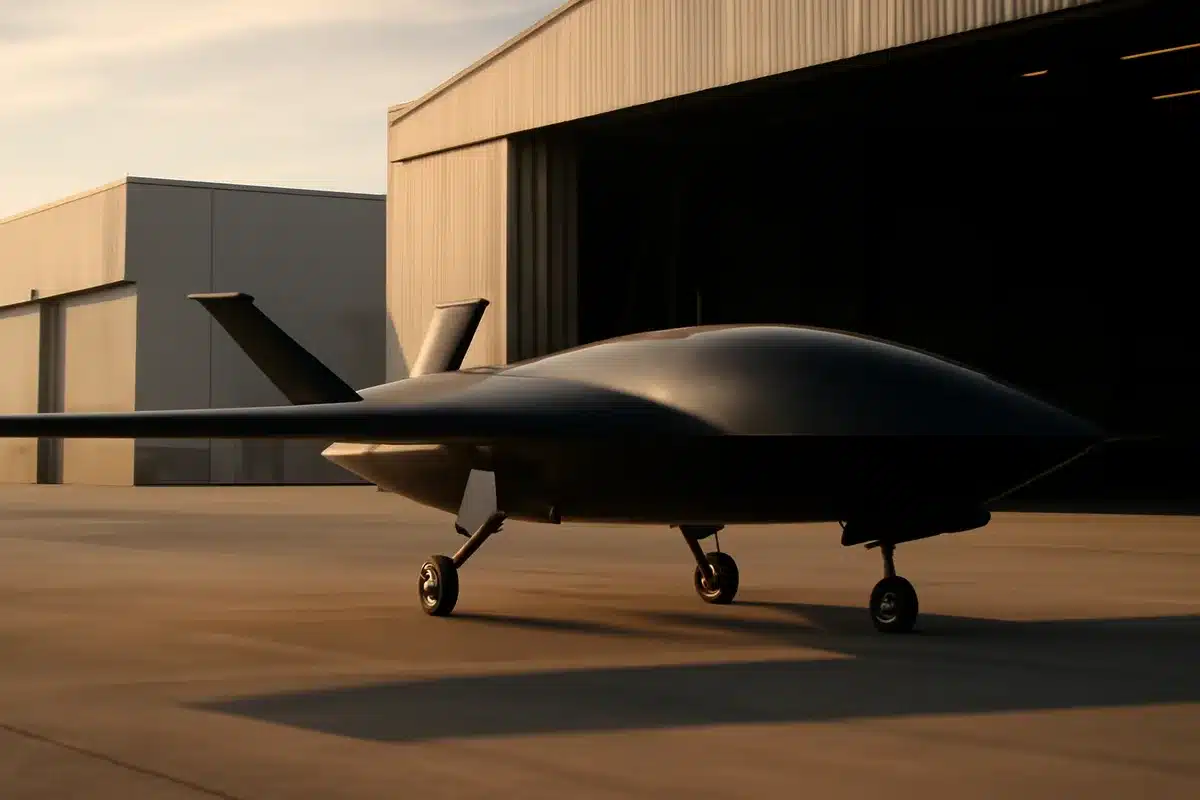
Aevum’s Ravn X autonomous aircraft completed its first taxi tests at Long Beach Airport, marking a major milestone for the experimental space-launch vehicle after years of development delays. The 80-foot-long drone, which weighs 55,000 pounds and has a 60-foot wingspan, rolled out of a Long Beach hangar on September 6, 2026, and conducted ground movement tests that demonstrated autonomous control systems ahead of potential flight trials.
The Ravn X is designed to carry a 100-kilogram payload to orbit by accelerating a two-stage rocket to 60,000 feet, where it releases the rocket for orbital insertion. The aircraft features two afterburning turbofan engines and can operate from standard runways as short as one mile, eliminating the need for specialized launch facilities. Aevum, headquartered in Long Beach, registers the aircraft as N567RX.
The taxi tests represent a critical step toward operational flights. No official announcement has yet come from Aevum about the timeline for first flight or the next phase of testing, though the aircraft’s reappearance after years of limited public activity signals renewed momentum. The company’s planned first mission was originally scheduled for 2021 but has not yet occurred.
Aevum was contracted by the U.S. Air Force in 2019 to develop the launch system for the ASLON-45 mission, a series of cubesat deployments. The company’s CEO Jay Skylus stated in December 2020 that the Ravn X would be ready for operations within 18 months after clearing regulatory reviews, though that timeline was not met. The aircraft’s design distinguishes it from earlier air-launch approaches: rather than dropping a rocket mid-air like Virgin Orbit‘s LauncherOne or Northrop Grumman’s Pegasus, the Ravn X accelerates the rocket through the atmosphere before release.

Virgin Orbit, a comparable air-launch competitor, conducted its first successful orbital flight in January 2021 after completing drop tests in 2019. That company later ceased operations and was acquired by Rocket Lab in 2023. The Ravn X’s autonomous flight capability and ability to launch on short notice from standard runways represent a different approach to responsive space access, targeting a market where rapid, flexible launch windows are valuable to government and commercial customers.
Sources
- The Aviationist — detailed reporting on the Ravn X rollout, taxi tests, aircraft specifications, development history, and U.S. Air Force contract
- Fliegerfaust — confirmation of the successful first autonomous taxi tests at Long Beach Airport
- SpaceNews — CEO Jay Skylus’s 2020 statement on operational readiness timeline and regulatory approval process
- Ars Technica — technical specifications and design comparison with other air-launch systems
- Satellite Today — Virgin Orbit LauncherOne first orbital flight achievement in January 2021