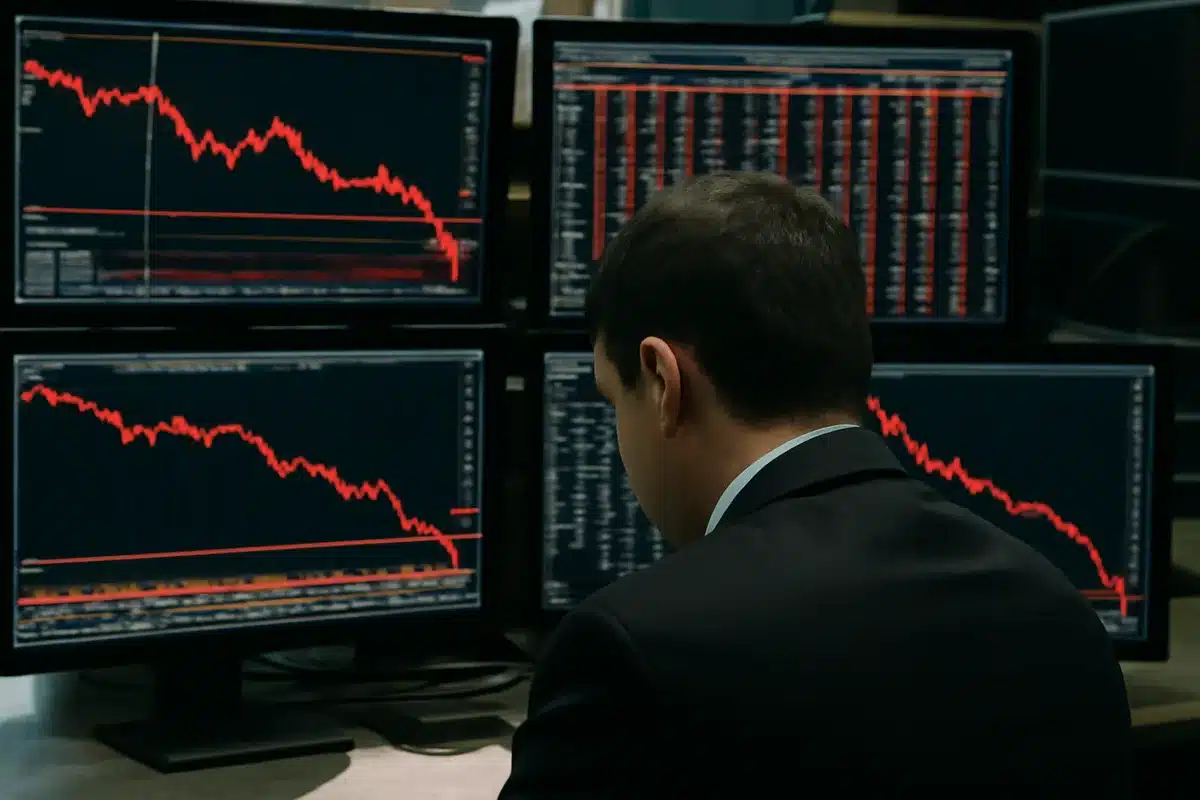
The Federal Reserve warned in its July meeting minutes that the S&P 500’s equity risk premium has fallen to levels not seen since the dot-com bubble, signaling that stocks are expensive relative to risk-free Treasury bonds and raising questions about valuations in a market driven by artificial intelligence enthusiasm.
The Federal Reserve calculates the equity risk premium by subtracting the real 10-year Treasury yield from the S&P 500’s forward earnings yield. This metric measures the extra return investors expect to earn by holding stocks rather than government bonds. When the premium shrinks, it suggests stocks are priced richly compared to the safety of Treasury investments.
According to the FOMC minutes released August 19, the staff noted: “The equity premium—the forward earnings-to-price ratio adjusted for the level of long-term interest rates—was at a level that has only been lower in recent history during the dot-com bubble.” The S&P 500 has maintained an equity risk premium below 2.5% for five consecutive months, a condition last seen in May 2002.

History offers a sobering precedent. When the equity risk premium last remained this compressed in May 2002, the S&P 500 declined 16% over the subsequent year, according to Motley Fool analysis of Fed data. During the dot-com crash itself, between March 2000 and October 2002, the Nasdaq fell from 5,048 to 1,139—a 78% decline that erased more than $5 trillion in market value, according to Britannica.
The Fed’s warning comes as three officials voted for a quarter-point rate hike at the July meeting, up from zero votes in June. Market pricing now suggests a 25 basis point increase is likely in September 2026, followed by another in early 2027. When the Fed signals rate hikes, stock market corrections often follow: over the past 30 years, the S&P 500 and Nasdaq have fallen by an average of 10% and 12%, respectively, during the three-month period following the first rate hike in a new tightening cycle.

The staff attributed the compressed equity risk premium to elevated asset valuations supported by AI enthusiasm and strong corporate profits. In its assessment of financial stability, the Fed noted that “equity valuations remained high despite some moderation from year-end.” This echoes warnings from other market observers: Jamie Dimon has cautioned that margin debt is hitting all-time highs, a sign of investor leverage that can amplify losses during downturns.
The narrowing equity risk premium reflects a broader market dynamic: investors are willing to accept smaller returns for holding stocks over bonds, a bet that assumes continued strong earnings and economic resilience. Yet the Fed’s own staff flagged “notable” financial vulnerabilities, including elevated leverage at hedge funds near all-time highs and heightened exposures at life insurers to riskier asset classes. Fed Chair Kevin Warsh has emphasized that inflation remains a persistent concern, suggesting rate hikes may be necessary to restore price stability.
The Fed’s historical comparison to the dot-com era carries weight because it marks the only other recent period when equity risk premiums compressed this severely. Today’s compression occurs amid a different driver—AI-driven earnings optimism rather than speculative internet startup valuations—but the structural warning is identical: the market is pricing in little compensation for equity risk.
Sources
- Motley Fool — Analysis of Federal Reserve FOMC minutes and historical equity risk premium data; five-month trend below 2.5% and May 2002 precedent
- Federal Reserve — Official FOMC minutes from July 28-29, 2026 meeting, released August 19; staff assessment of equity premium at dot-com bubble levels
- Britannica — Dot-com bubble timeline and Nasdaq decline from 5,048 to 1,139 between March 2000 and October 2002