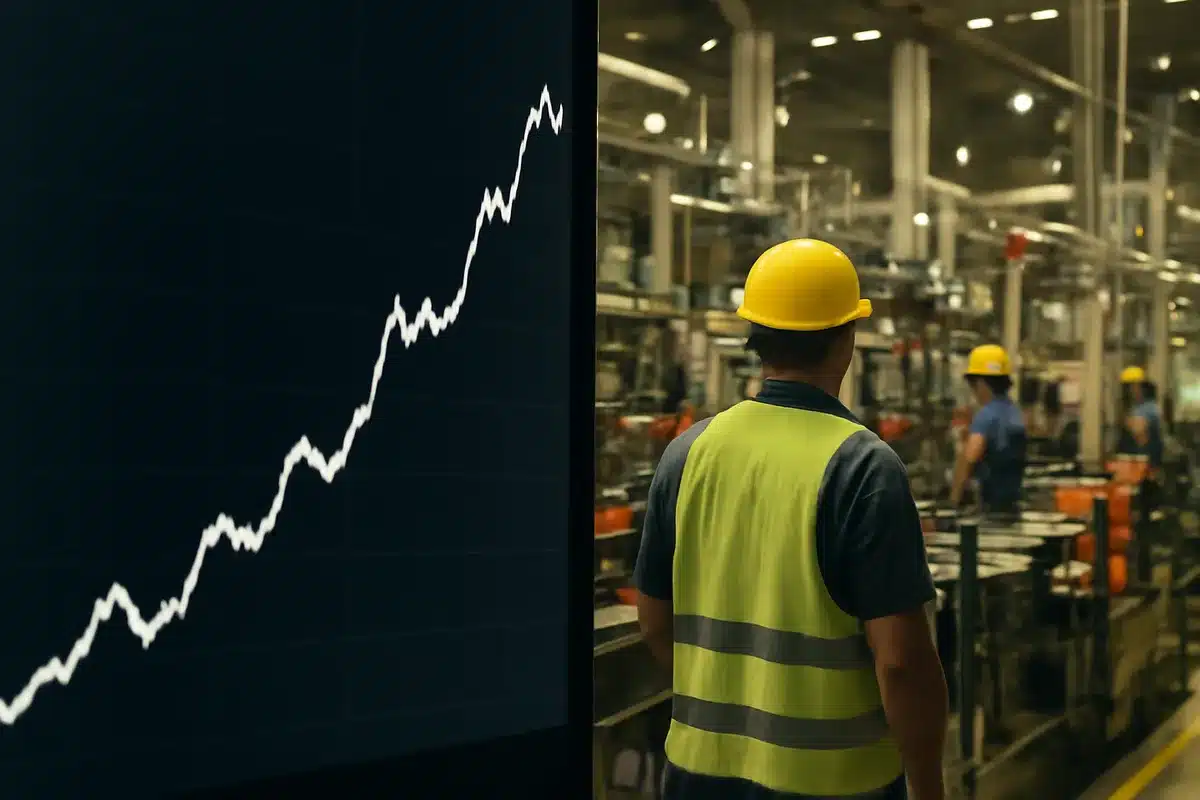
The Mexican peso strengthened to around 16.89 per US dollar in September 2026, marking its highest level since May 2024 and defying earlier forecasts that predicted weakening through the year.
The currency’s resilience comes despite Banxico’s series of interest rate cuts throughout 2026. The central bank reduced its benchmark rate by 25 basis points in May to 6.50%, continuing an easing cycle that brought rates down from 11.25% at the start of 2025.

Nearshoring has emerged as a key driver of peso strength. U.S. and Canadian companies have increasingly relocated operations to Mexico to access USMCA trade benefits and reduce supply chain costs. Mexico recorded $23.6 billion in foreign direct investment during the first quarter of 2026, underscoring sustained investor confidence in the nearshoring trend.
The peso’s strength stands in contrast to market expectations. At year-end 2025, analysts surveyed by Reuters predicted the currency would weaken to around 19 pesos per dollar by the end of 2026. Instead, the currency has appreciated significantly, prompting analysts to describe the phenomenon as a return of the “super peso.”
According to Reuters reporting in August 2026, the peso’s strength has surprised markets, as expectations at the start of 2025 held that the currency would weaken toward 21 per dollar. The reversal reflects Mexico’s appeal as a stable investment destination amid broader economic uncertainty.

The strength of the currency has created mixed effects for Mexico’s economy. While it attracts foreign investment and signals confidence in macroeconomic stability, a strong peso can pressure exporters by making Mexican goods more expensive for foreign buyers. Earlier in 2026, analysts noted that exporters faced headwinds from the currency’s appreciation.
Banxico signaled in August 2026 that it was likely to keep its benchmark interest rate unchanged, as recently released meeting minutes indicated. The central bank faces a balancing act: supporting growth through rate cuts while managing inflation and the peso’s strength.
Mexico’s economy is projected to grow around 1.2% in 2026, nearly double its 2025 output, according to reporting on Banxico’s economic assessments. This modest but improving growth, combined with the nearshoring momentum and relative macroeconomic stability, continues to underpin demand for the peso among international investors seeking exposure to Mexico’s role as a manufacturing hub in North America.
Sources
- Trading Economics — Mexican peso exchange rate at 16.89 per USD in September 2026, highest since May 2024
- Reuters — Banxico rate cut to 6.50% in May 2026; August 2026 reporting on “super peso” and market surprise at peso strength
- Yahoo Finance — Nearshoring boom and higher Mexican interest rates as drivers of peso appreciation
- Mexican government sources — $23.6 billion in FDI recorded in Q1 2026
- TechTimes — Mexico’s projected GDP growth of 1.2% for 2026 and Banxico’s economic outlook