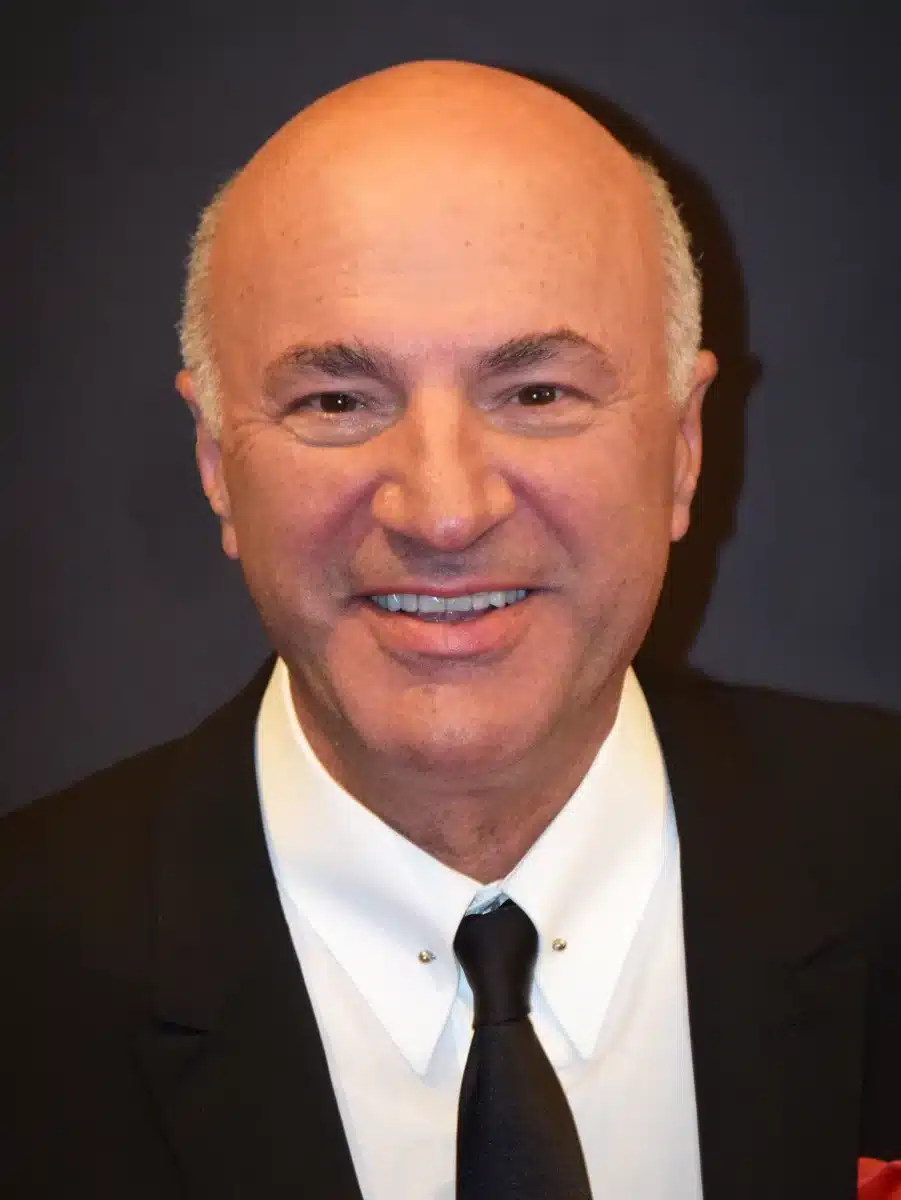
Kevin O’Leary, the Shark Tank investor with an estimated $400 million net worth, buys his everyday jeans for $29 at Walmart but has zero guilt about spending $120 on a single pair of luxury Zimmerli boxers from Switzerland.
O’Leary recently went viral standing in a Walmart aisle, comparing Bounty paper towel pack sizes and displaying the black jeans he wears regularly. “Inflation affects all of us,” he said in the Instagram video. “Saving dough is the name of the game.” Yet his spending habits reveal a more nuanced strategy than simple frugality.

The contrast between $29 jeans and $120+ underwear isn’t a contradiction to O’Leary—it’s a strategy. He’s willing to spend on things that directly affect how he looks and feels, while refusing to overpay for things that don’t matter. “I invest in looking great all the time,” he told CNBC, by paying for great clothing and shoes, and frequent haircuts.
O’Leary pays $80 for haircuts every 10 days, joking to CNBC that he doesn’t have that many hairs, so he wants them to have a personal relationship with every one. He buys Egyptian cotton boxers from Zimmerli of Switzerland, a company that has been handcrafting underwear since 1871. Adjusted for inflation, that $120 he spent eight years ago is actually around $160 today.
Where he won’t spend: pricey coffee. “Do I pay $2.50 for a coffee? Never, never, never do I do that,” he told CNBC. “That is such a waste of money for something that costs 20 cents.” The underlying framework is one he applies to every purchase. “Anytime I pick up something I’m going to buy, I say to myself, ‘Do I really need this?'” he explained, adding that if he opts out, that’s money going towards investments instead.
O’Leary’s selective spending is rooted in discipline and compound growth. In an interview with The Diary of a CEO, he said: “I can’t stand it when I see kids that are making 70 grand a year spending $28 for lunch. I mean that’s just stupid.” His point isn’t the $28 itself—it’s what that money could become. “Think about that in the context of that being put into an index and making 8% to 10% a year for the next 50 years,” he said.
He recommends a simple closet audit: most people regularly use about 20% of their wardrobe while the other 80% sits untouched, showing how money gets wasted on things that felt necessary in the moment but weren’t. His solution is automatic investing—specifically, putting aside 15% of your salary before you have a chance to spend it. “If you’re making $70,000 a year and you put 15% aside from when you’re 25, you’ll have over a million and a half dollars if you just invested it in the stock index in the S&P 500,” he explained.
O’Leary’s framework is backed by research. According to Ramsey Solutions’ National Study of Millionaires, which surveyed more than 10,000 millionaires, 94% live on less than they make, and one-third never earned a six-figure salary at any point in their career. Northwestern Mutual’s 2025 Planning & Progress Study found that 79% of American millionaires describe their wealth as self-made, compared to just 12% who inherited it.
Sources
- Yahoo Finance / Moneywise — Kevin O’Leary’s $29 Walmart jeans and $120 Zimmerli boxers spending habits, published September 4, 2026
- CNBC — O’Leary’s 2018 interview on luxury underwear spending and wealth-building philosophy
- Ramsey Solutions — National Study of Millionaires data on self-made wealth and spending habits
- Northwestern Mutual — 2025 Planning & Progress Study on millionaire wealth sources