
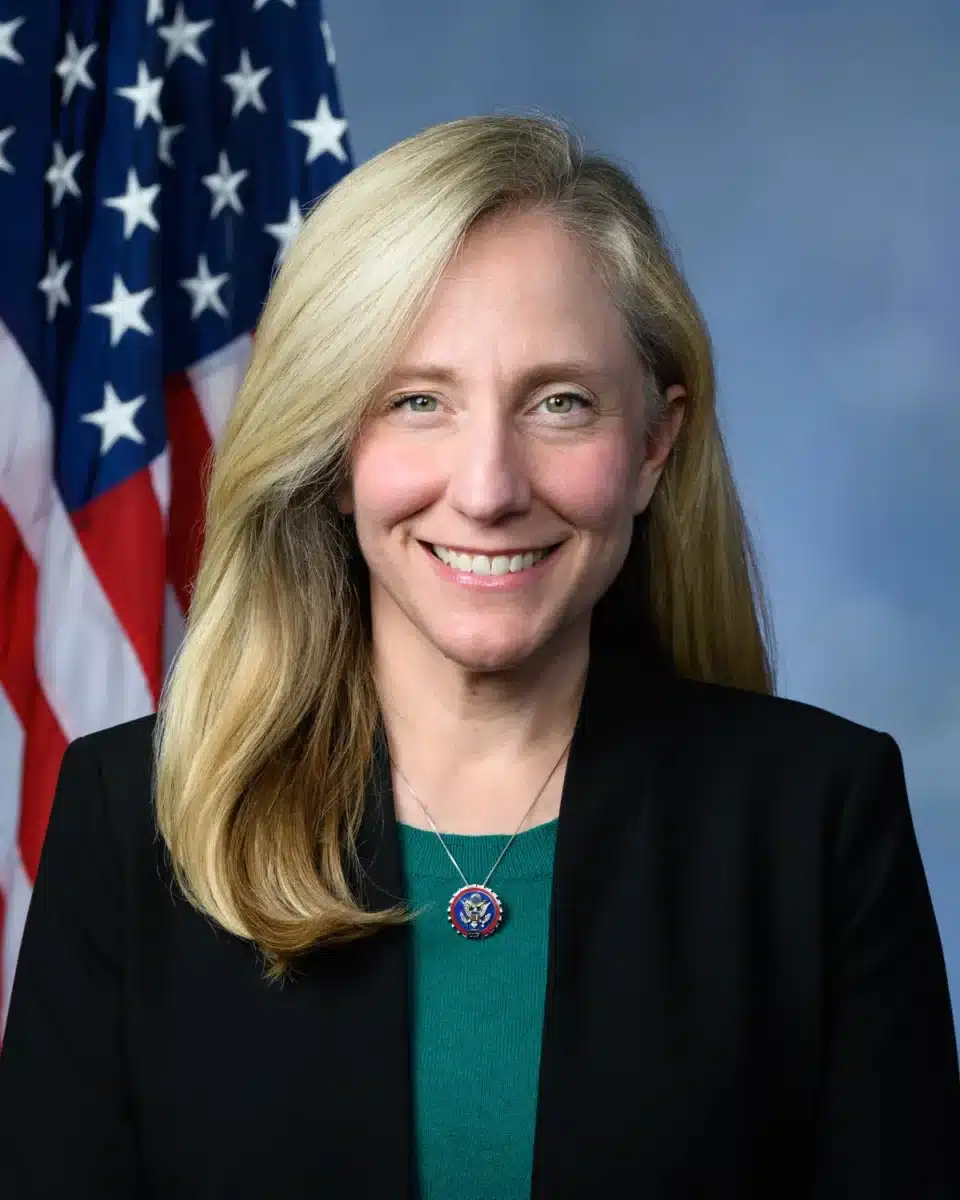
Virginia Gov. Abigail Spanberger’s claims that the Trump administration was blocking overseas military mail-in voting were fact-checked after she raised alarm about the policy during a CNN interview, prompting the network’s anchor to issue a public correction.
On August 29, Spanberger posted on X that she believed Americans serving abroad “should have the ability to cast a vote in our elections” and accused the Trump administration of “attempting to take that ability away.” She made similar arguments during a CNN interview with Wolf Blitzer on August 28, after the anchor raised concerns about whether Virginia military personnel overseas could be affected by Trump’s mail-voting restrictions.
However, the U.S. Postal Service’s final rule, issued in August 2026, explicitly exempts ballots covered by the Uniformed and Overseas Citizens Absentee Voting Act (UOCAVA) from the new federal ballot-mail requirements. UOCAVA is a federal law passed by Congress in 1986 that protects the voting rights of active-duty military members, their families, and other overseas U.S. citizens in federal elections.
CNN subsequently issued a correction. “On Friday, I interviewed the Democratic governor of Virginia, Abigail Spanberger. We discussed legal challenges to the Trump administration’s directives for the Postal Service on mail-in voting,” Blitzer said in the on-air statement on Monday. “A comment that may’ve suggested that US military and overseas voters’ ballots would be impacted by these directives — I want to be clear right now, those ballots are exempt from the Postal Service’s new rules implementing the president’s March executive order.”
An X community note was also added to Spanberger’s original tweet, stating: “Military and overseas voters’ UOCAVA ballots are explicitly exempt from the USPS rules implementing the March 2026 executive order; service members abroad can still register/request absentee ballots via the Federal Post Card Application.”
Trump signed an executive order on March 31, 2026, titled “Ensuring Citizenship Verification and Integrity in Federal Elections,” which directed the USPS to issue new regulations on mail-ballot procedures. The order requires states to submit lists of eligible mail voters to the USPS 60 days before an election, and the USPS can only send mail-in ballots to voters whose names appear on those lists. However, the final USPS rule explicitly carved out an exemption for UOCAVA-covered voters, recognizing the unique circumstances facing military personnel and overseas citizens.
The broader fight over Trump’s mail-voting restrictions has faced multiple legal challenges. A federal judge temporarily blocked key provisions of the rule in August, and the Supreme Court later stayed that injunction, allowing the administration to move forward with the policy. States have filed lawsuits challenging the restrictions, arguing they interfere with voting rights. Election experts have noted that mail voting remains central to how military voters exercise their franchise, with service members relying heavily on absentee ballots to participate in federal elections.
Spanberger did not respond to requests for comment. A representative for CNN confirmed that Blitzer had issued the correction after the August 28 interview.
Sources
- New York Post — Spanberger’s claims about military ballots, CNN’s correction, X community notes, and details of the USPS rule exemption
- Fox News — Wolf Blitzer’s on-air correction and its timing
- White House — Text of Trump’s March 31, 2026 executive order on mail-voting restrictions
- U.S. Department of Justice — Overview of UOCAVA and its protections for military and overseas voters
- Federal Register — USPS final rule on ballot mail for federal elections, including UOCAVA exemption










